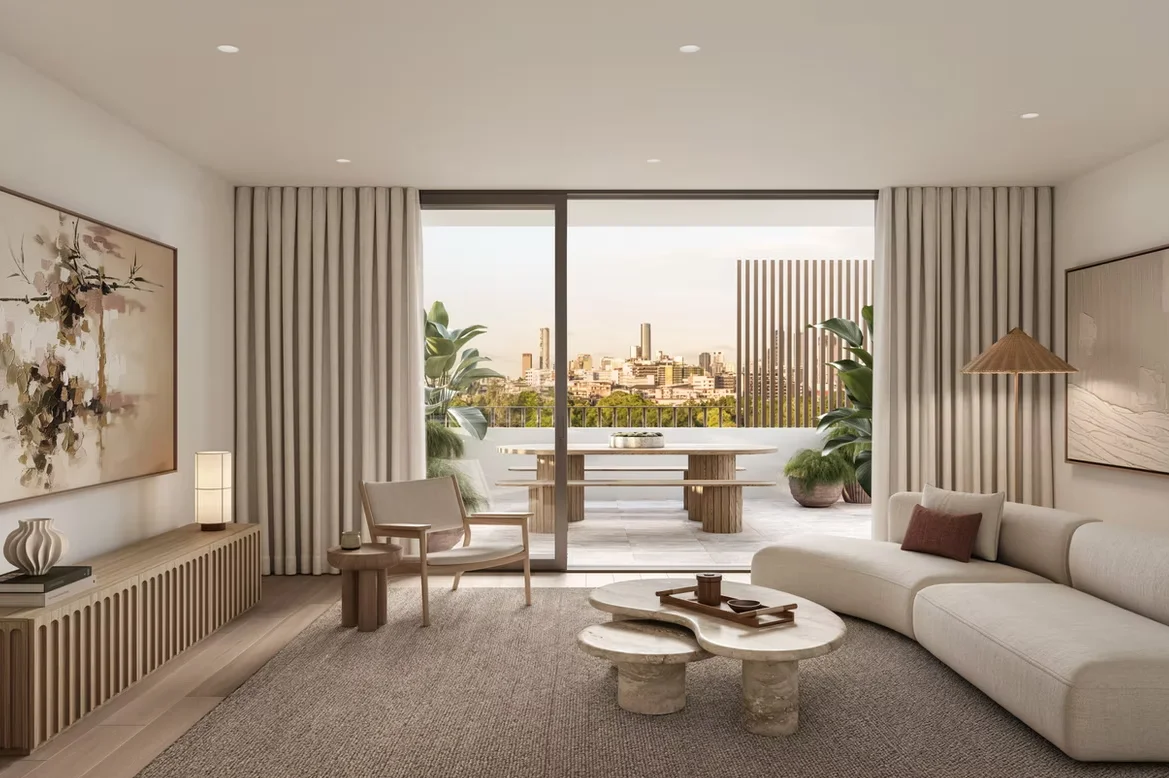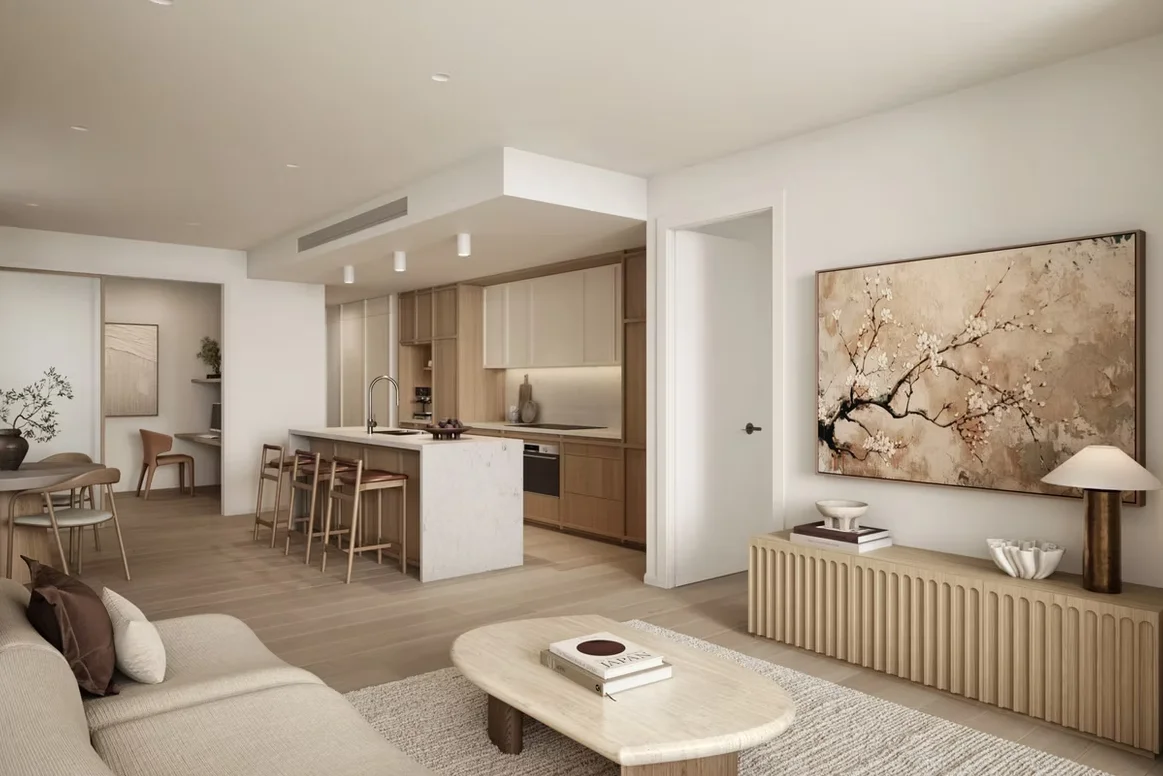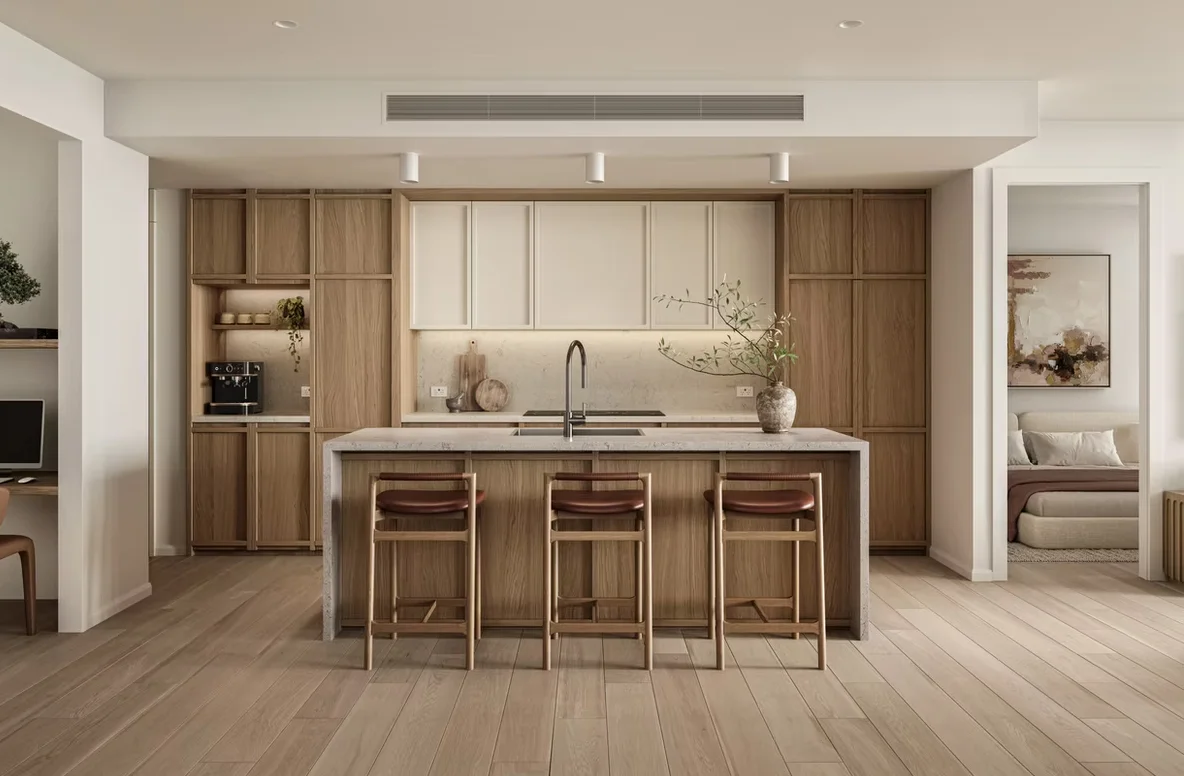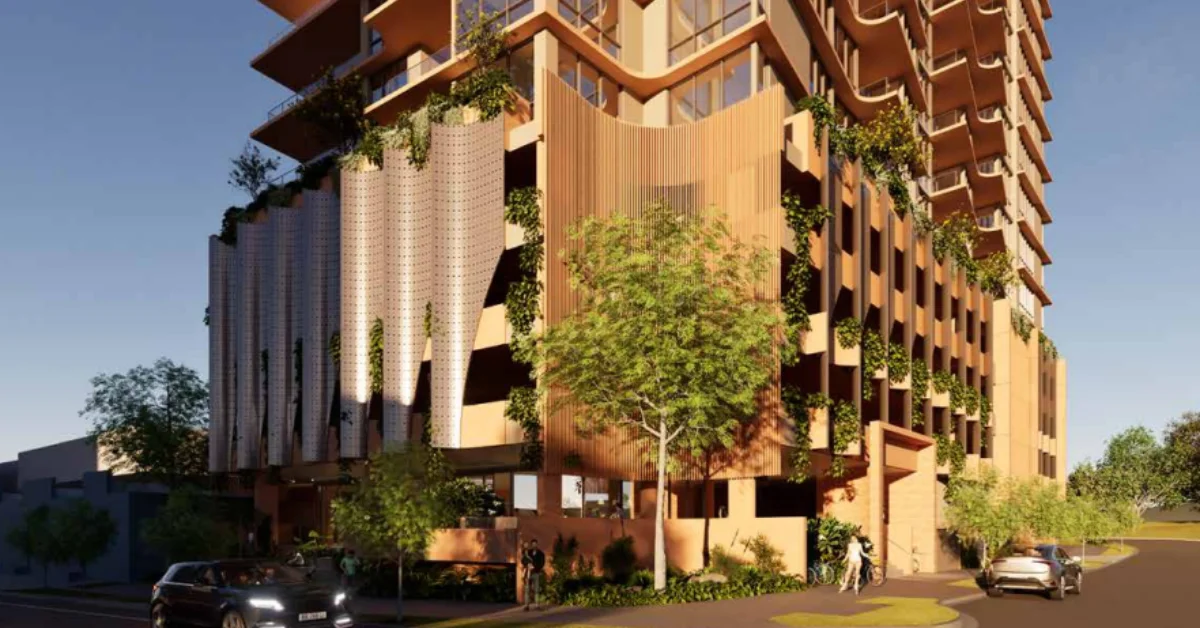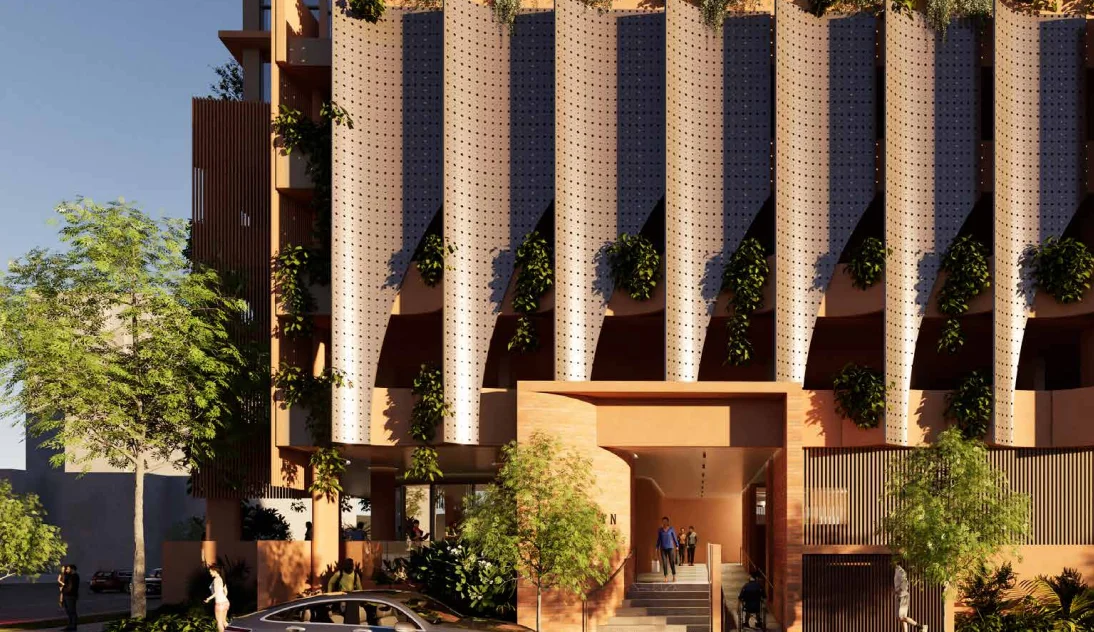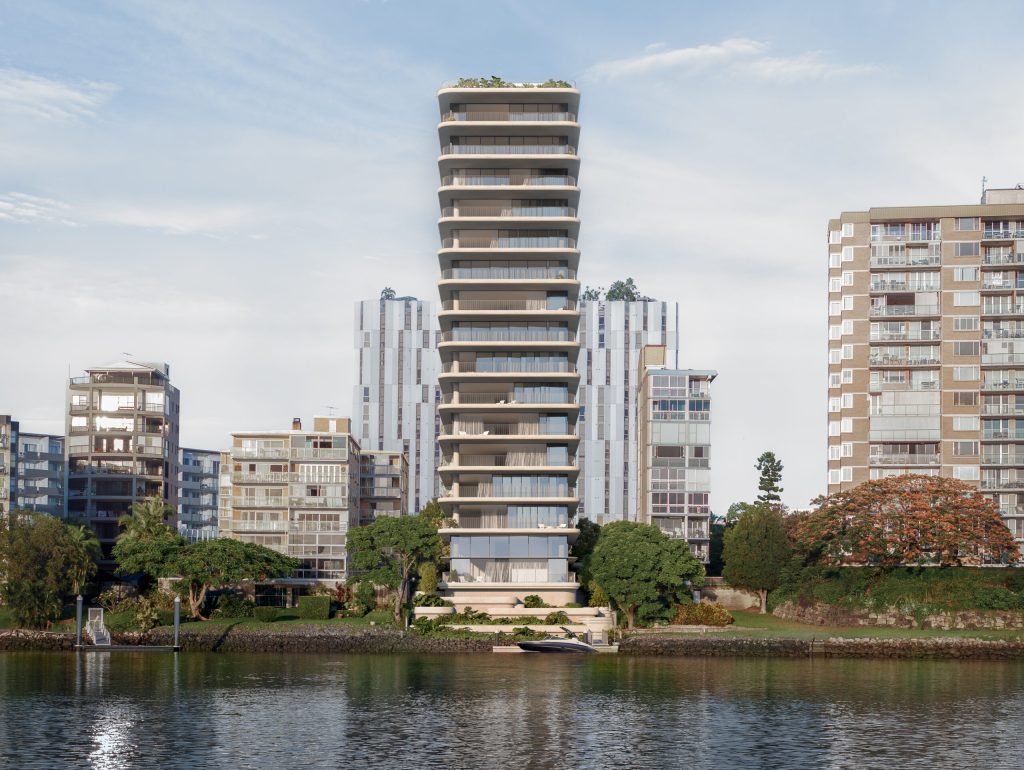

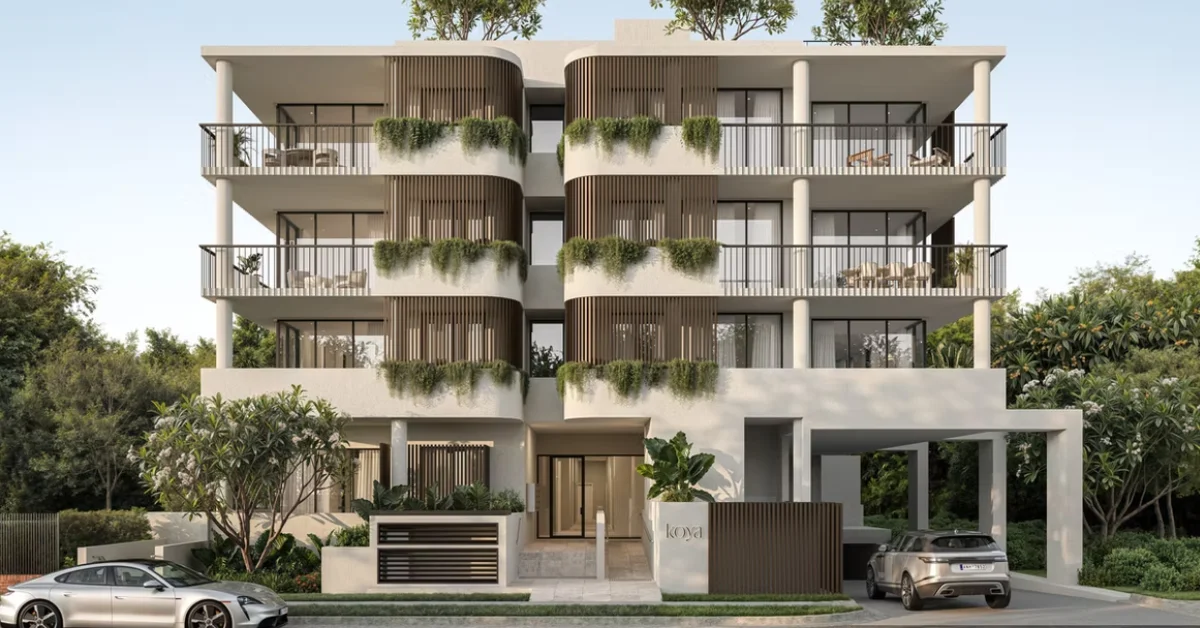
A vacant site in central Toowong with existing approval for a 26-storey build-to-rent tower has been brought to market, presenting an opportunity for developers in one of Brisbane’s most established inner suburbs.
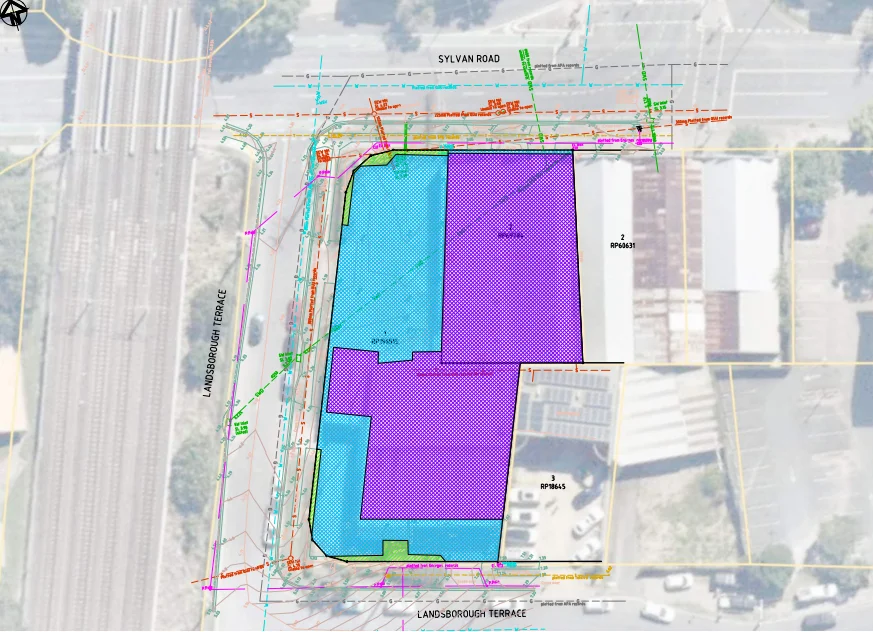
The 1,571 square metre landholding at 58 High Street is being offered by CDL Australia Holdings through Knight Frank via Registrations of Interest. The freehold property features dual street frontage to High Street and Ebor Street.
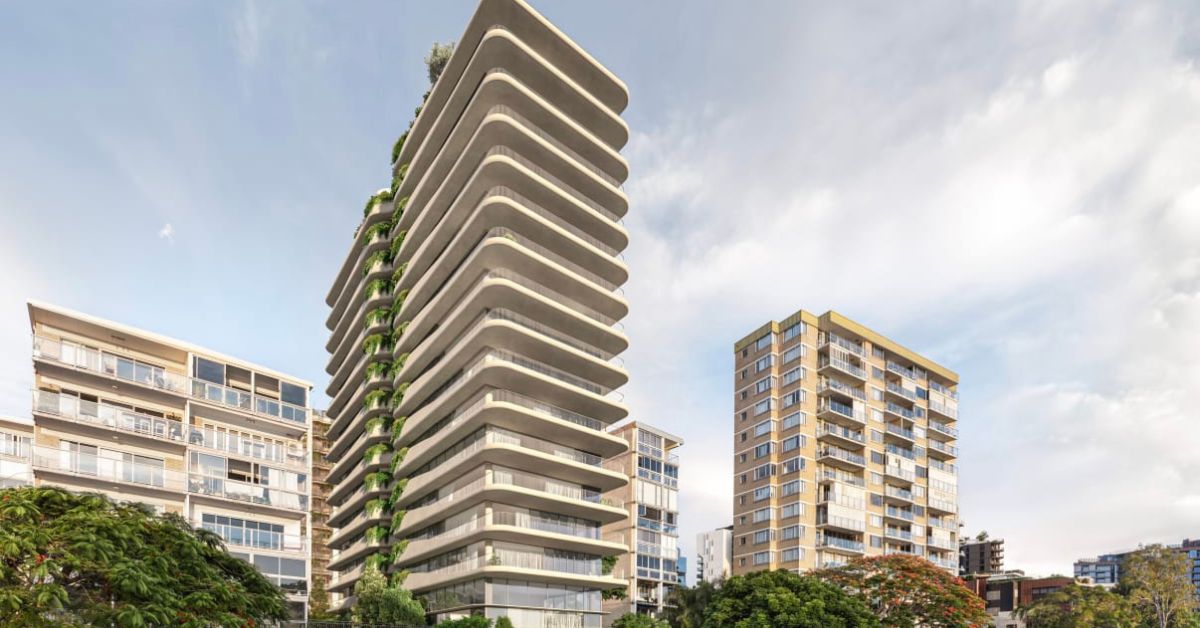
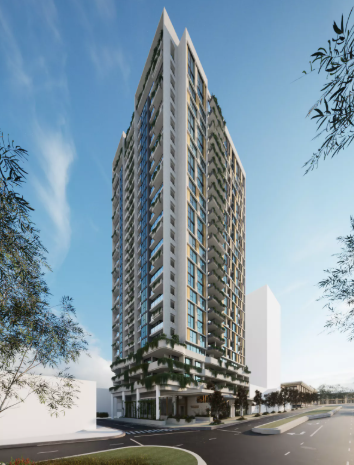
The site comes with development approval already secured for a 326-apartment, 26-storey residential tower. While the Major Centre zoning permits buildings up to 20 storeys, the existing approval extends beyond this base allowance, positioning the site as construction-ready for potential developers.
Build-to-Rent Model
Artist’s impression of approved development at 58 High Street (Photo credit: Knight Frank)
The approved scheme is designed as a build-to-rent development. Build-to-rent developments differ from traditional apartment buildings in that all units are retained by a single owner and operated as rental properties rather than being sold to individual buyers.
According to the listing agents, the location and transport connectivity suggest strong potential for tenant demand in a build-to-rent model. They point to what they describe as limited supply of rental apartments across inner Brisbane, which could support such a development in the area.
Site Location and Amenity
The High Street site sits within walking distance of Toowong Village shopping centre, Toowong Train Station, and the Regatta Hotel. The Brisbane River foreshore is nearby, while the CBD is located approximately four kilometres to the east. The University of Queensland campus is also accessible from the location.
Transport connections include rail, bus, and ferry services, along with major road networks. The site’s position within Toowong’s commercial and retail precinct provides access to established local amenity.
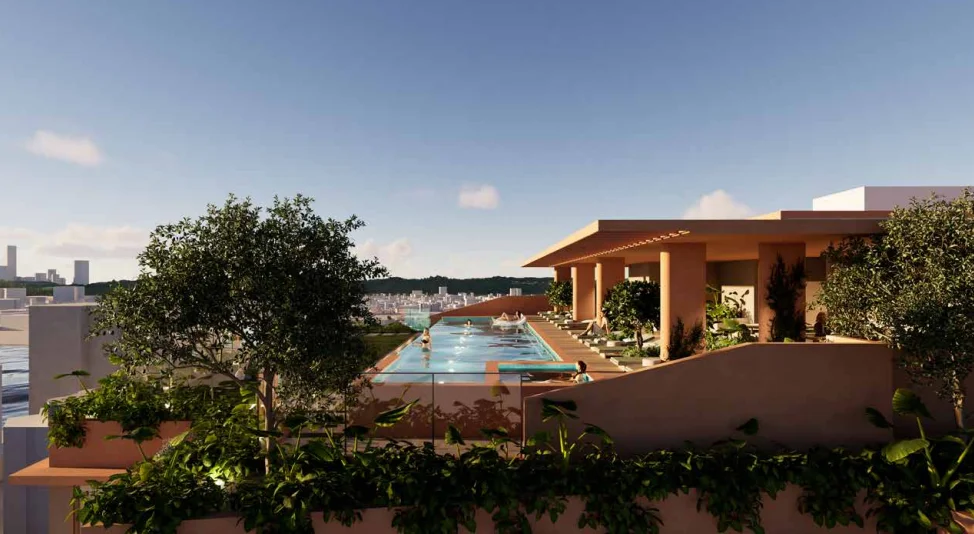
According to the listing information, the development would offer potential for views across the Brisbane River and CBD skyline, though this would depend on the final design and construction.
Alternative Development Options
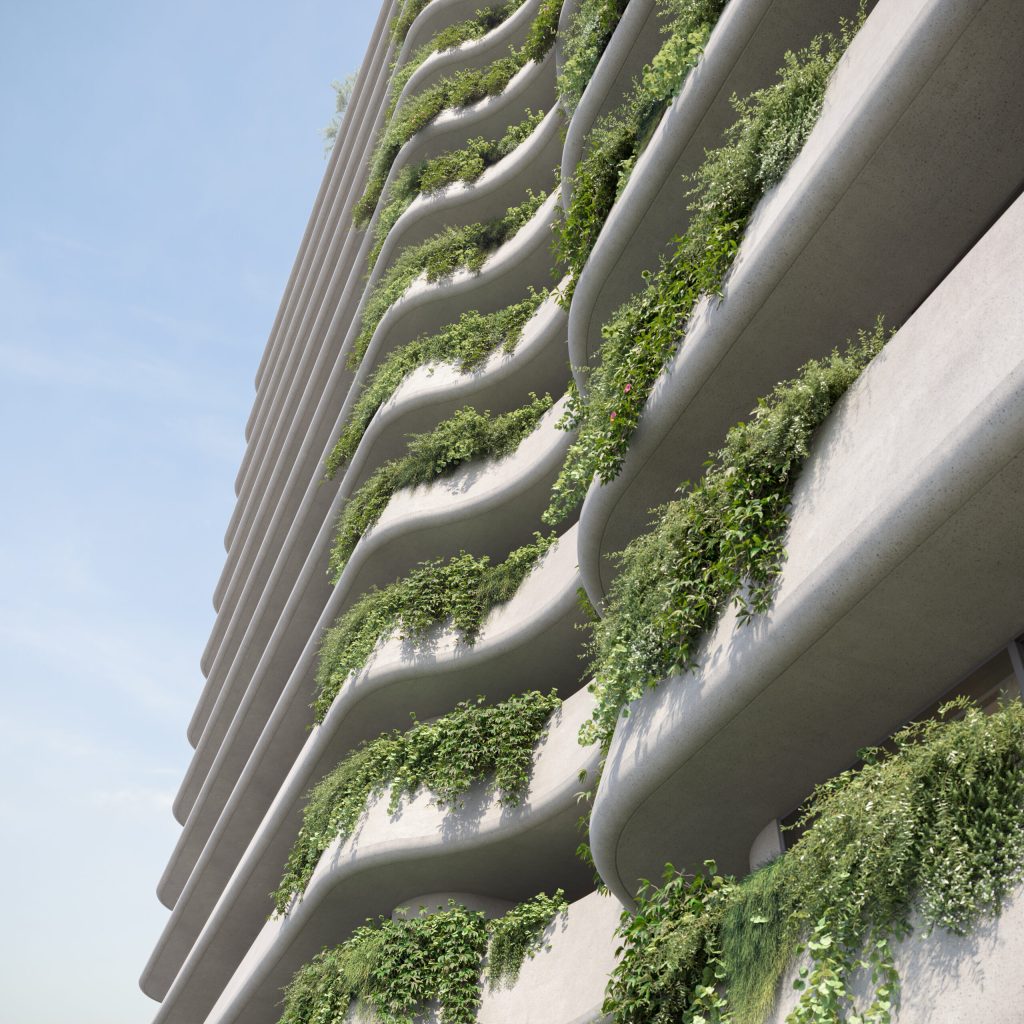
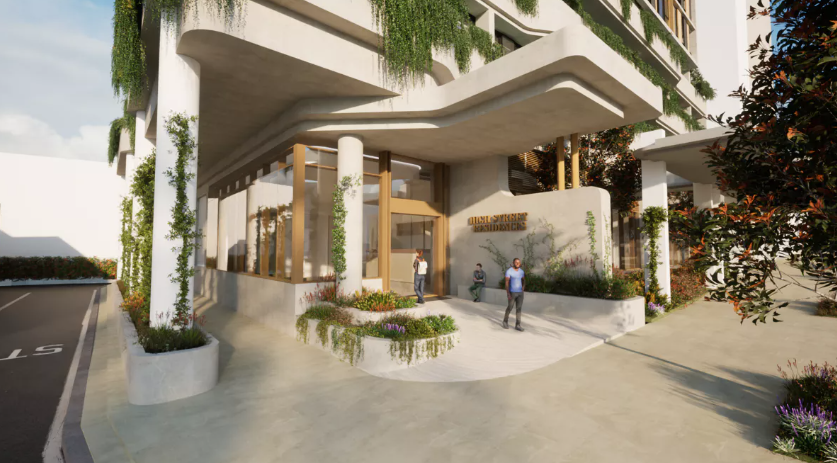
Photo credit: Knight Frank
While the current approval is for a build-to-rent scheme, the listing indicates that the site could potentially accommodate other residential models. These alternatives include purpose-built student accommodation, co-living developments, build-to-sell apartments, short-term accommodation, or office space, though such options would require fresh applications to Brisbane City Council.
The proximity to the University of Queensland has been noted as a factor that could make the site suitable for student accommodation or co-living concepts, should a purchaser choose to pursue a different development path.
Surrounding Development Activity
Toowong has experienced notable development activity in recent years. The Monarch residential project has reached completion, with most apartments reported to have been pre-sold. The Arc development is scheduled for completion this year, with agents reporting strong demand for remaining stock in these projects.
Directly across from the High Street site, a significant mixed-use development known as Toowong Central has been proposed. That project, valued at approximately $1 billion, would span a 14,126 square metre site with frontages to High Street, Sherwood Road, and Jephson Street. The development is planned to include retail, office, and communal recreation spaces.
The listing agents have described Toowong as a high-growth precinct with several major projects in the pipeline, suggesting ongoing transformation of the suburb over coming years.
Motorists crawling through Toowong during peak hour are experiencing speeds slow enough that an e-scooter could keep pace, with Brisbane’s December 2025 data revealing median traffic speeds below 25 kilometres per hour on Moggill Road.
The western suburbs arterial route is among several Brisbane roads where rush-hour traffic moves at very slow speeds. Alongside Logan Road, Stanley Street heading into the city and Vulture Street outbound, Moggill Road recorded median speeds under 25km/h during weekday peak periods.
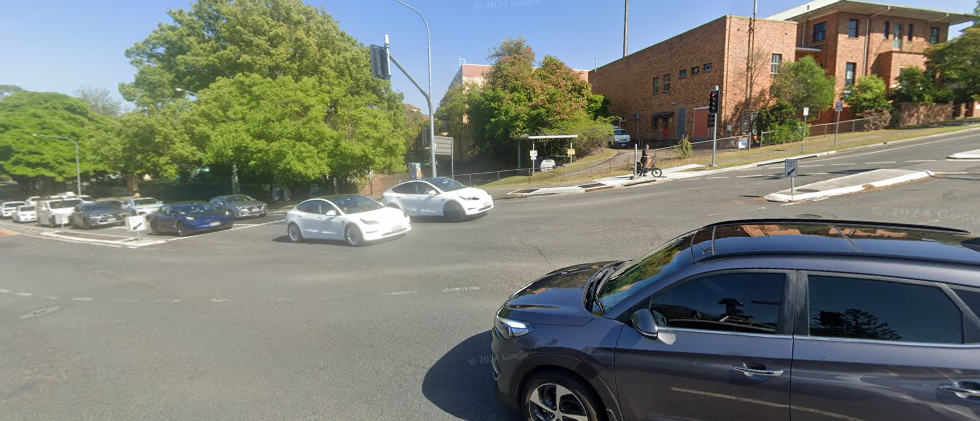
For Toowong commuters heading west toward Indooroopilly, the situation has deteriorated since before the pandemic. Data shows speeds have dropped compared to pre-pandemic levels, while traffic volume has increased. During afternoon peak periods, an additional 54 vehicles on average now use the Toowong to Indooroopilly section each hour compared to six years earlier.
Photo credit: Google Street View
The 20.6-kilometre Moggill Road corridor connects Toowong to the Moggill Ferry, serving as a vital link for Brisbane’s western suburbs. The stretch through Toowong and Indooroopilly carries particularly heavy loads, moving traffic past commercial centres, dense residential areas and the Indooroopilly Shopping Centre.
At these crawling speeds, the question arises: could alternative transport actually work? Personal mobility devices including e-scooters can legally reach 25km/h on separated bike paths and certain roads under Queensland law. On footpaths and shared paths, the limit drops to 12km/h unless signs specify otherwise.
Photo credit: Egor Komarov/Pexels
The catch is infrastructure. Continuous off-road paths suitable for e-scooter commuting don’t exist along much of the Toowong corridor. Riders wanting to travel at the 25km/h speed limit must use bike lanes on roads with 50km/h limits and no centre dividing line, or physically separated cycling infrastructure. Helmets remain mandatory under state regulations.
Rule violations result in substantial fines. E-scooter riders caught speeding face fines above $500, while using a mobile phone whilst riding will cost more than $1,000. These penalties apply to all personal mobility device users in Queensland.
Recent infrastructure investment has not eliminated congestion on the corridor. The Coonan Street intersection upgrade was designed to ease congestion at one of the corridor’s busiest junctions. Despite this work, December’s speed data indicates ongoing challenges throughout the broader Moggill Road corridor.
The combination of population growth and commercial development in the area contributes to traffic pressure. Cycling infrastructure lacks continuity along parts of the corridor. E-scooters could theoretically match current car speeds, but incomplete paths limit their viability as a commuting option.
The Toowong to Indooroopilly stretch experiences significant peak-hour congestion. The December data highlights ongoing traffic management challenges on the corridor, with current speeds on the route remaining below 25km/h during peak periods.
When Super Bowl LX kicks off on Monday, 9 February (February 8 US Time), there’s no better place to be in Brisbane than the Regatta Hotel. The iconic Toowong venue on Coronation Drive is pulling out all the stops for what’s become one of the year’s most anticipated sporting events, and they’re making sure locals have every reason to settle in for the spectacle.
The Regatta’s approach to Super Bowl LX goes well beyond simply switching on the telly. Screens throughout the riverside venue will be broadcasting the game live and loud, ensuring you won’t miss a single tackle, touchdown, or time-out. The multi-screen setup means groups of mates can spread out without sacrificing their view of the action, and the venue’s various spaces cater to different vibes—from those wanting to be in the thick of the atmosphere to punters preferring a slightly more relaxed setting.
What’s really setting the Regatta apart this year is their week-long celebration of American cuisine. Running from 1 February through to game day on the 9th, the kitchen is serving a lineup of stateside classics that goes well beyond standard pub fare.
The menu features generous portions designed for sharing—or not sharing, no judgement here. Foot-long baguette toasties, loaded nachos piled high, a full kilogram of wings for those with serious appetites, classic po’boy sandwiches, and the venue’s popular dawg basket round out the American-themed offerings.
Other Brisbane Venues Getting in on the Action
While Toowong claims the Regatta as its Super Bowl headquarters, several other Brisbane pubs are creating their own game day experiences for those based elsewhere in the city.
The Lord Alfred at Petrie Terrace is taking a competitive approach to their Super Bowl broadcast, with games and giveaways running alongside the on-field action. Their kitchen is preparing special menu items tailored for game day, including breakfast burritos for early arrivals, chicken and waffles for those wanting something substantial, and loaded dogs for easy eating whilst keeping eyes on the screen. The wall-to-wall coverage and chef specials create an atmosphere that’s as much about the shared experience as the game itself.
Finn McCool’s Brisbane (Photo supplied)
Over on Edward Street in the CBD, Port Office Hotel is offering two distinct packages for those who want their Super Bowl experience sorted in advance. The Game Day Package runs $55 per person and includes a curated selection of American-style food throughout the broadcast. For those wanting to make a proper session of it, there’s an optional beverage upgrade that extends for four hours—more than enough to cover the game and halftime show. The venue’s screens will be broadcasting every moment, and the package approach means you can lock in your spot and your feed in one booking.
In Fortitude Valley, Finn McCool’s is thinking bigger, transforming Brunswick Street Mall into an outdoor Super Bowl festival. Temporary bars will be set up alongside massive screens, creating a street party atmosphere that’s unique among Brisbane’s viewing options. The venue is offering both basic and premium all-inclusive packages starting from $109 per person, covering food, drinks, and entertainment. Games and giveaways will run throughout the broadcast, and the American-themed menu keeps the stateside vibe flowing.
The Monday morning timing presents both a challenge and an opportunity. Kick-off at 10:40am means most venues will be opening their doors well before their usual hours. It’s become something of a tradition for fans to take the day off work, treating the Super Bowl LX as the cultural event it’s evolved into rather than just another sporting match.
With multiple venues across Brisbane gearing up for capacity crowds, anyone planning to attend should contact their chosen pub sooner rather than later. Package bookings at some venues are already filling up, and walk-ins on the day might find themselves watching from the footpath rather than from a comfortable seat with a clear view.
Whether you’re a die-hard NFL supporter who knows the difference between a safety and a field goal, or someone who just enjoys the spectacle and the excuse for American comfort food on a Monday morning, Toowong and Brisbane’s pubs have created options to suit every level of fandom.
Seven students from a Toowong school achieved perfect scores last year, yet none of them appear in Queensland’s official count of 37 top ATARs. It’s not an administrative error—it’s because the Queensland Academy for Science, Mathematics and Technology teaches a different curriculum altogether.
While QASMT’s academic excellence rarely surprises Brisbane anymore, this statistical quirk highlights something many parents and students still don’t understand about the International Baccalaureate system. The seven students earned perfect scores equivalent to an ATAR of 99.95, but because they weren’t assessed through Queensland’s standard system, their achievements went uncounted in the state’s official tally released by the Queensland Tertiary Admissions Centre.
Principal Kath Kayrooz said 2025 marked the school’s strongest year 12 result to date, with the perfect scorers forming part of a broader cohort of exceptional achievers. But she emphasised that the numbers tell only part of the story.
Photo credit: Facebook/Queensland Academy for Science, Mathematics & Technology
What makes her most proud, Kayrooz said, is the young people behind the results—students who know themselves, feel supported, and are thoughtful, empathetic individuals who care about the world and those in it.
The 2025 graduating class holds particular significance as only the second cohort to complete the full six-year IB programme since the school expanded in 2019. Previously, QASMT only catered to students in years 10 to 12, but the addition of the IB Middle Years Programme for years 7 to 9 allowed students to develop within the international curriculum from an earlier age.
Kayrooz credited this extended pathway as instrumental to the students’ success, explaining that having completed six years of the IB programme, the students learned in an environment that values both high expectations and wellbeing.
The 2025 school captain, who started at QASMT in year 7 in 2020, said the IB system shaped her into a well-rounded person. She said one of the main reasons she decided to come to QASMT was the people and the environment.
Why IB students don’t appear in ATAR rankings
The International Baccalaureate differs fundamentally from Queensland’s traditional system. Unlike Queensland’s ATAR system, IB students must balance six subjects while completing three core components: Theory of Knowledge (a philosophy-based subject examining how we know what we know), Creativity, Activity, Service (community engagement and personal growth experiences), and an Extended Essay (a 4000-5000 word self-directed research project).
This breadth sometimes means students sacrifice potential ATAR points to pursue genuine interests. One year 12 graduate discovered a passion for Latin through the school’s mandatory foreign language requirement.
One incoming 2026 school captain explained that while students can pursue their passions, the IB requires them to have multiple passions. He added that they have more flexibility in that they can pursue what they are passionate about, but they need to have multiple passions.
A fellow 2026 captain noted that despite QASMT’s reputation as a STEM specialist school, she’d pursued extensive sporting opportunities.
The selective-entry school accepts 224 students into year 7 annually, with capacity for several dozen more in its year 10 intake. Last year’s fees were $2600 for the IB Diploma Programme and approximately $1030 for the Middle Years Programme, though the state revises costs annually.
QASMT has a national Index of Community Socio-Educational Advantage percentile of 99 out of 100, with about 80 per cent of students from the top socioeconomic quarter. Just over half the students are male, and 64 per cent come from a language background other than English. Most students’ families live locally in Toowong and surrounding suburbs.
Kayrooz said the school receives far more applications than it can accept under current student caps managed by the Education Department. Last year, QASMT launched a pathways programme for high-achieving year 7 applicants who would have been accepted if enrolments were higher, guaranteeing them year 10 enrolment while providing access to some school resources and teachers during years 7 to 9.
The principal said it saddened her to turn away highly capable students, and she didn’t want these applicants and their parents to feel they didn’t deserve a position. Thirty-two students registered for the inaugural program.
The Toowong campus, of the state’s three selective-entry academies teaching the IB programme, is the only one offering education below year 10. Its facilities include a telescope, VR workspaces, STEM and language hubs, and a university-style library housing the robotics makerspace.
For the seven perfect scorers and their classmates, the IB’s broader educational philosophy appears to have paid dividends, even if their achievements won’t show up in Queensland’s official statistics.
Proposed billion-dollar development Toowong Central has generated more than 500 public submissions, making it one of the most heavily scrutinised projects in the city’s recent history.
The ambitious proposal by Verso Projects would see three residential towers ranging from 49 to 58 storeys constructed in the heart of Toowong – approximately double the local height limit. The scale of public engagement ranks among the highest responses to Brisbane developments in the past decade, surpassed only by projects such as the Mt Coot-tha zip line proposal, which attracted over 2,000 comments.
Community Concerns Mount Over Traffic and Height
Photo credit: Brisbane PD Online – A006836692
Approximately two-thirds of the public submissions have objected to Toowong Central, with traffic congestion emerging as the most significant concern amongst residents. Many locals fear the development will exacerbate existing problems in what is already recognised as one of Brisbane’s most congested areas.
Residents have expressed worry that the project will worsen the scarcity of street parking and add further strain to the Sherwood Road and High Street intersection, a notorious bottleneck during peak periods. One submission noted that Toowong is already struggling with traffic flow and urged the project to prioritise public transport, walking and cycling connections rather than encouraging additional car usage.
The proposed building heights have also drawn substantial criticism. At 58 storeys, the tallest tower would dwarf the neighbouring Toowong Village shopping centre, which has stood at approximately 20 storeys as the area’s tallest building since its controversial approval in the 1980s. Several submissions argued the towers would appear oppressive and out of character with the surrounding neighbourhood, blocking natural light to existing apartments and businesses.
Some community members have called for an entirely different approach to the site, suggesting it should be transformed into green space that could serve as habitat for native wildlife and recreational areas for local residents.
Local councillor Penny Wolff and state Greens MP Michael Berkman have both lodged formal submissions opposing the proposed building heights. Berkman’s submission went further, calling for 25 per cent of the new homes to be allocated as affordable housing if any development exceeding the height limit receives approval. He also raised concerns about the amount of green space included in the plans.
Developer Defends Vision as Fair Trade-Off
Photo credit: Brisbane PD Online – A006836692
Verso Projects CEO Steve Laffey has maintained that the proposal represents a genuine plan rather than an excessive opening position in negotiations. He emphasised that the company could have alternatively constructed six code-assessable buildings on the amalgamated site with similar dwelling yields, which would have left the public with no opportunity to provide input or challenge the plans in court.
Mr Laffey argued that building higher allows the developer to deliver 5,500 square metres of public open space, which the company hopes to activate with markets, buskers, outdoor movie nights and other community events. He drew comparisons to West Village in West End, suggesting Toowong Central could similarly transform its suburb.
According to Mr Laffey, Toowong currently functions primarily as a transit point, with limited reasons for people to remain in the area beyond work commitments. He believes this transient nature actually contributes to traffic generation.
Addressing traffic concerns directly, Mr Laffey cited company modelling indicating the development would add only two cars per traffic light cycle. He attributed this minimal impact to the site having three street access points, contrasting it with Toowong Village’s single access point. The company had anticipated the substantial public response and viewed it positively, believing the community wanted transparency about the project’s future.
Mr Laffey noted that many respondents appeared unaware that Verso had amalgamated a significantly larger site than previous developers, allowing greater separation between the three towers.
Mixed Support and Path Forward
Photo credit: Brisbane PD Online – A006836692
Not all feedback has been negative. Approximately one-third of submissions supported the project, with some residents welcoming over 1,000 new apartments in an inner-city location where housing is really needed. Supporters highlighted potential benefits including improved pedestrianisation between the development and Toowong Village train station, new amenities such as gym facilities, and infrastructure appropriate for a city preparing to host the 2032 Olympics and Paralympics.
Verso Projects is still determining whether the towers will comprise build-to-rent, build-to-sell, or a combination of both models. The three towers would be constructed atop stage one, which includes basement parking and podium-level retail, minimising disruption while activating the area progressively.
The developer is targeting council approval around mid-year, with hopes to begin construction by the end of 2025 and complete the project before the 2032 Games. Full details of development application A006836692 are available on Brisbane’s developmenti portal.
Architectural photographer Richard Stringer of Toowong has been appointed a Member of the Order of Australia for his significant service to architectural photography, education and history.
The 89-year-old Toowong resident has spent over six decades documenting Queensland’s built environment, creating an archive of more than 63,000 negatives now held at the State Library of Queensland. His photographs captured many of Brisbane’s historic buildings before demolition, preserving visual records that would otherwise be lost.
Forensic Precision Meets Architectural History
Stringer arrived in Brisbane in 1963 after studying architecture at the University of Melbourne. He joined renowned architect James Birrell’s practice at the University of Queensland, where architecture and photography merged into his life’s work.
His photographic approach treats the medium as forensic documentation rather than artistic interpretation. This technical precision means his images serve as detailed records of structural design and architectural elements that researchers and historians now rely on to understand Queensland’s architectural evolution.
The State Library of Queensland’s acquisition of his complete archive ensures permanent public access to this visual history spanning Brisbane’s dramatic transformation from the 1960s onwards.
Preserving Brisbane’s Vanished Spaces
Stringer’s most valuable contribution came through capturing buildings destined for demolition. His photographs of the Bellevue Hotel precinct and other lost buildings provide some of the most detailed visual records of these spaces.
This archival thinking set him apart. Rather than creating promotional images, Stringer built a comprehensive record of Queensland’s architectural heritage, photographing buildings at different life stages including decay and demolition.
Teaching and Professional Recognition
Beyond photography, Stringer influenced countless architects and photographers through decades of teaching. The Toowong Australia Day recipient holds Honorary Life Membership with the Institute of Modern Art and Fellowship with the Royal Australian Institute of Architects.
In 2003, the University of Queensland awarded him an honorary Doctor of Philosophy for documenting the state’s cultural legacy. His work reached wider audiences through exhibitions, notably Pleasure of Place at QAGOMA in 2013-2014.
The recognition highlights how one resident’s meticulous work over 60 years created an irreplaceable public resource. Stringer’s archive doesn’t just document buildings, it preserves visual evidence of how Brisbane transformed from a regional city into a modern metropolis.
For Toowong residents, having a neighbour recognised nationally for work benefiting all Queenslanders demonstrates the area’s role as home to people making lasting cultural contributions. His archive will serve researchers and the public for generations, long after the buildings themselves have vanished.
More than 1,100 people on bikes and e-scooters travel the Sylvan Road Bikeway corridor each weekday in Brisbane’s inner west, despite the route running directly alongside traffic with no physical separation. Plans are now advancing fora protected bikeway through Toowong.
Early works are expected to start from mid-2026, with a target completion in 2028, after community consultation held in June 2025. The project is backed by a Queensland cycling grant supporting the design phase and a $5 million federal contribution announced on 27 February 2025, towards an estimated $12 million total cost.
A Key Link Between Two Major Bikeways
Sylvan Road is a key connection between two major off-road routes: the Bicentennial Bikeway near the river and the Western Freeway Bikeway. Council describes the project as part of local network improvements around Sylvan Road and nearby intersections, aimed at making trips smoother and safer for more people moving through Toowong.
The route has also been highlighted in cycling safety reporting, including BikeSpot material that collects and maps locations riders consider unsafe.
Strong Community Support
Council’s community engagement update reports strong support for protected infrastructure on Sylvan Road. It says 93 per cent of respondents believed a separated bikeway would have a positive or very positive effect on their travel, while 94 per cent said they would feel very safe or somewhat safe using Sylvan Road if a separated bikeway was installed.
The consultation summary also reports concerns about avoiding crashes, unsafe turning movements and limited crossing options. It notes people asked for safer crossings, slower traffic speeds, wider footpaths, better lighting and more greenery to improve comfort for everyone using the street.
Alongside separated bike lanes, Council’s update also points to work around major junctions connected to Sylvan Road, including Croydon Street, Jephson Street and Milton Road. Council says it is working toward concept designs in early 2026, with detailed design expected later in the year, and construction timing dependent on how the design develops.
Council’s “Your Say” page for the project describes Sylvan Road as a popular cycling route linking the two bikeways and says there is an opportunity to improve safety for walking, riding and scooting, including at key intersections.
A proposal has been lodged for a nine-storey retirement facility in Toowong that aims to extend the leafy atmosphere of the neighbouring Memorial Park directly into a new high-rise residential space.
The application for the site at 1 Croydon Street and 9-15 Bayliss Street outlines a vision where the building does not just sit beside the park but incorporates it into the design. Architects from Jackson Teece have created a plan where more than 30 per cent of the site is dedicated to deep planting.
The design includes a large, landscaped courtyard at the entrance on Bayliss Street, with greenery cascading over the edges of the building levels above. This approach is intended to create a seamless visual link between the private residences and the public green space next door.
To respect the character of the street, the building is designed to appear as a five-storey structure when viewed from Bayliss Street. The upper levels are recessed toward the rear of the site, eventually rising to the full nine storeys adjacent to the park. The development would replace the existing structures on the 3,670-square-metre site.
Inside, the facility plans to house 53 independent living units tailored for seniors. The mix includes 32 two-bedroom units, 16 three-bedroom units, and five larger three-plus bedroom dwellings. Planners at Urbis noted that the project is designed to offer a balance of comfort and community connection. They emphasised that the inclusion of a wellness centre, dining areas, and various recreational amenities would support social interaction among residents.
The development proposes two levels of podium parking to accommodate the needs of residents and guests. The plans allow for 87 on-site car parking spaces. This allocation includes 70 spots specifically for residents, 15 for visitors, and two spaces designated for persons with disabilities.
The rooftop garden serves as another key feature, adding to the extensive landscaping proposed for the site. By incorporating dense planting on the Level 2 terrace and the roof, the developers aim to ensure the building contributes to the subtropical feel of the Toowong area. The project is currently awaiting assessment by the local council.
A new surveillance camera has been set up at Perrin Park near Taringa after residents voiced concerns about antisocial activity and recent incidents reported in and around the area.
Park Safety Measures Introduced After Resident Feedback
Local community members raised repeated concerns about behaviour in Perrin Park, with additional incident reports also noted by police. The volume and frequency of these concerns led to a formal review of safety conditions at the park.
The park, which features a popular off-leash dog zone, is widely used by nearby residents for recreation and daily exercise. The Taringa Community Garden is also within the area.
Camera Added After Site Review
After evaluating the location, authorities approved a position for a mobile suburban safety camera. The device has now been installed and integrated into a broader CCTV system that includes roughly 3,800 cameras across the network.
Officials say the camera is intended both to discourage disruptive conduct and to assist police when monitoring activity.
Prior to the camera rollout, lighting upgrades were carried out at Perrin Park, including new illumination within the dog off-leash section. These works were described as the first stage of broader safety enhancements for the space.
Online discussion about the new camera has produced mixed reactions. Some locals welcomed the move, saying it should help improve safety and reduce unwanted behaviour. Others questioned the need for surveillance in a public park and raised privacy concerns.
Several commenters also asked what specific types of incidents prompted the decision, showing varied opinions about safety priorities in shared public areas.
The surveillance camera is now operating at Perrin Park, complementing the recently completed lighting upgrades in key sections of the grounds. Both measures were introduced in response to community reports and safety concerns.
In golf, the course stays the same, but the way you play it changes. Distance, terrain and timing all call for different choices as the round unfolds. That idea sits neatly behind The Evelyn, a new retirement community taking shape beside the McLeod Country Golf Club in Mt Ommaney, at a time when many Australians are quietly rethinking what home should look like later in life.
Across the country, that rethink is already underway. National research shows that 26 per cent of people over 55 have already moved into housing better suited to how they live today, while another 29 per cent are actively considering it. Data also shows that one in five Australians over 65 requires help with property maintenance.
When the Family Home Stops Fitting
Against this backdrop, downsizing has steadily become something closer to recalibration. Ease of living, reduced upkeep and flexibility now rank ahead of financial pressure as reasons older Australians consider a move.
Like changing clubs mid-round, it is less about starting again and more about adjusting approach. People are not necessarily seeking smaller lives, but homes that allow them to stay active and connected, without the physical and mental load that can come with maintaining a large family property.
Evelyn and a Different Way of Living
Set within a golf course environment, The Evelyn reflects that shift in practical ways.
Residents live independently in private apartments and townhouses, while maintenance across homes and shared spaces is handled within the village. An on-site Village Manager and a 24-hour response system provide support when needed, without intruding on daily routines.
Photo Credit: Aura Holdings
Shared facilities are designed to be used naturally rather than formally programmed. Residents can join activities, socialise casually or simply keep their own rhythm. Like a clubhouse, the spaces are there to support connection without obligation.
Photo Credit: Aura Holdings
The development comprises 126 residences, including apartments and townhouses, delivered in stages.
Photo Credit: Aura Holdings
Designed by Marchese Partners | Life 3A, the community includes landscaped outdoor areas, a pool, gym, library, wine room and billiards room, all set within the grounds of the golf course.
Photo Credit: Aura Holdings
Shared facilities and communal areas are designed to be used naturally rather than programmed heavily. They offer a place to gather, linger or pass through, depending on the day. Connection is available, not compulsory.
The Role of Golf Beyond the Game
Golf’s presence here is not incidental. Golf courses, by their nature, act as large, stable green buffers within suburban environments. They offer visual openness, reduced noise and opportunities for restoration that are increasingly recognised as important for mental health.
While not everyone plays, research increasingly points to golf environments as supportive of healthy ageing in broader ways. Studies examining golf participation among older adults have found that the activity often delivers moderate-intensity physical movement, particularly walking, alongside cardiovascular and musculoskeletal benefits. Even when played at a lower intensity, golf has been shown to produce short-term improvements in cardiovascular profiles among older participants.
Photo Credit: Aura Holdings
What matters just as much is the social and environmental context. Golf courses function as ready-made walking networks and social landscapes. People walk the fairways, meet others at the clubhouse, or simply move through open green space as part of daily routines. The Evelyn’s location within the McLeod Country Golf Club places residents adjacent to that ecosystem, whether they play the game or not.
The benefits of this setting extend beyond activity alone. A growing body of research, including Australian longitudinal studies, has linked exposure to green space with better mental health outcomes. More recent research focusing on mid-to-older adults has strengthened the evidence, showing associations between access to public green space and improved mental wellbeing over time.
The Evelyn’s proximity to the McLeod Country Golf Club taps into that reality, embedding the community within an active, established setting rather than isolating it from the surrounding suburb.
That everyday rhythm matters as people get older. Familiar places, regular movement and casual interaction are often what sustain wellbeing over time.
Infographic from Meaningful Aging Australia
McLeod Country Golf Club President Diane Lally said the partnership was about more than development. “The Evelyn represents more than a new retirement community — it represents the long-term sustainability of the McLeod Country Golf Club. This partnership allows us to strengthen our future, maintain a premier course, and continue to serve our members and the wider community.”
Housing That Supports How People Live
Research into retirement living models suggests that where and how people live can influence how active and socially engaged they remain. Communities designed around accessibility and shared space tend to support regular movement and interaction, while reducing some of the practical pressures of home ownership.
By reducing barriers to physical activity and providing access to fitness and recreational facilities, retirement communities help residents remain approximately 15 per cent more frequently active than those living independently in the community. Residents are also 20 per cent less likely to be hospitalised after entry.
Mt Ommaney itself offers a balance many retirees value. Established parklands, river views and shopping centres sit alongside strong transport links to the Brisbane CBD. For long-term locals, staying close to familiar places often matters as much as changing how they live.
The Evelyn allows for that continuity. It offers an option to remain within the same neighbourhood while adapting housing to better suit changing needs. It is a shift in position rather than a change of course.
Who Is Behind The Evelyn?
Photo Credit: Aura Holdings
The Evelyn is owned and operated by Aura Holdings, a Brisbane-based retirement living company founded by Tim Russell and Mark Taylor. The company’s approach is informed by professional experience and personal perspective, with both founders having parents living in communities they operate.
“The Evelyn will set the benchmark for retirement living in Brisbane, delivering modern apartments, strong community connections, and a premier golf club setting, unlike anything else in the Centenary suburbs,” Aura Holdings Chief Executive Officer Sean Graham said.
“We are pleased to see … the community’s confidence in both the project and Aura’s commitment to the ongoing partnership with the McLeod Country Golf Club,” he added.
Playing the Long Game
Not everyone will choose this path, and many Australians will continue to age in place. What is changing is the range of options available and the way people think about them.
Photo Credit: Aura Holdings
The Evelyn reflects a broader shift in mindset. Life does not narrow as priorities change. It simply calls for a different approach. And sometimes, staying in the game means recognising when it is time to change clubs, not courses.
The Evelyn has emerged within that moment, amidst a gradual shift rather than a rush. People are not abandoning the course, they are choosing a different club to use.
Published 2-January-2026.
Aura Holdings is a proud Promotional Partner of Brisbane Suburbs Online News