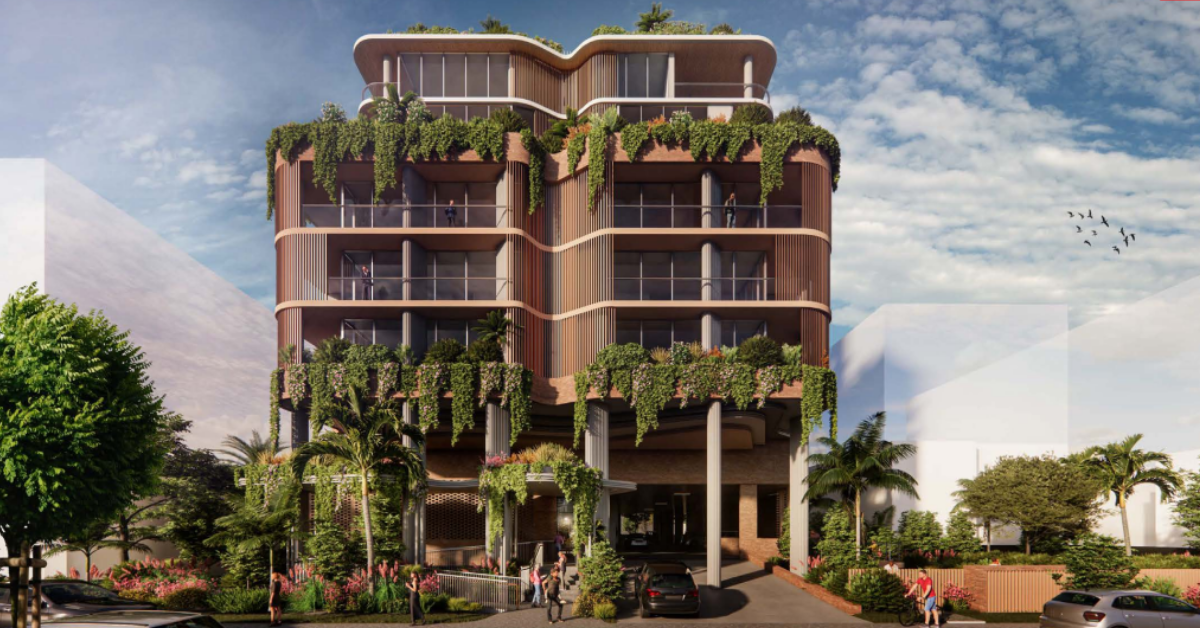
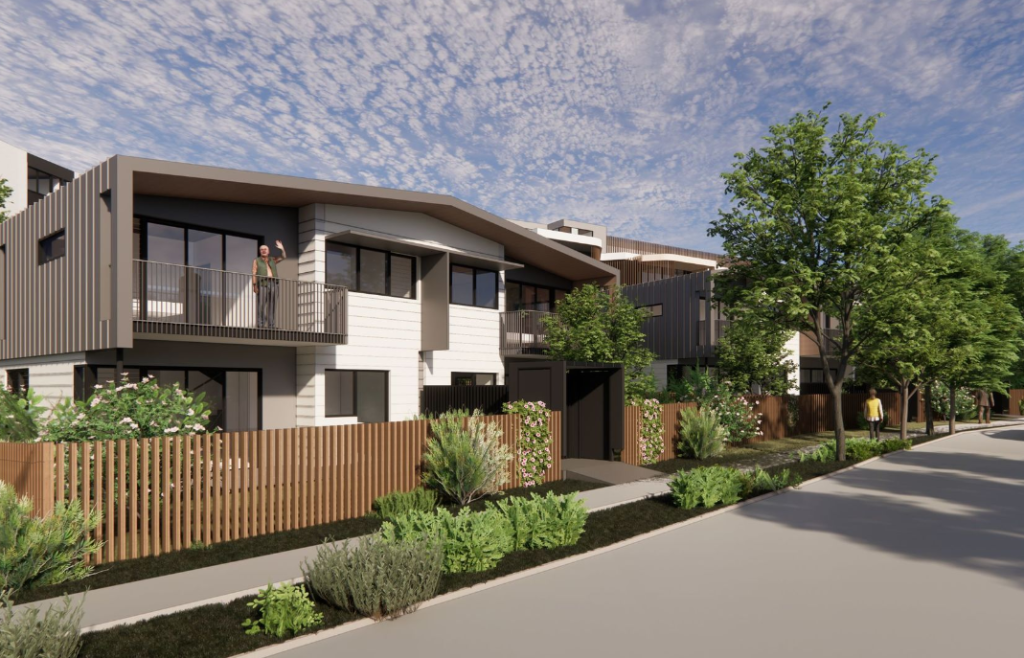
A proposal has been lodged for a nine-storey retirement facility in Toowong that aims to extend the leafy atmosphere of the neighbouring Memorial Park directly into a new high-rise residential space.
The application for the site at 1 Croydon Street and 9-15 Bayliss Street outlines a vision where the building does not just sit beside the park but incorporates it into the design. Architects from Jackson Teece have created a plan where more than 30 per cent of the site is dedicated to deep planting.
The design includes a large, landscaped courtyard at the entrance on Bayliss Street, with greenery cascading over the edges of the building levels above. This approach is intended to create a seamless visual link between the private residences and the public green space next door.
To respect the character of the street, the building is designed to appear as a five-storey structure when viewed from Bayliss Street. The upper levels are recessed toward the rear of the site, eventually rising to the full nine storeys adjacent to the park. The development would replace the existing structures on the 3,670-square-metre site.
Inside, the facility plans to house 53 independent living units tailored for seniors. The mix includes 32 two-bedroom units, 16 three-bedroom units, and five larger three-plus bedroom dwellings. Planners at Urbis noted that the project is designed to offer a balance of comfort and community connection. They emphasised that the inclusion of a wellness centre, dining areas, and various recreational amenities would support social interaction among residents.
The development proposes two levels of podium parking to accommodate the needs of residents and guests. The plans allow for 87 on-site car parking spaces. This allocation includes 70 spots specifically for residents, 15 for visitors, and two spaces designated for persons with disabilities.
The rooftop garden serves as another key feature, adding to the extensive landscaping proposed for the site. By incorporating dense planting on the Level 2 terrace and the roof, the developers aim to ensure the building contributes to the subtropical feel of the Toowong area. The project is currently awaiting assessment by the local council.
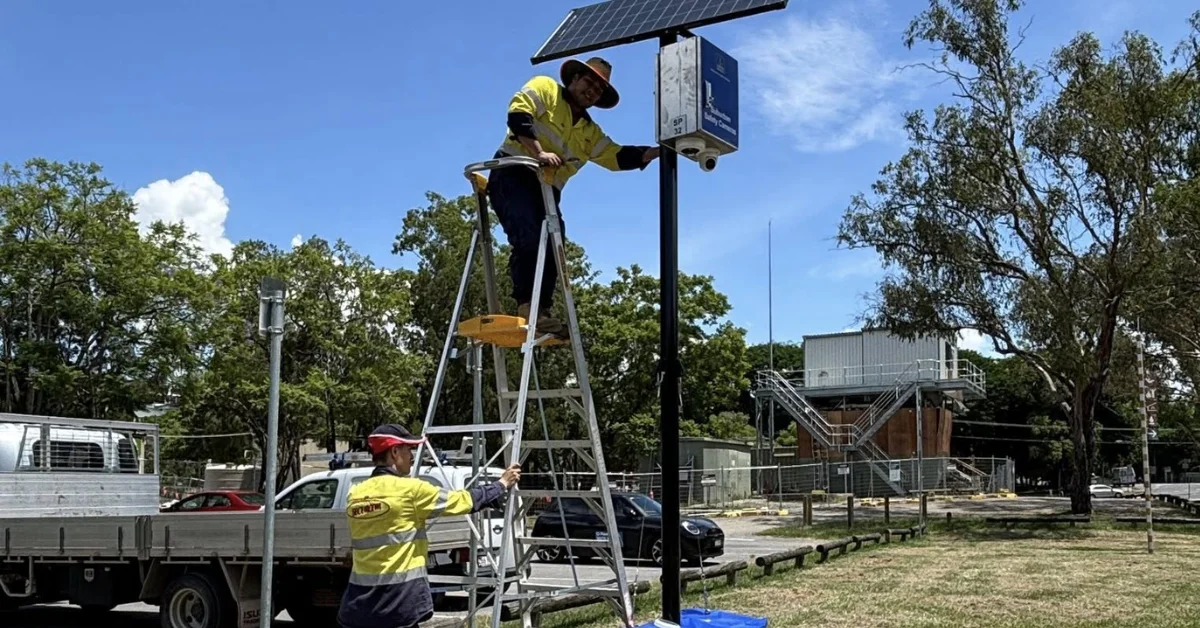
A new surveillance camera has been set up at Perrin Park near Taringa after residents voiced concerns about antisocial activity and recent incidents reported in and around the area.
Park Safety Measures Introduced After Resident Feedback
Local community members raised repeated concerns about behaviour in Perrin Park, with additional incident reports also noted by police. The volume and frequency of these concerns led to a formal review of safety conditions at the park.
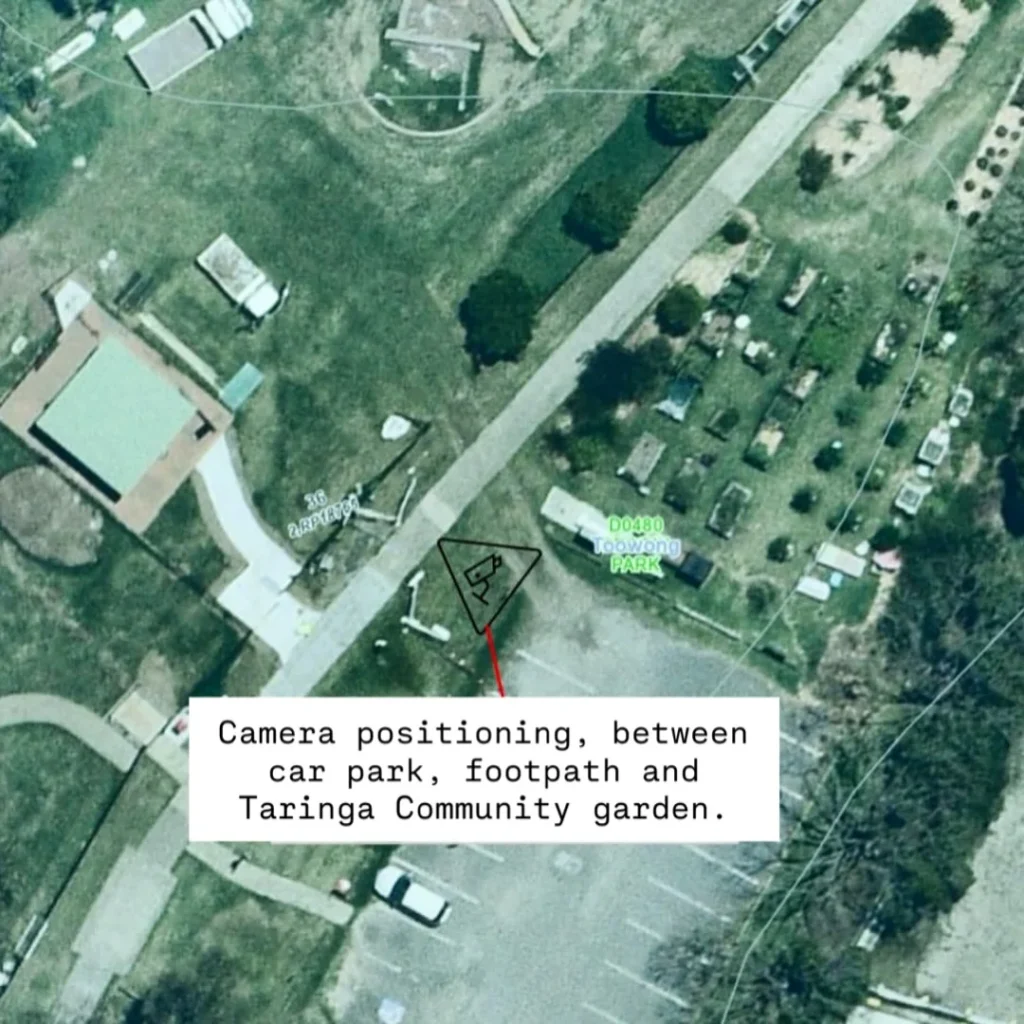
The park, which features a popular off-leash dog zone, is widely used by nearby residents for recreation and daily exercise. The Taringa Community Garden is also within the area.
Camera Added After Site Review
After evaluating the location, authorities approved a position for a mobile suburban safety camera. The device has now been installed and integrated into a broader CCTV system that includes roughly 3,800 cameras across the network.
Officials say the camera is intended both to discourage disruptive conduct and to assist police when monitoring activity.
Prior to the camera rollout, lighting upgrades were carried out at Perrin Park, including new illumination within the dog off-leash section. These works were described as the first stage of broader safety enhancements for the space.
Online discussion about the new camera has produced mixed reactions. Some locals welcomed the move, saying it should help improve safety and reduce unwanted behaviour. Others questioned the need for surveillance in a public park and raised privacy concerns.
Several commenters also asked what specific types of incidents prompted the decision, showing varied opinions about safety priorities in shared public areas.
The surveillance camera is now operating at Perrin Park, complementing the recently completed lighting upgrades in key sections of the grounds. Both measures were introduced in response to community reports and safety concerns.
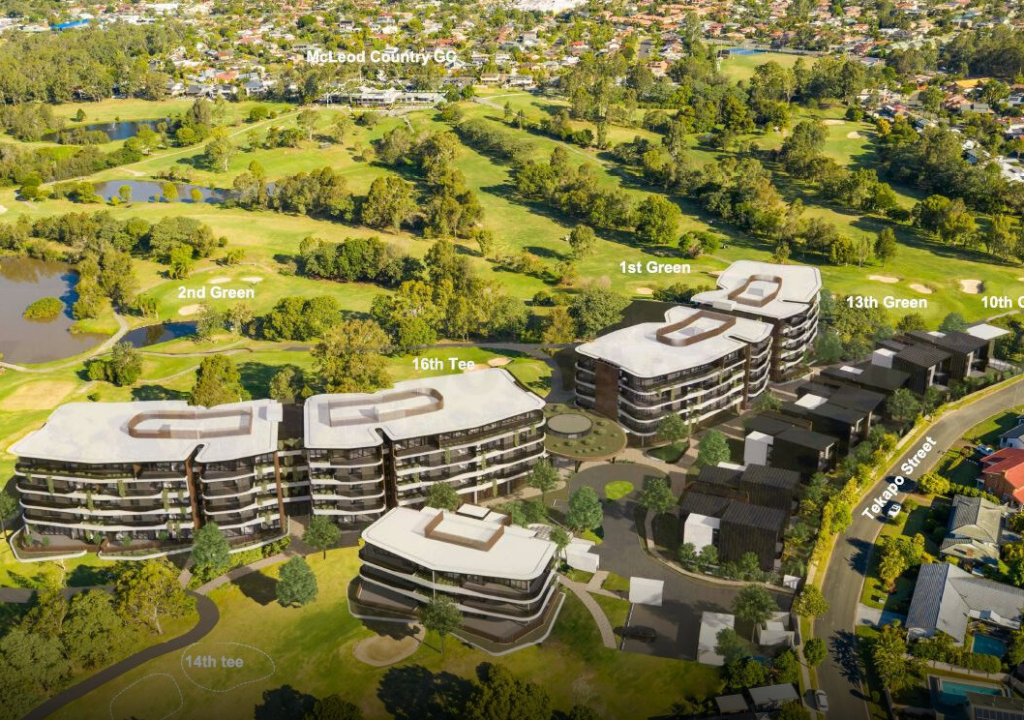
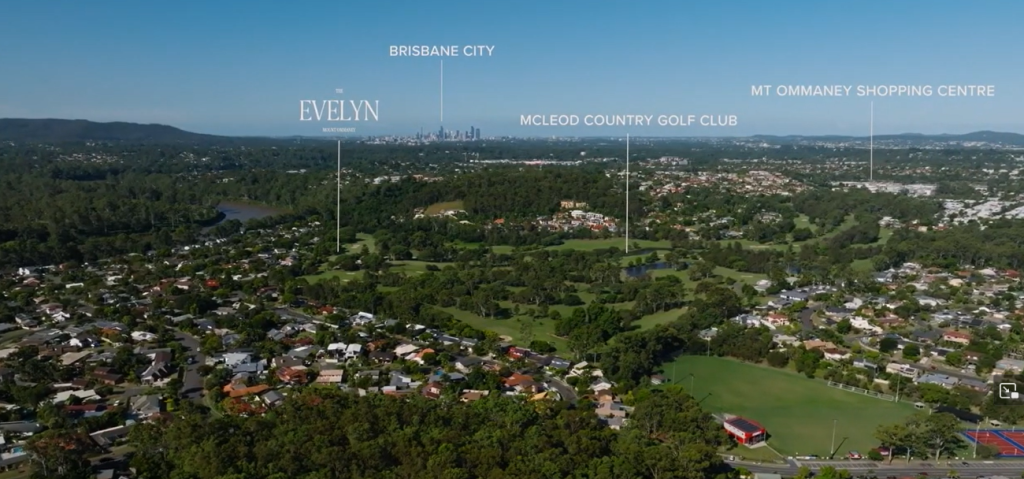
In golf, the course stays the same, but the way you play it changes. Distance, terrain and timing all call for different choices as the round unfolds. That idea sits neatly behind The Evelyn, a new retirement community taking shape beside the McLeod Country Golf Club in Mt Ommaney, at a time when many Australians are quietly rethinking what home should look like later in life.
Across the country, that rethink is already underway. National research shows that 26 per cent of people over 55 have already moved into housing better suited to how they live today, while another 29 per cent are actively considering it. Data also shows that one in five Australians over 65 requires help with property maintenance.
When the Family Home Stops Fitting
Against this backdrop, downsizing has steadily become something closer to recalibration. Ease of living, reduced upkeep and flexibility now rank ahead of financial pressure as reasons older Australians consider a move.
Like changing clubs mid-round, it is less about starting again and more about adjusting approach. People are not necessarily seeking smaller lives, but homes that allow them to stay active and connected, without the physical and mental load that can come with maintaining a large family property.
Evelyn and a Different Way of Living
Set within a golf course environment, The Evelyn reflects that shift in practical ways.
Residents live independently in private apartments and townhouses, while maintenance across homes and shared spaces is handled within the village. An on-site Village Manager and a 24-hour response system provide support when needed, without intruding on daily routines.
Photo Credit: Aura Holdings
Shared facilities are designed to be used naturally rather than formally programmed. Residents can join activities, socialise casually or simply keep their own rhythm. Like a clubhouse, the spaces are there to support connection without obligation.
Photo Credit: Aura Holdings
The development comprises 126 residences, including apartments and townhouses, delivered in stages.
Photo Credit: Aura Holdings
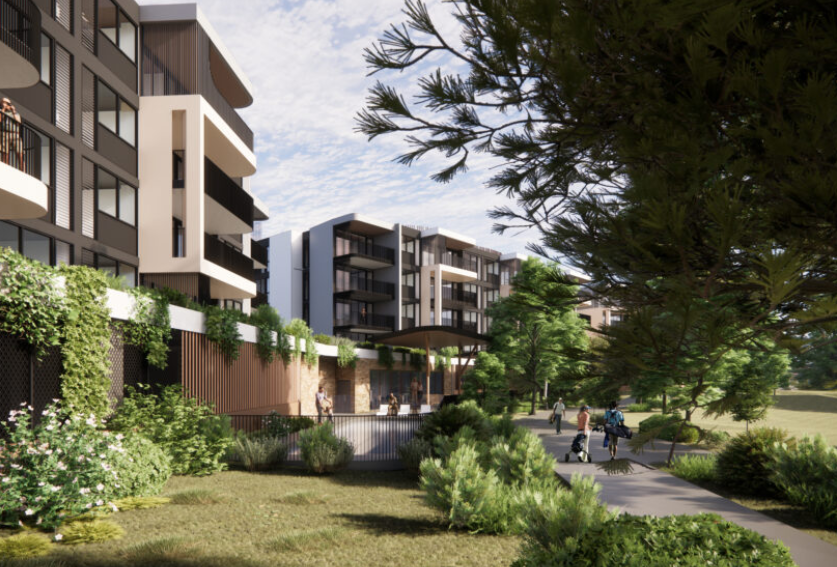
Designed by Marchese Partners | Life 3A, the community includes landscaped outdoor areas, a pool, gym, library, wine room and billiards room, all set within the grounds of the golf course.
Photo Credit: Aura Holdings
Shared facilities and communal areas are designed to be used naturally rather than programmed heavily. They offer a place to gather, linger or pass through, depending on the day. Connection is available, not compulsory.
The Role of Golf Beyond the Game
Golf’s presence here is not incidental. Golf courses, by their nature, act as large, stable green buffers within suburban environments. They offer visual openness, reduced noise and opportunities for restoration that are increasingly recognised as important for mental health.
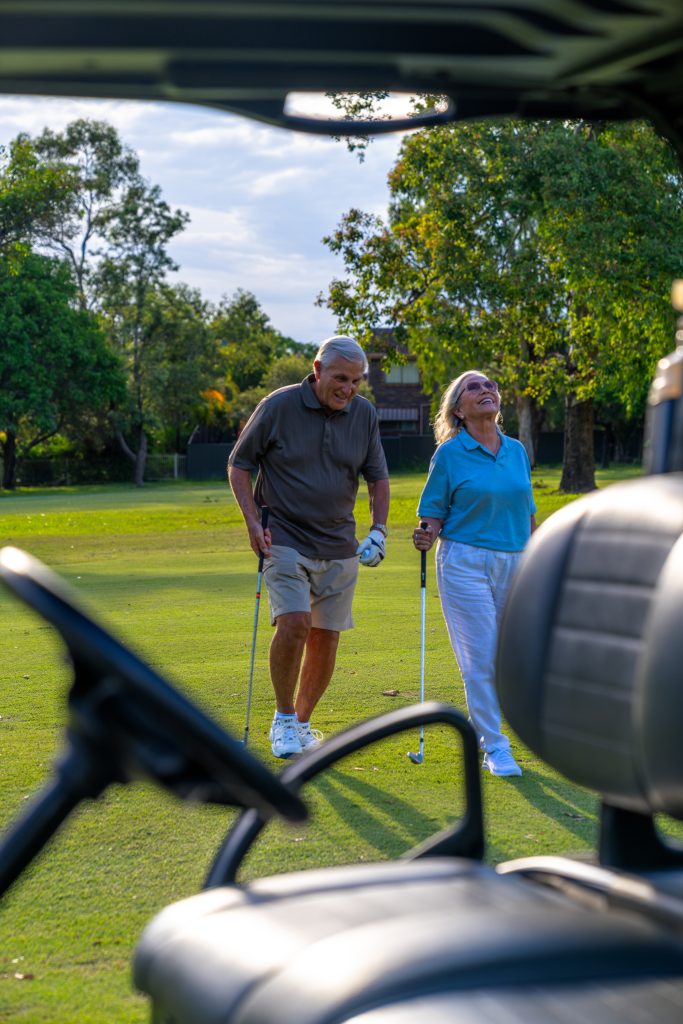
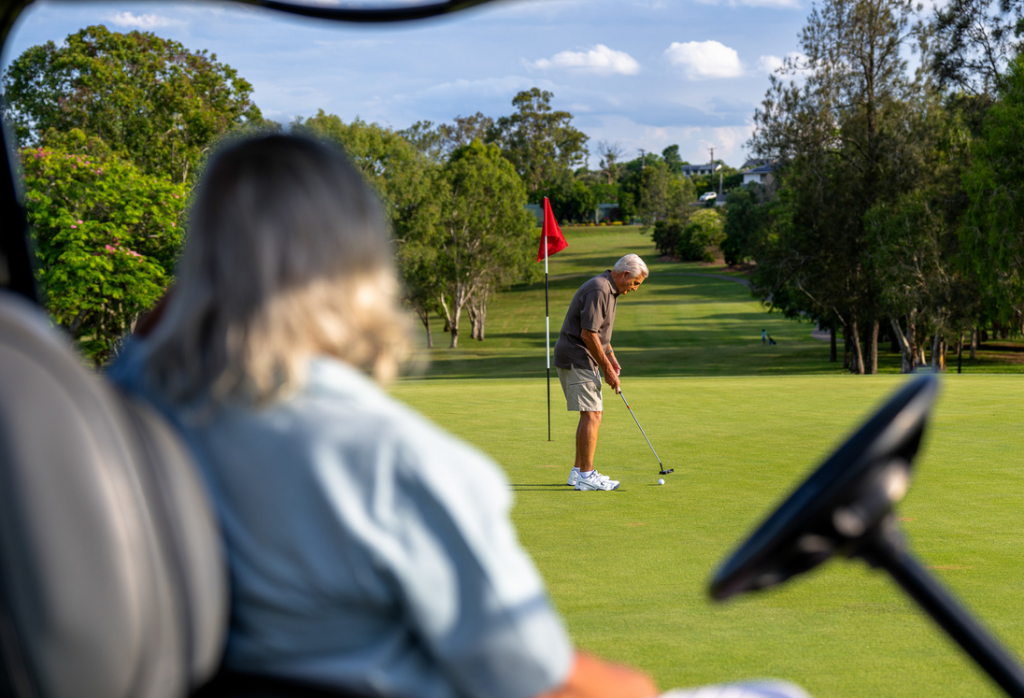
While not everyone plays, research increasingly points to golf environments as supportive of healthy ageing in broader ways. Studies examining golf participation among older adults have found that the activity often delivers moderate-intensity physical movement, particularly walking, alongside cardiovascular and musculoskeletal benefits. Even when played at a lower intensity, golf has been shown to produce short-term improvements in cardiovascular profiles among older participants.
Photo Credit: Aura Holdings
What matters just as much is the social and environmental context. Golf courses function as ready-made walking networks and social landscapes. People walk the fairways, meet others at the clubhouse, or simply move through open green space as part of daily routines. The Evelyn’s location within the McLeod Country Golf Club places residents adjacent to that ecosystem, whether they play the game or not.
The benefits of this setting extend beyond activity alone. A growing body of research, including Australian longitudinal studies, has linked exposure to green space with better mental health outcomes. More recent research focusing on mid-to-older adults has strengthened the evidence, showing associations between access to public green space and improved mental wellbeing over time.
The Evelyn’s proximity to the McLeod Country Golf Club taps into that reality, embedding the community within an active, established setting rather than isolating it from the surrounding suburb.
That everyday rhythm matters as people get older. Familiar places, regular movement and casual interaction are often what sustain wellbeing over time.
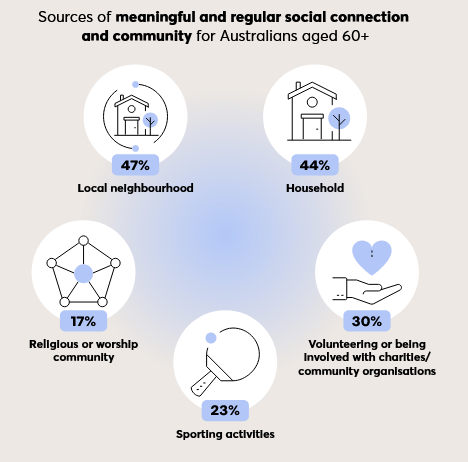
Infographic from Meaningful Aging Australia
McLeod Country Golf Club President Diane Lally said the partnership was about more than development. “The Evelyn represents more than a new retirement community — it represents the long-term sustainability of the McLeod Country Golf Club. This partnership allows us to strengthen our future, maintain a premier course, and continue to serve our members and the wider community.”
Housing That Supports How People Live
Research into retirement living models suggests that where and how people live can influence how active and socially engaged they remain. Communities designed around accessibility and shared space tend to support regular movement and interaction, while reducing some of the practical pressures of home ownership.
By reducing barriers to physical activity and providing access to fitness and recreational facilities, retirement communities help residents remain approximately 15 per cent more frequently active than those living independently in the community. Residents are also 20 per cent less likely to be hospitalised after entry.
Mt Ommaney itself offers a balance many retirees value. Established parklands, river views and shopping centres sit alongside strong transport links to the Brisbane CBD. For long-term locals, staying close to familiar places often matters as much as changing how they live.
The Evelyn allows for that continuity. It offers an option to remain within the same neighbourhood while adapting housing to better suit changing needs. It is a shift in position rather than a change of course.
Who Is Behind The Evelyn?
Photo Credit: Aura Holdings
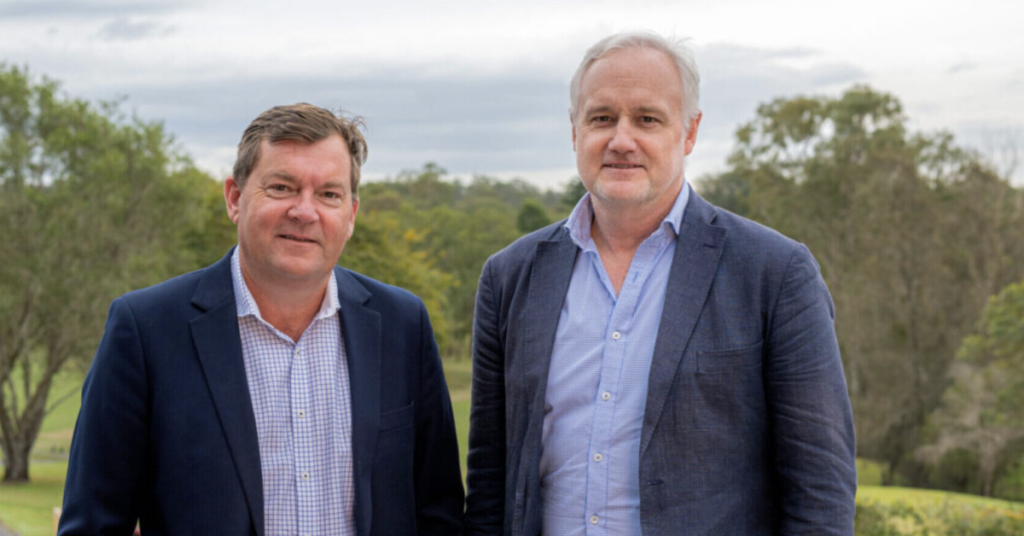
The Evelyn is owned and operated by Aura Holdings, a Brisbane-based retirement living company founded by Tim Russell and Mark Taylor. The company’s approach is informed by professional experience and personal perspective, with both founders having parents living in communities they operate.
“The Evelyn will set the benchmark for retirement living in Brisbane, delivering modern apartments, strong community connections, and a premier golf club setting, unlike anything else in the Centenary suburbs,” Aura Holdings Chief Executive Officer Sean Graham said.
“We are pleased to see … the community’s confidence in both the project and Aura’s commitment to the ongoing partnership with the McLeod Country Golf Club,” he added.
Playing the Long Game
Not everyone will choose this path, and many Australians will continue to age in place. What is changing is the range of options available and the way people think about them.
Photo Credit: Aura Holdings
The Evelyn reflects a broader shift in mindset. Life does not narrow as priorities change. It simply calls for a different approach. And sometimes, staying in the game means recognising when it is time to change clubs, not courses.
The Evelyn has emerged within that moment, amidst a gradual shift rather than a rush. People are not abandoning the course, they are choosing a different club to use.
Published 2-January-2026.
Aura Holdings is a proud Promotional Partner of Brisbane Suburbs Online News
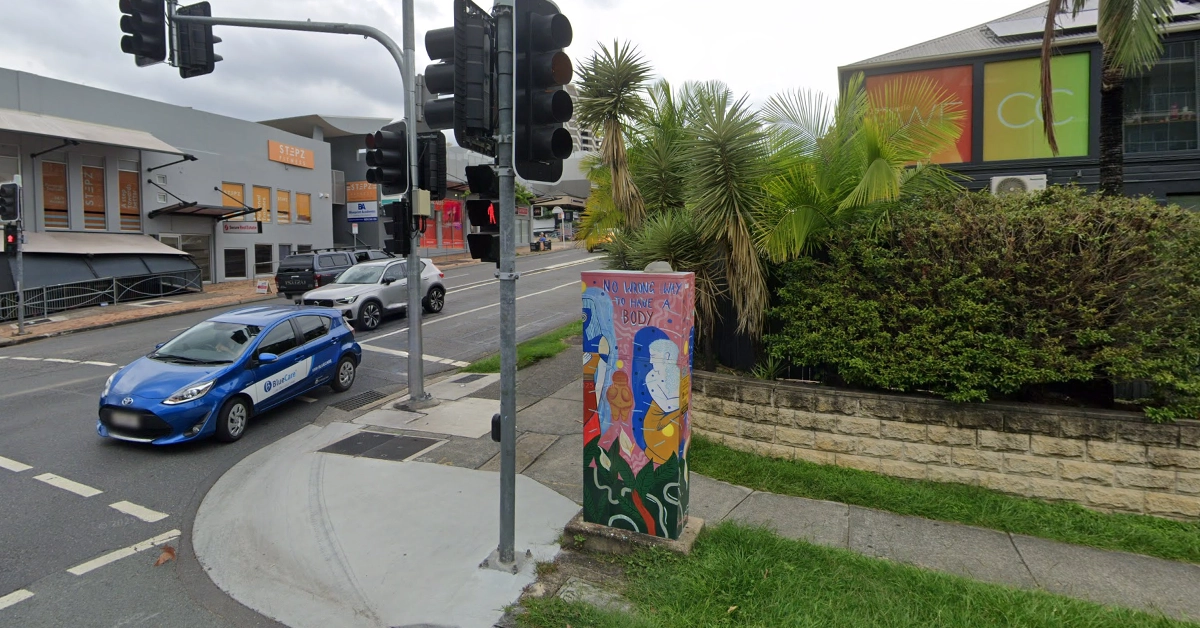
The streets of Toowong have been transformed into an open-air gallery, with local residents painting vibrant artworks on traffic signal boxes throughout the suburb. These eye-catching installations celebrate everything from local stories to community connections, turning everyday street furniture into conversation starters.
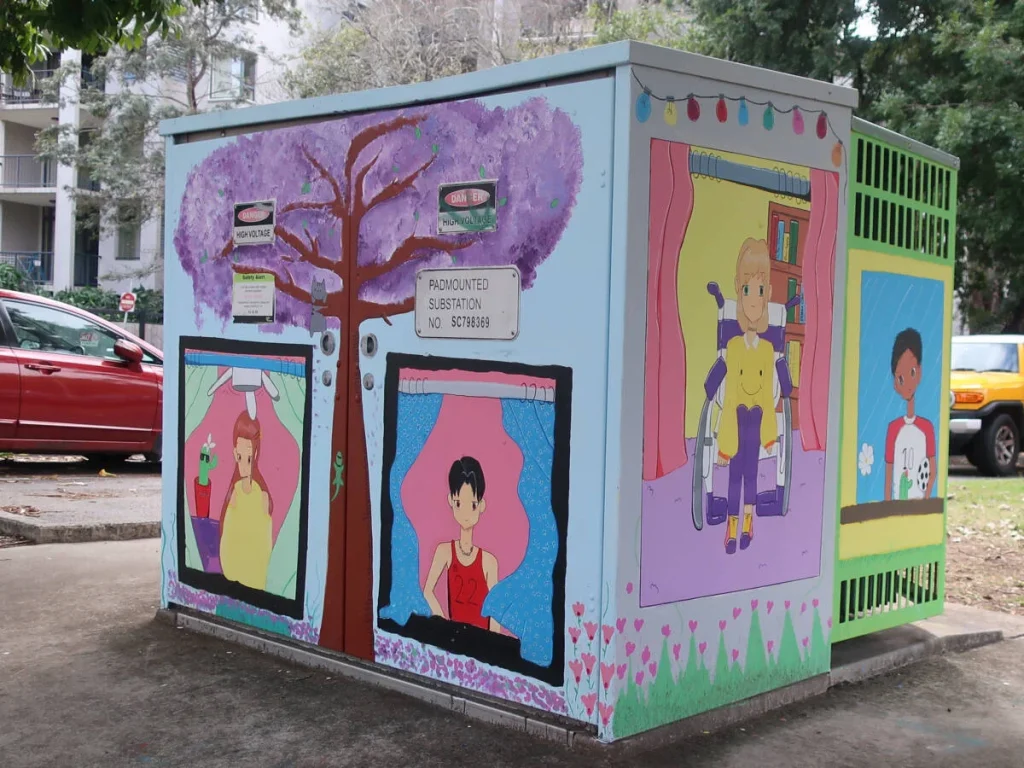
At the corner of Coronation Drive and Booth Street, artists Matisse Raphael and Aya Stronach have transformed an Energex padmount transformer into an imaginary apartment building. Painted in June 2022, the artwork features multiple window panels, each framing diverse characters who peer out or sometimes in, representing Toowong’s cosmopolitan community. A flowering jacaranda filled with local wildlife completes the scene, capturing the vibrancy of this inner-Brisbane suburb.
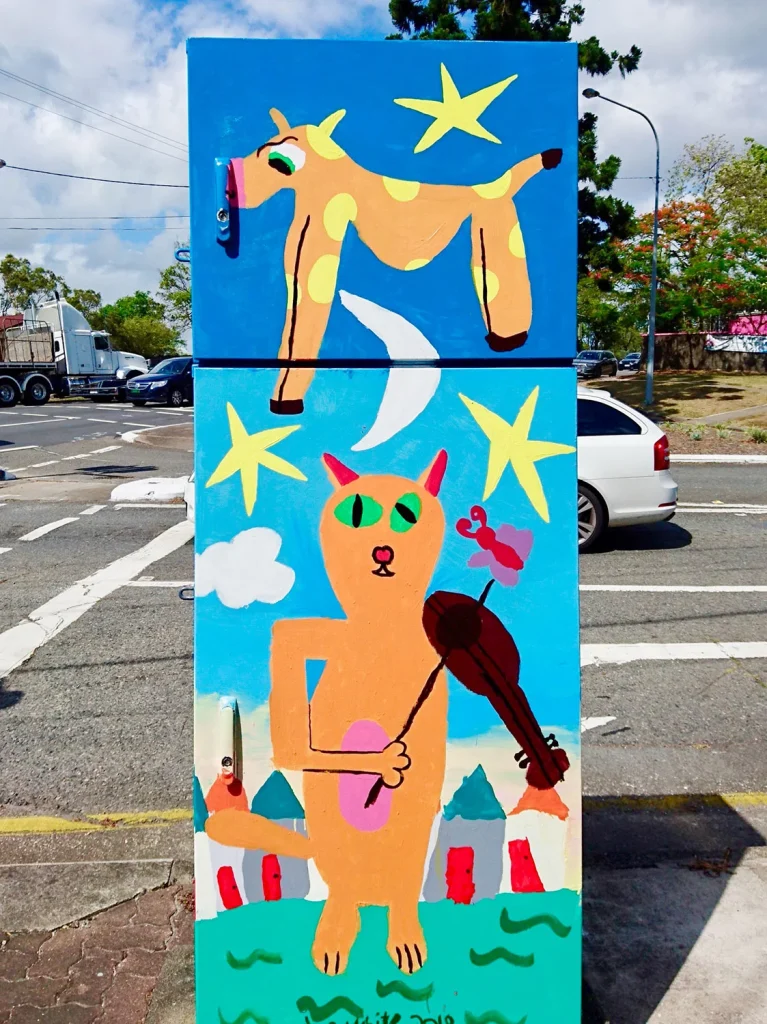
Created by eight-year-old Alice White in December 2018, this design at the intersection of Milton Road, Croydon Street and Morley Street takes inspiration from the nearby Cat and Fiddle shopping centre. The artwork features a possum dressed in Toowong School uniform alongside colourful Queenslander houses and a sunset characteristic of local skies. The piece earned a nomination for Best 12 and Under.
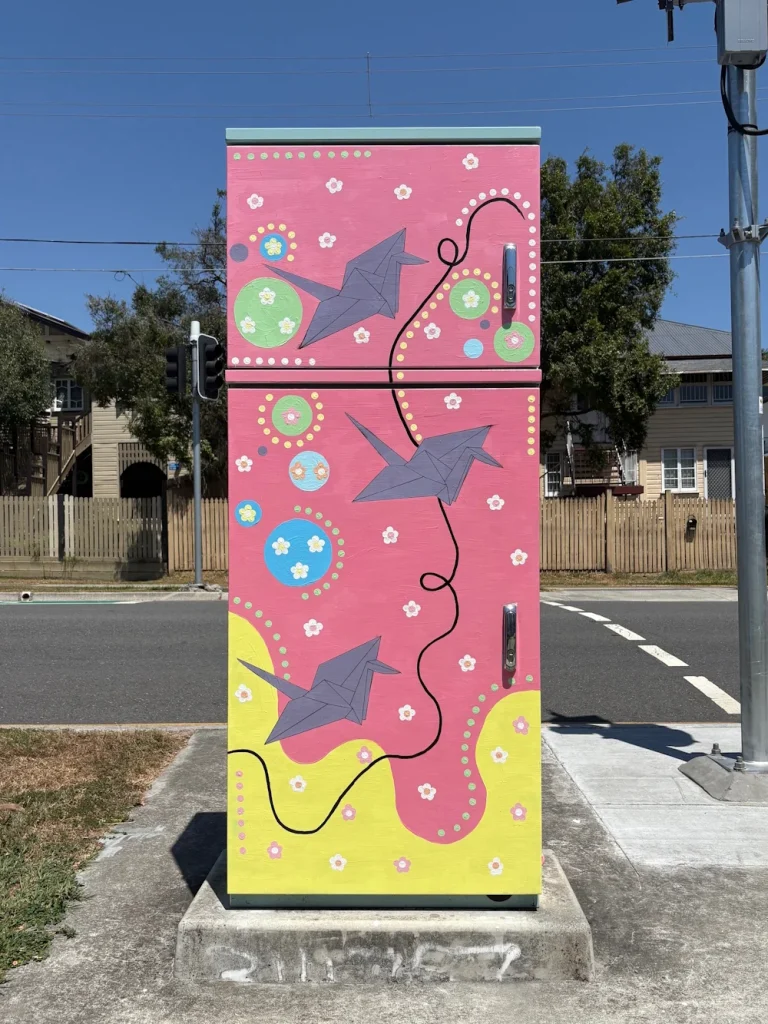
Located at the Sylvan Road pedestrian crossing near Kate Street, Maleea Holbert’s August 2025 design depicts origami cranes drifting through the sky. Positioned directly in front of Toowong State School, the artwork aims to capture children’s imagination whilst providing a calming presence for parents and passers-by. Holbert drew inspiration from memories of making paper cranes in Japanese class.
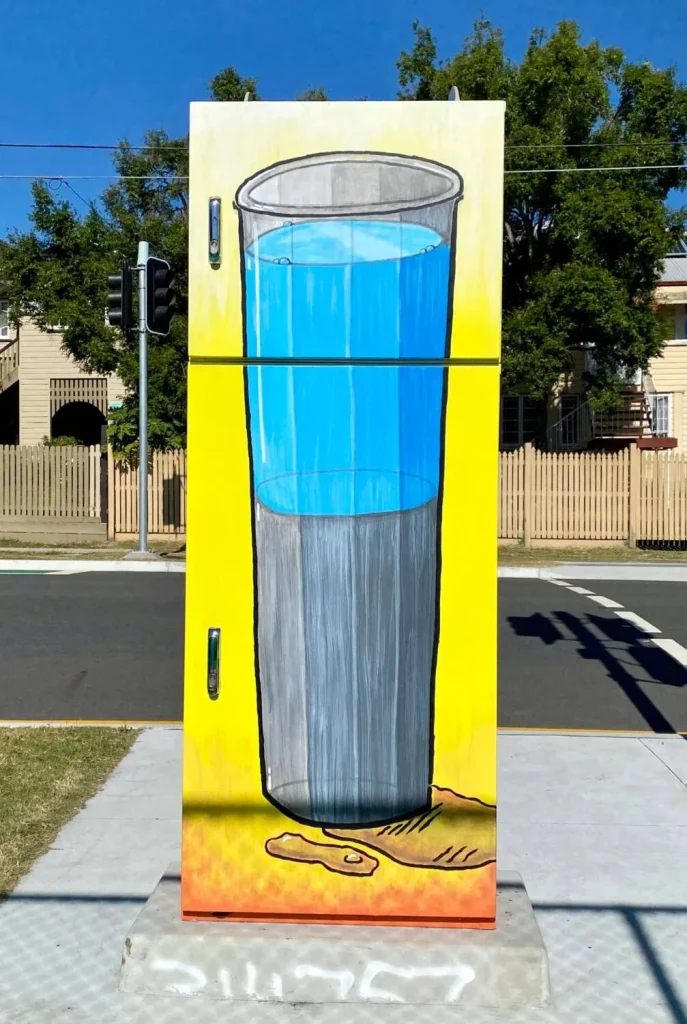
At the same Sylvan Road pedestrian crossing location (a previous artwork on this box), D.K. Perkins and Peta Thomson created this May 2021 piece asking the age-old question: is the glass half empty or half full? The design encourages viewers to look for silver linings and sparked from the family’s experiences during 2020. The artwork won Best 18 and Under in 2021.
Mira Westaway’s December 2016 artwork at the intersection of Moggill Road, Jephson Street and High Street combines her passions for ballet and fashion design with a Halloween twist. The piece earned nominations across multiple categories, including Overall Winner and both youth age groups.
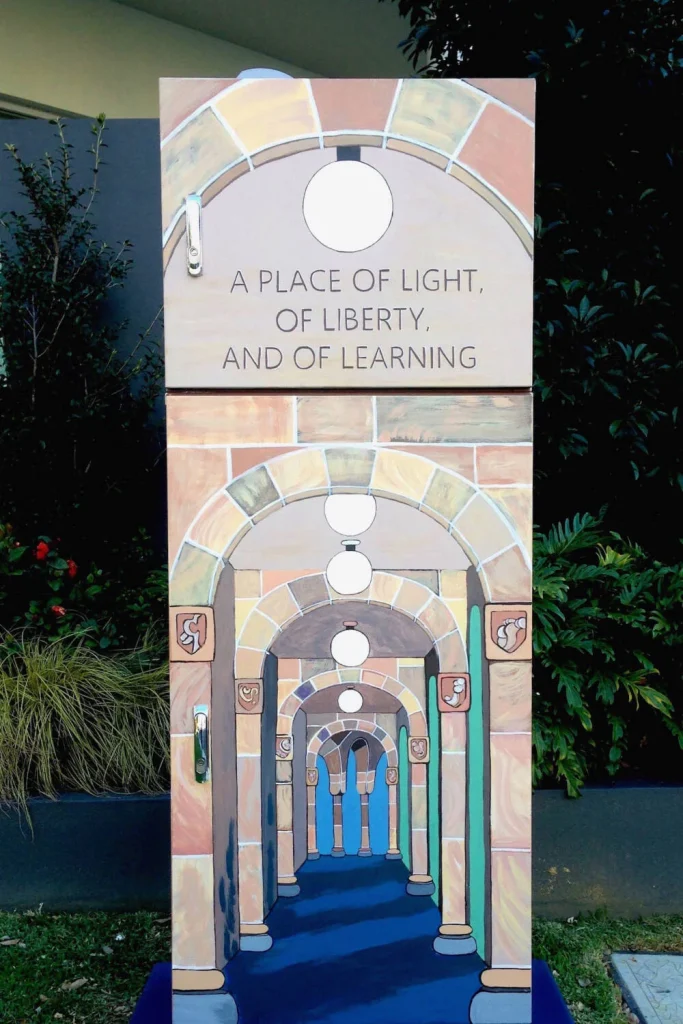
Leesl Ross brings the University of Queensland to Toowong’s streets with this October 2016 depiction of the university’s iconic sandstone walkway and arcade. Located at Brisbane Street and Glen Road, the artwork earned a nomination for Overall Winner.
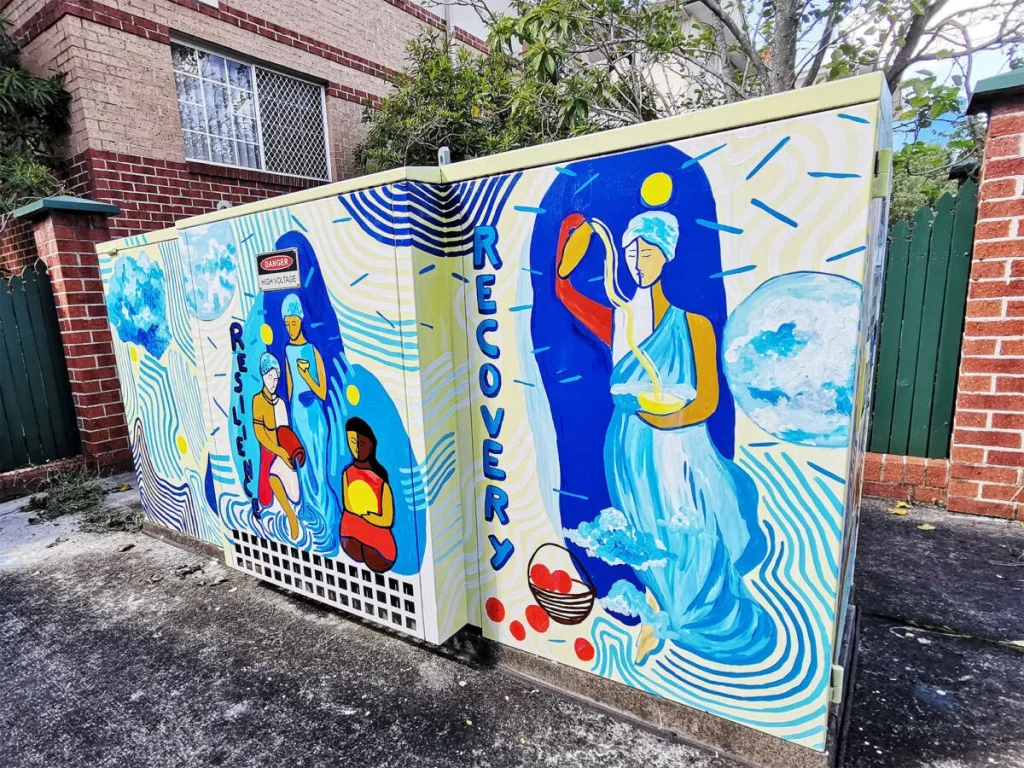
At Sherwood Road and Holland Street, Lisa Kelly’s April 2019 artwork promotes the message of Eating Disorders Queensland, a community-based not-for-profit organisation. The piece serves as a sister artwork to Kelly’s other box on the same street, designed to bring the community together and remind viewers that beauty comes in all forms. It received a nomination for the Energex Box Award.
Lisa Kelly’s September 2018 design at Sherwood Road and Jephson Street celebrates bodies of all shapes and sizes through depictions of various female forms throughout history. Created in recognition of Body Image and Eating Disorders Awareness Week, the artwork was produced in collaboration with The Eating Issues Centre and earned nominations for Overall Winner and Best Organisation.
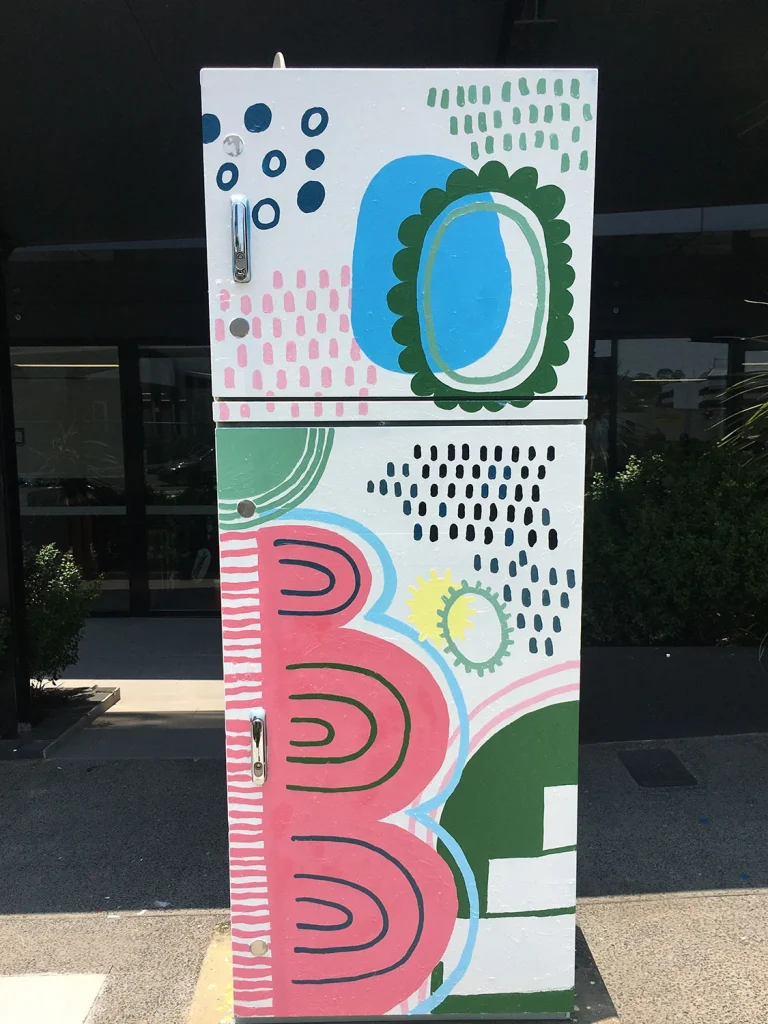
Kate Halling’s January 2020 design at Benson Street and High Street explores how people make sense of their surroundings through sensory experiences. Using varying colours, shapes and forms, the artwork responds to its location and aims to provoke a positive sensory experience for viewers.
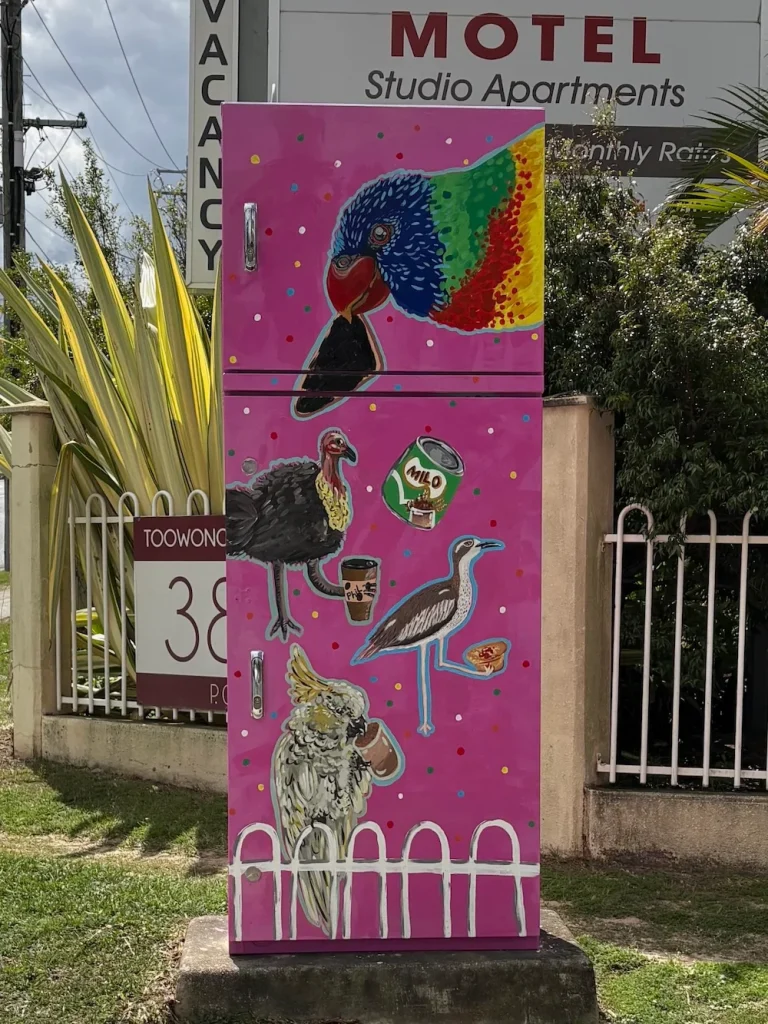
Gabrielle Cook, a disabled artist, created this July 2025 artwork at Jephson Street and Lissner Street featuring iconic Australian birds enjoying a picnic of recognisable Aussie snacks. Cook, working with collaborators Emma Blakey, Kyron Mayhew and Naomi Moore from the University of Queensland’s School of Social Sciences, designed the piece to invite playfulness and connection through accessible public art.
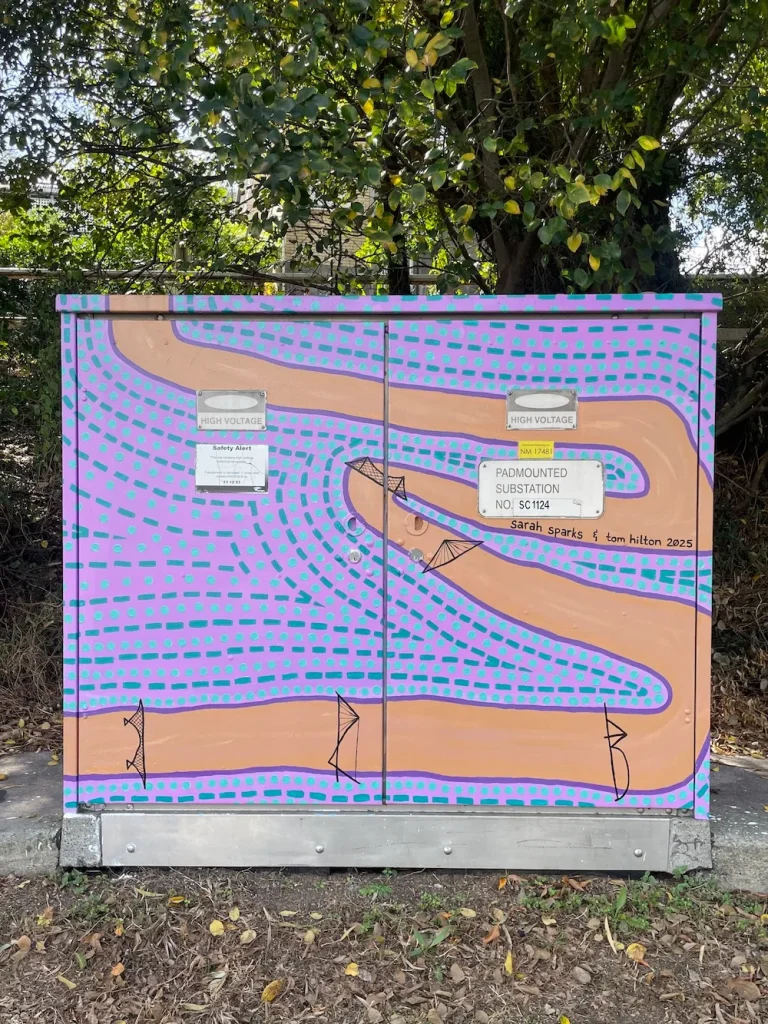
Sarah Sparks and Tom Hilton’s June 2025 design at 3 Valentine Street and Milton Road celebrates Brisbane from the river to the purple jacarandas and turquoise of South Bank lagoon. The artwork features six iconic bridges symbolising the merging of modern and historic Brisbane, with dashes representing walking tracks and dots representing the city’s tapestry of cultures. The title pays homage to the traditional name for Brisbane.
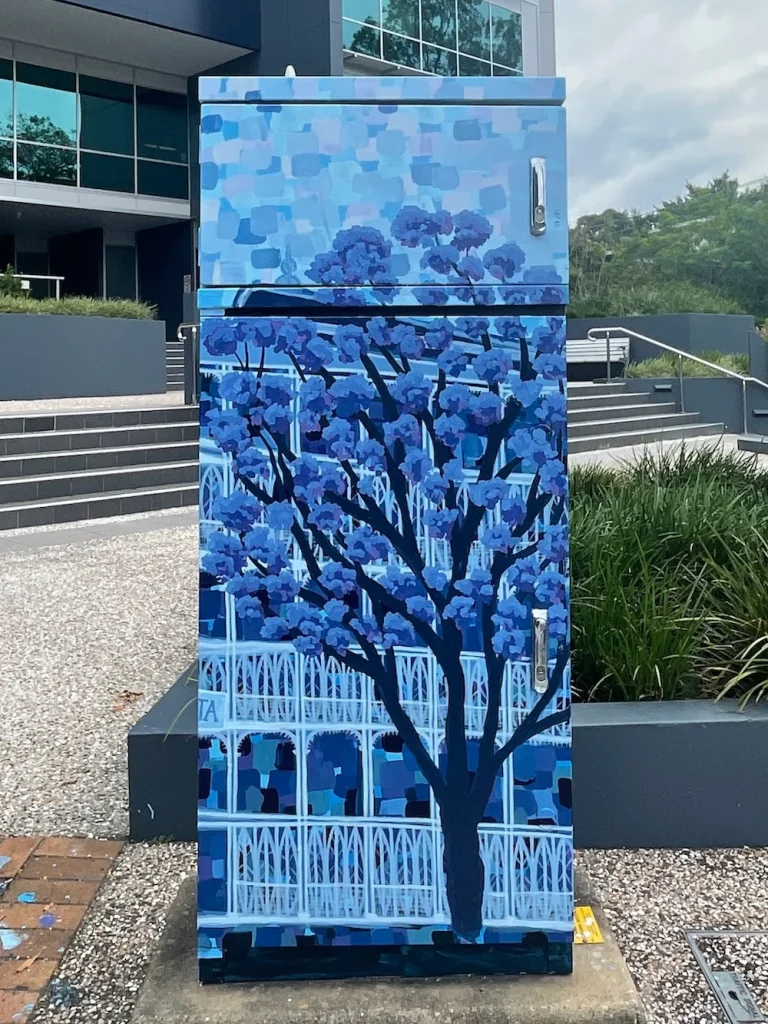
Emma Watt’s October 2024 artwork at the Coronation Drive pedestrian crossing and Booth Street captures jacaranda trees flowering against the heritage Regatta Hotel. The piece aims to evoke nostalgia and appreciation for Brisbane’s character, highlighting the short-lived beauty of spring before summer arrives and the intertwining of history and nature.
At Land Street and Patrick Street, Bronte McDonald’s December 2022 design draws from Ray Bradbury’s quote comparing cats to creative ideas. McDonald, working with assistants Ashleigh Barker and Bibi Bonfield, believes creating is as essential to human wellbeing as exercise and good nutrition, with CAT also serving as an acronym for Creative Art Therapy.
Santo Cavallaro’s June 2022 artwork at Land Street and Sylvan Road celebrates the special connection between nature and discovery. The design reflects on how spending time in nature can provide endless opportunities for learning, growth and peace, whether hiking through mountains or simply walking in a park.
About Artforce Brisbane
These artworks are part of Artforce Brisbane, an annual community art programme run by Brisbane City Council since 1999. The initiative invites Brisbane residents of all ages, abilities and backgrounds to paint original artworks on traffic signal boxes throughout the city’s suburbs. More than 5,000 volunteers have painted over 1,200 boxes across Brisbane, celebrating local characters, cultures, histories and landmarks while reducing graffiti and vandalism. The programme is managed by Artfully, a Brisbane-based arts consultancy specialising in public art and placemaking. Each year, approximately 80 painting opportunities become available as the council upgrades intersections and replaces old cabinets.
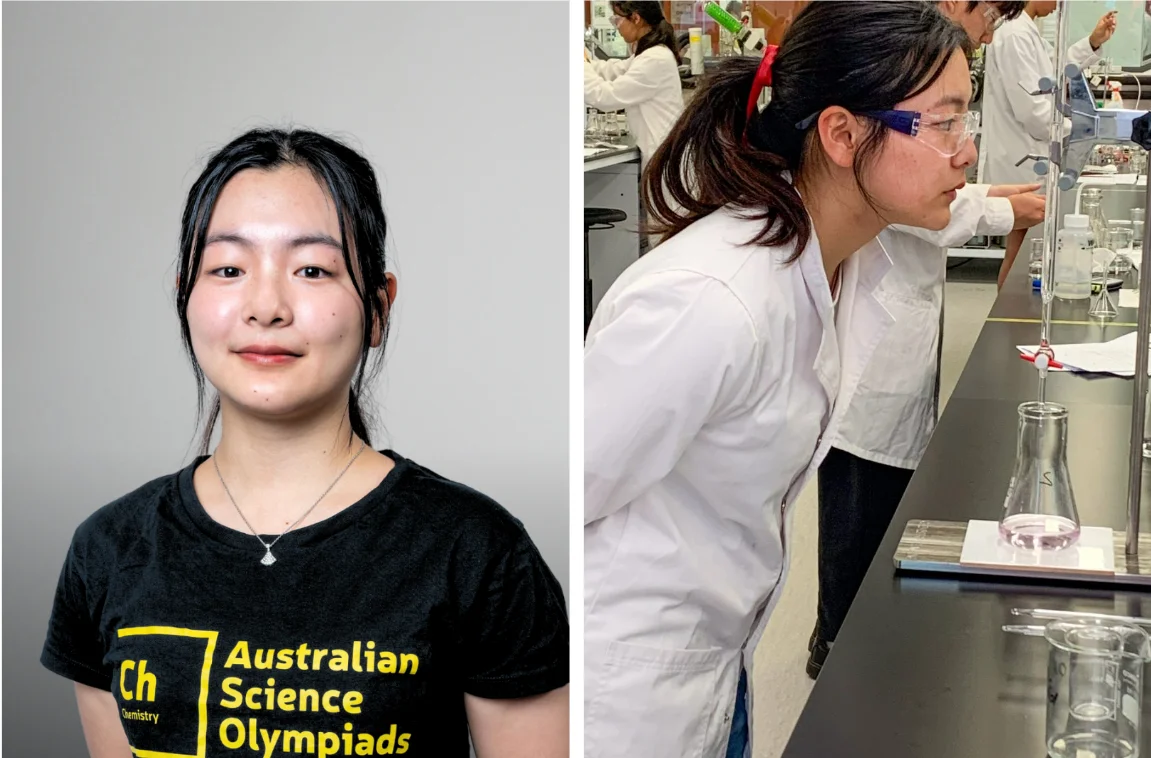
High-achieving student Katherine Lu was among Queensland’s top performers as ATAR results were released, with students in Toowoong part of the statewide cohort marking the end of Year 12.
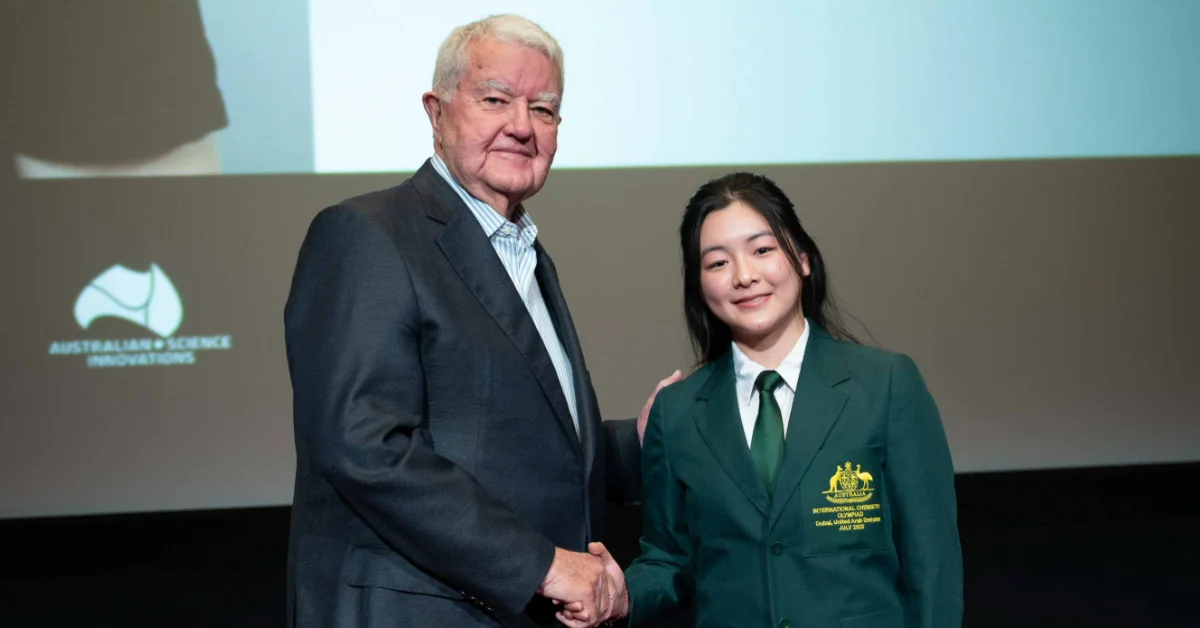
Katherine Lu recorded a perfect ATAR of 99.95, placing her among just 37 students statewide to achieve the highest possible ranking this year. She completed the International Baccalaureate (IBAS) program at the Queensland Academy of Science, Mathematics and Technology.
In addition to her ATAR result, Lu achieved an IBAS score of 45.75, the highest IBAS score recorded in Queensland, distinguishing her performance within an already competitive group of top achievers.
Photo Credit: Australian Science Innovations
A Select Group of Top Performers
Lu was one of a small number of students across Queensland to reach the top ATAR band. Other students who also achieved an ATAR of 99.95 included graduates from schools across Brisbane and regional Queensland, reflecting a broad distribution of academic excellence across the state.
Several students described the release of results as an emotional moment following years of sustained academic effort, with families and school communities sharing in the milestone.
Statewide ATAR Outcomes
Across Queensland, 30,167 Year 12 graduates received an ATAR when results were released on December 18. Nearly one in four eligible students achieved a rank of 90 or above, continuing a steady pattern of strong overall outcomes.
More broadly, 93.4 per cent of students completed a Queensland Certificate of Education, while others graduated with vocational qualifications or completed university subjects during senior schooling.
Caption: Katherine Lu and the team representing Australia at the 2025 Australian Science Olympiad. Photo Credit: Australian Science Innovations
Results Day Experiences
Students across Brisbane reported mixed emotions on results day, ranging from relief to quiet confidence. While some graduates closely tracked their final ranking, others focused on how their subject results aligned with future study plans.
For many students, early university offers or alternative entry pathways helped reduce pressure, allowing results day to be viewed as a checkpoint rather than a defining moment.
As students in Toowoong and across Queensland review their results, attention now turns to enrolments and post-school pathways. For top achievers like Katherine Lu, the ATAR release marks the culmination of years of academic commitment, while also opening the door to a wide range of future opportunities.
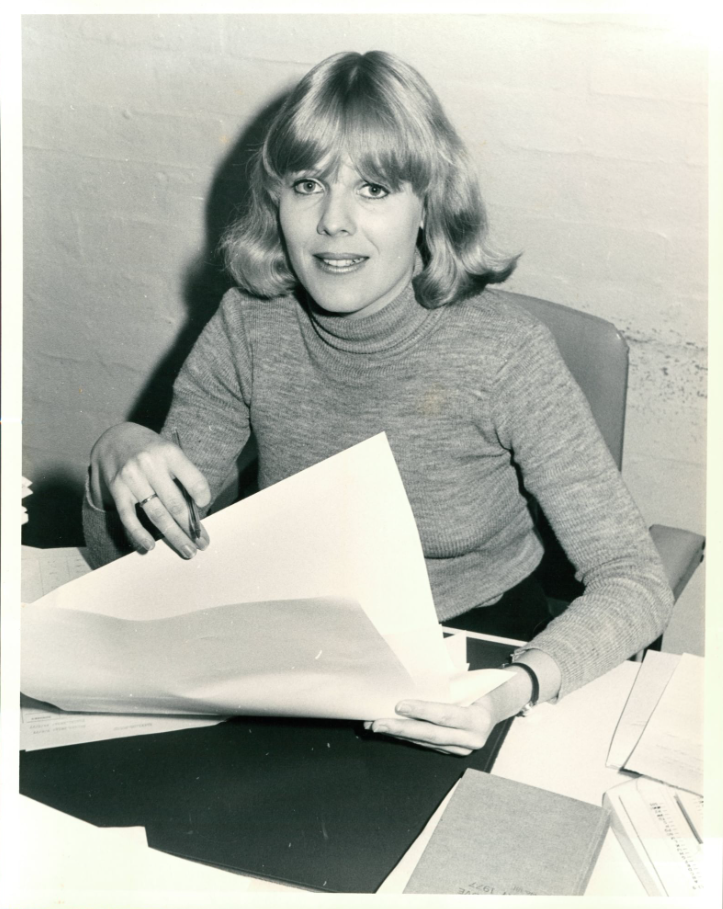
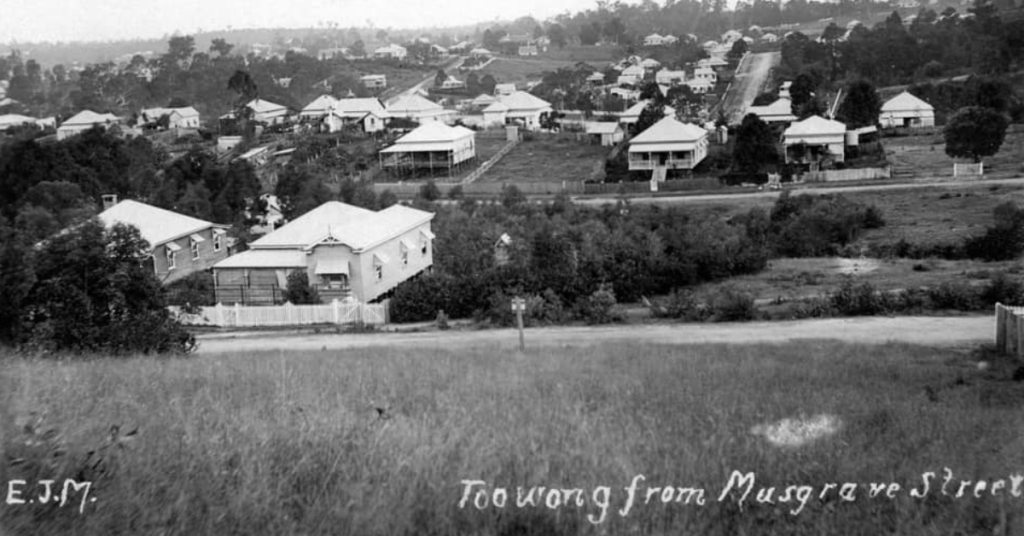
Robin McIlwain has seen Toowong evolve over the last few decades, and in this column shares her astute observations as well as her memories of the area since arriving in 1977.
Working in Toowong for nearly 5 decades, Robin has seen many buildings come and go, as the area evolves into servicing the continually growing high-density population. Few people enjoy seeing local institutions and meaningful structures disappear in their own backyard, though expanding cities require this it seems.
I first worked in Toowong in 1977. I didn’t know then that it would become the suburb I’d measure time by — not in years, but in buildings replaced, streets reshaped, and habits quietly lost and re-learned.
Back then, Brisbane’s town plan encouraged smaller walk-up apartment blocks. They were often built by Italian families who lived locally, knew the streets, and worked at a human scale. Today, most new residential development is high-rise. It’s not sentimentality to say that something changed with that shift — not just the skyline, but the way decisions are made. Multi-national commercial builders replaced local ones, and with that came a different pace and pressure.
The loss of older Federation and Colonial homes has been substantial, particularly in streets like Holland Street, Kensington Terrace and Glen Road. What’s often forgotten is that many of those houses were saved — not by stopping development, but by relocating them. Council policy at the time allowed viable homes to be moved rather than demolished. Many of them went on to second lives on acreage in Brookfield and Pullenvale.
I’ve always admired builders like Tony Findlay, who restored so many of those homes and placed them back into generous grounds — long driveways, jacarandas, tennis courts. It wasn’t just preservation; it was respect.
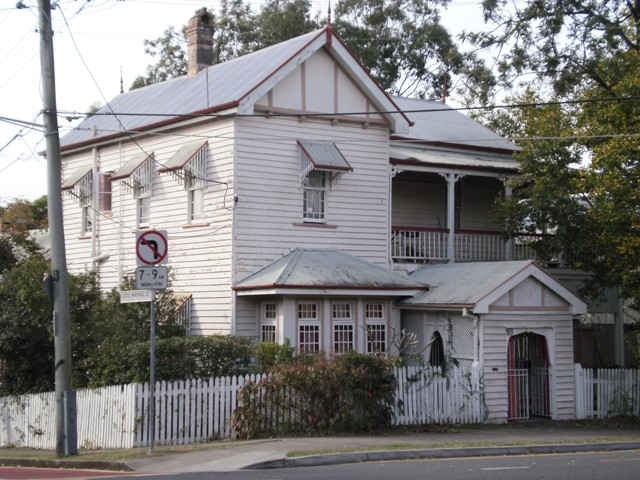
Still, it’s hard not to feel sadness when I see heritage-listed buildings like the old Toowong Library or Patterson House on Sherwood Road falling into disrepair. Obsolescence can be quieter than demolition, but it leaves its mark all the same.
Patterson House on 89 Sherwood Rd, Toowong Photo Credit: Brisbane City Council https://heritage.brisbane.qld.gov.au/heritage-places/1708 When the Toowong Library opened in April 1961, it was the largest suburban library in Brisbane. Its distinctive circular design gave the building a presence that extended beyond its function, establishing it as a valued civic landmark within the community. Photo Credit: Brisbane City Archives, BCC-15117 1960
What daily work has changed most is movement. When I was a young agent, you could usually park right outside a property. Clients could too. We left five minutes between appointments and arrived on time.
Now, we plan routes carefully. Sometimes a colleague drops us off and picks us up later. Often, we walk. Forty-five minutes between appointments is standard. Open inspections are more frequent and increasingly held out of hours — not just for convenience, but because parking itself has become a consideration in property access.
Just this morning, walking out of the post office in Ebor Lane, I noticed the vacant land beside the old Kratzman Hardware building. In the time I’ve worked here, that site has gone through two development cycles and is about to be redeveloped again. When I started in real estate, it was empty. Today, it’s empty once more. That alone tells a story about how cities evolve.
Did you know Toowong once had a bomb shelter?
Many locals remember the old blue Kratzman House at 50 High Street, where Peter Forrest ran his agency for years. Fewer people knew there was a Toowong bomb shelter in the front yard. It had been closed off, but we used it for archived files and, occasionally, curiosity got the better of us. I’ve often wondered what the developers thought when they finally uncovered it during demolition, long after most locals had forgotten it existed.
Those early years in real estate weren’t always polished or predictable. On my very first day in the industry in the 1970s, I was greeted not with a tidy office or a structured induction, but with a dead shark left on the doorstep — a moment that captured both the toughness of the era and the resilience you needed to last in it. Like many starting out then, I learned quickly, often the hard way, and those experiences stayed with me.
When my husband, Russ Cornish, opened L J Hooker Toowong in the then-new Commonwealth Bank building on Sherwood Road and Jephson Street, there were no traffic lights at that intersection. There was street parking on Jephson Street.
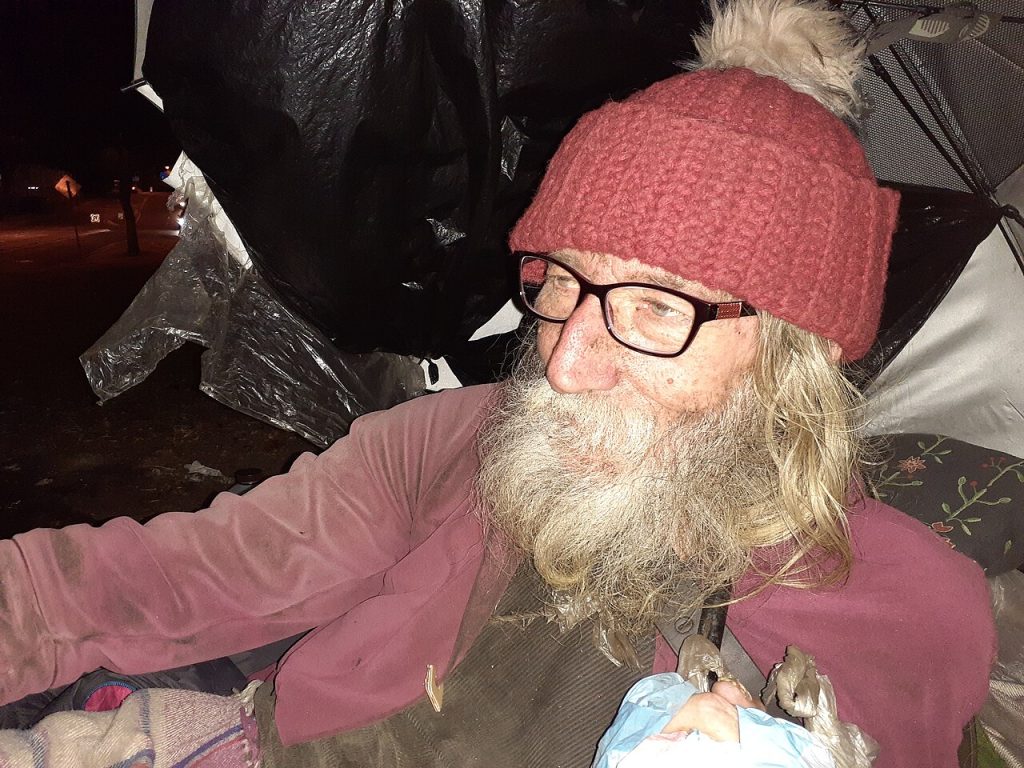
Did you know Ziggy once foiled a burglary?
We had an RSL hall and two service stations on the corners. Wilf Rooney ran one of them, and Ziggy — known to most locals — kept an eye on things at night.
Ziggy the bagman — a familiar sight on the street. Photo credit: Wikimedia Commons / Pony31 – Own work, CC BY-SA 4.0 https://commons.wikimedia.org/w/index.php?curid=91801036
He even foiled a burglary once. It’s hard to imagine that intersection now without lights, let alone with parking.
Trying to leave my mark
Over time, my work extended beyond day-to-day agency life. I became involved in advisory roles with government bodies and development groups, contributed to changes in training and licensing standards, and helped shape marketing approaches that were more research-led and buyer-focused. I was also fortunate to work on projects where understanding how people live informed not just how properties were sold, but how they were designed. All of that grew out of my years working in and around Toowong — the place where theory met real people and real homes.
One thing that hasn’t changed is Toowong’s cultural diversity. Being a university suburb has ensured that. The streets are still full of young people from all over the world, and that cosmopolitan energy continues to give the area its edge and its warmth.
What do I miss in Toowong?
Jim and Anne’s sandwich shop in Dr Clements Arcade. D’Angelo’s pizza and their veal scallopini. Brian Krebs Hairdresser — flamboyant, talented, and very much of his time, when big hair was everything.
This isn’t nostalgia for its own sake. It’s simply what you see when you stay long enough. Toowong keeps changing — and so do we, alongside it.
Editor’s Note: As Robin McIlwain retires from her role at Ray White Toowong, her vast local experience and range of stories need to see the light of day, and it is with that in mind that we hope to persuade Robin to write further columns for Toowong News.
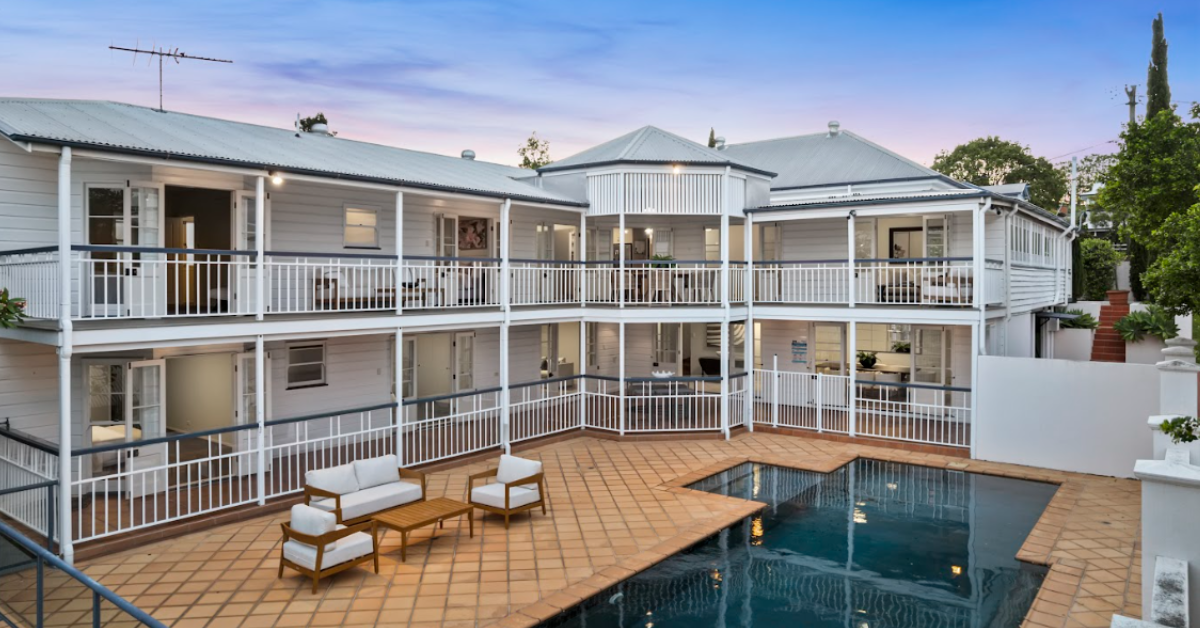
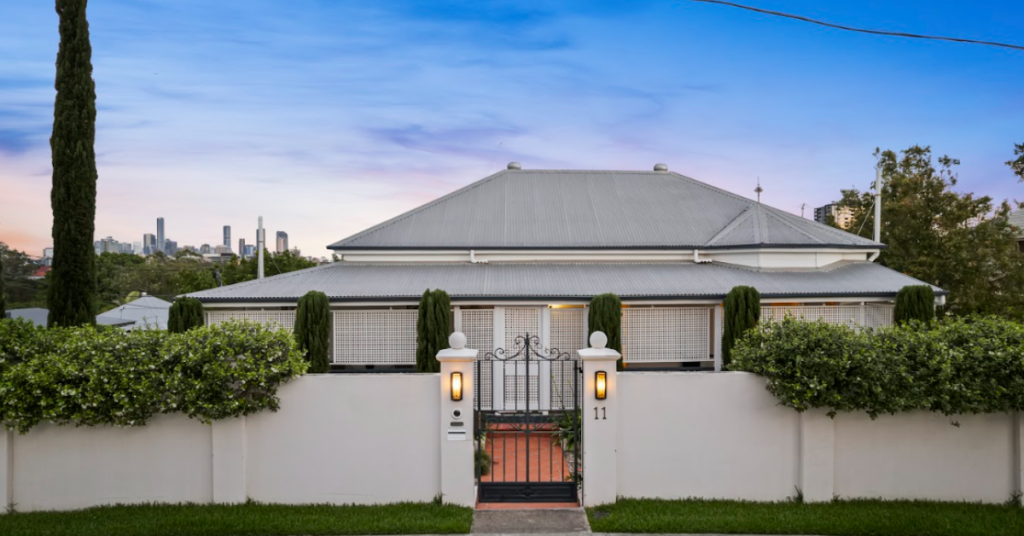
The residence at 11 Norwood Street sits on an elevated 814sqm block and is being marketed by Ray White Toowong selling principal Reuben Packer-Hill. Originally built around 1880, the property presents a unique chance for buyers to acquire a significant piece of Brisbane’s local history. The home has been held by the Armstrong family for nearly half a century, making this listing a notable event for the suburb’s property market.
Blending History with Modern Comfort
Photo Credit: Supplied
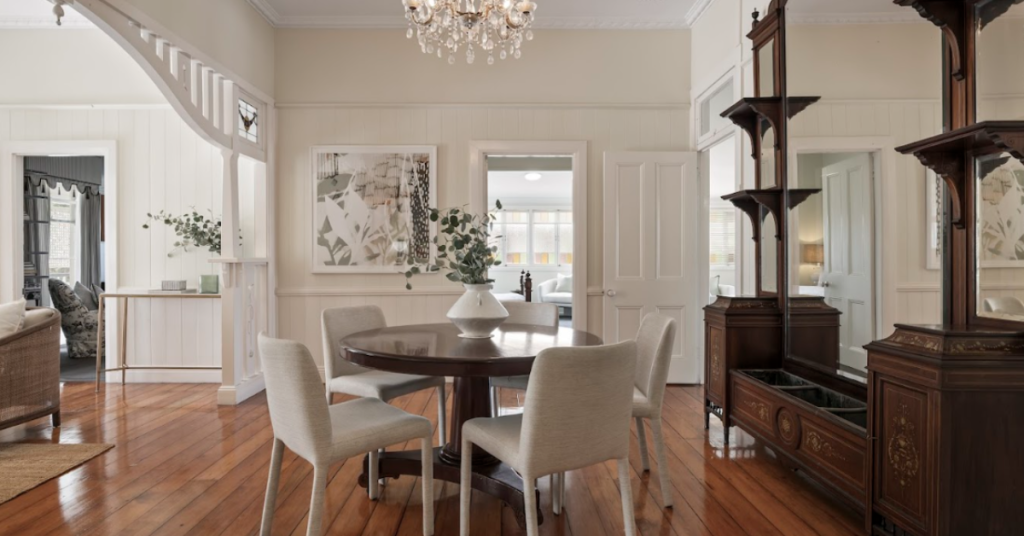
While the home retains its historic charm, it has been updated to suit contemporary needs. The structure features two architect-designed extensions that blend with the original 19th-century character. Key features include a latticed porch, high ceilings with detailed plasterwork, chandeliers, and polished timber floors.
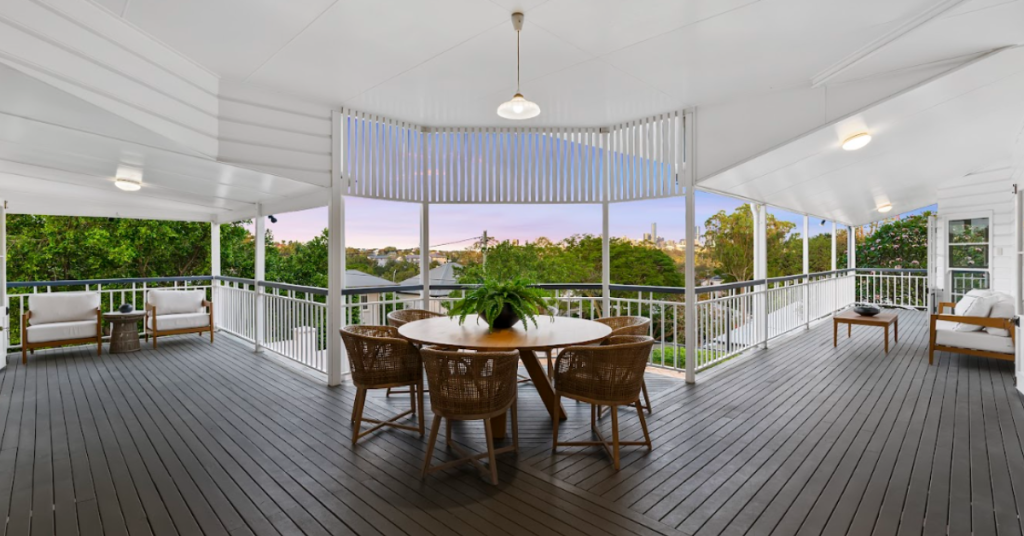
The layout is designed for large families, offering six bedrooms and seven bathrooms. There are multiple living spaces, such as a library, a formal dining room, and casual areas for relaxation. A veranda offers views of the city skyline and overlooks the swimming pool below. The owner, William Armstrong, noted that the vegetation around the home gives it a country feel despite looking out at the city.
Space for Everyone
Photo Credit: Supplied
The property includes a specialized “East Wing” that opens directly onto the poolside patio. This section of the house was designed to provide separation and privacy for extended family members, teenagers, or guests. With five of the bedrooms featuring their own ensuites, the house is well-equipped to handle multi-generational living arrangements.
A Long Family Legacy
Photo Credit: Supplied
Mr. Armstrong inherited the property from his great-uncle in 1969. Before that, his uncle had purchased the home from a doctor who both lived and ran a medical practice on the site. When Mr. Armstrong first took ownership, the house was being used as a rental property for several tenants.
Since moving in 46 years ago, William and Elizabeth Armstrong have raised their family there. They described the house as the heart of their family, where they celebrated milestones and watched generations grow up. Their grandchildren now affectionately refer to the property as the “pool house.”
After decades of memories, the Armstrongs have decided it is time to sell. Mr. Armstrong explained that while they would love to stay, health concerns regarding his hip and knees make the large home difficult to manage without installing a lift. They expressed hope that the new owners would cherish the home just as much as they have.
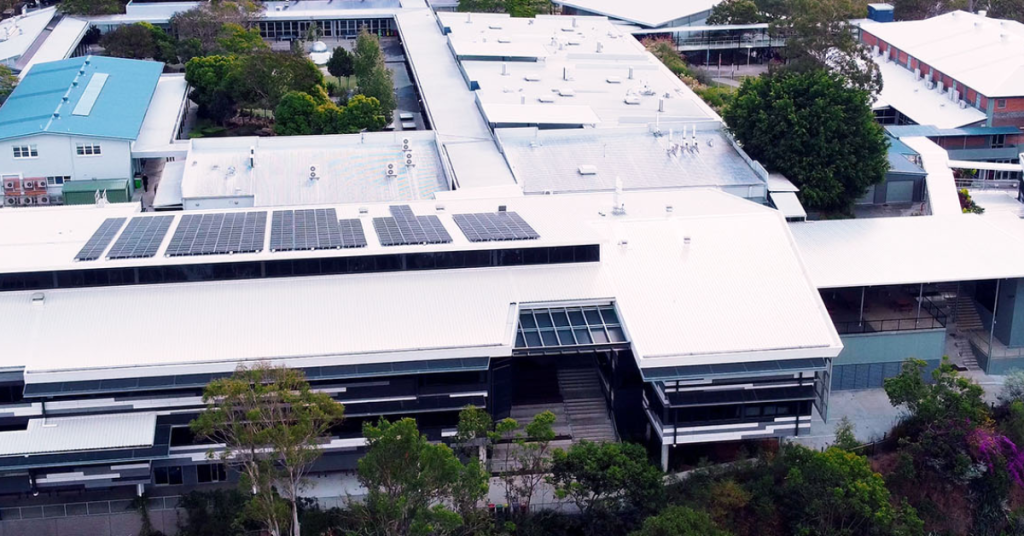
The Queensland Academy for Science Mathematics and Technology has outperformed institutions across Australia to secure the top spot in nearly every major academic performance category.
The Queensland Academy for Science Mathematics and Technology (QASMT), situated in Brisbane’s inner west, achieved leading results in 2023 and 2024. The data was released by the Australian Assessment Curriculum Assessment Authority (ACARA) on the My School website, which allows families to view how schools perform based on their specific situations. QASMT has a strong history of high achievement since it began. It was established under the Queensland government’s Smart State strategy to provide challenges for high-performing students.
The school is well known for its close relationship with the University of Queensland. This partnership was created to help students move easily into university life. Students at the Toowong campus can use university libraries and facilities, and some even finish university subjects while they are still in high school. Unlike many other state schools, the academy uses the International Baccalaureate framework instead of the standard curriculum.
Changes and Growth
The academy has grown significantly in recent years. While it originally served only senior students in Years 10 to 12, it expanded in 2019 to include Year 7 students. This shift turned the facility into a full secondary school.
To support the growing number of students, which jumped from around 600 to more than 1,200, the campus received major upgrades. These included a new STEM precinct and a Northern Learning Centre designed to look and feel like university lecture spaces.
While the Toowong school celebrates its success, the wider national results paint a different picture. Recent data shows that one-third of Australian students are not meeting reasonable expectations for reading and maths. About 10 per cent of students need extra help to catch up, while another 20 per cent are still developing their skills.
Education analyst Glenn Fahey from the Centre for Independent Studies expressed deep concern about these figures. He noted that students who fall behind early often struggle to catch up by the time they finish school. He suggested that the public should demand better results from the education system because the current approach is leaving too many children behind.
ACARA chief executive Stephen Gniel explained that the data on the My School website helps the community understand the value of each school. He pointed out that while there were small improvements in numeracy for students in Years 5, 7, and 9, there is still a gap for students in regional and remote areas. He emphasised the need for a collective effort to support disadvantaged students.
Teachers Professional Association Queensland president Scott Stanford described the results as a job well done for high-performing schools. He viewed the test as a snapshot in time that indicates whether getting back to basics in teaching is working. He added that if teachers are instructing correctly, the benefits should show in these assessments.
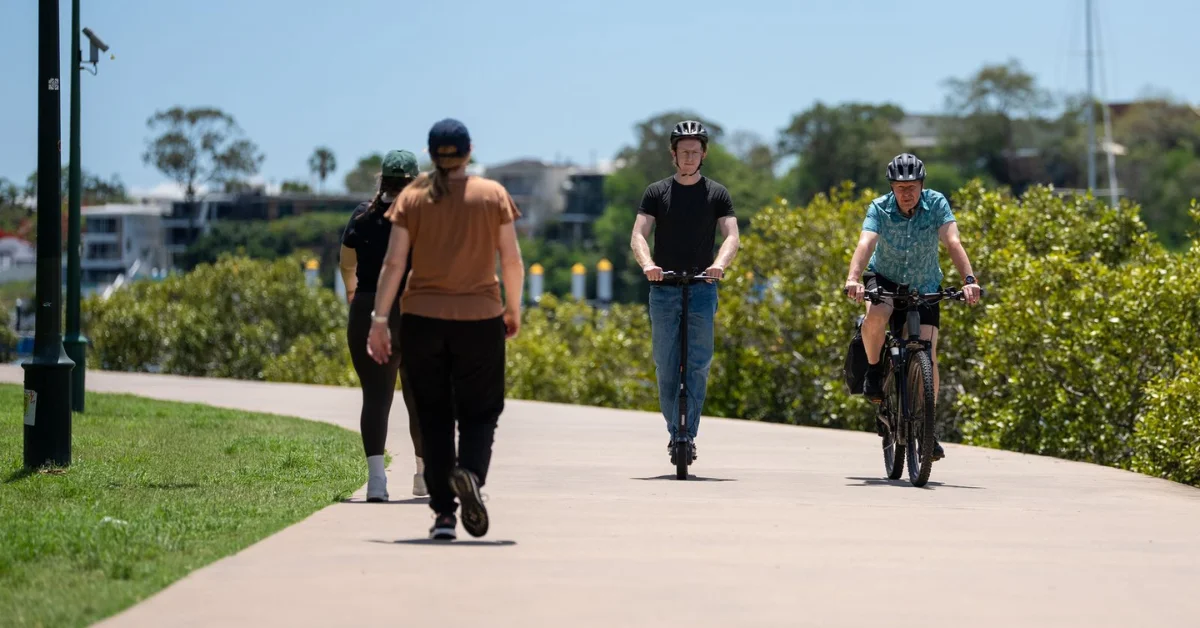
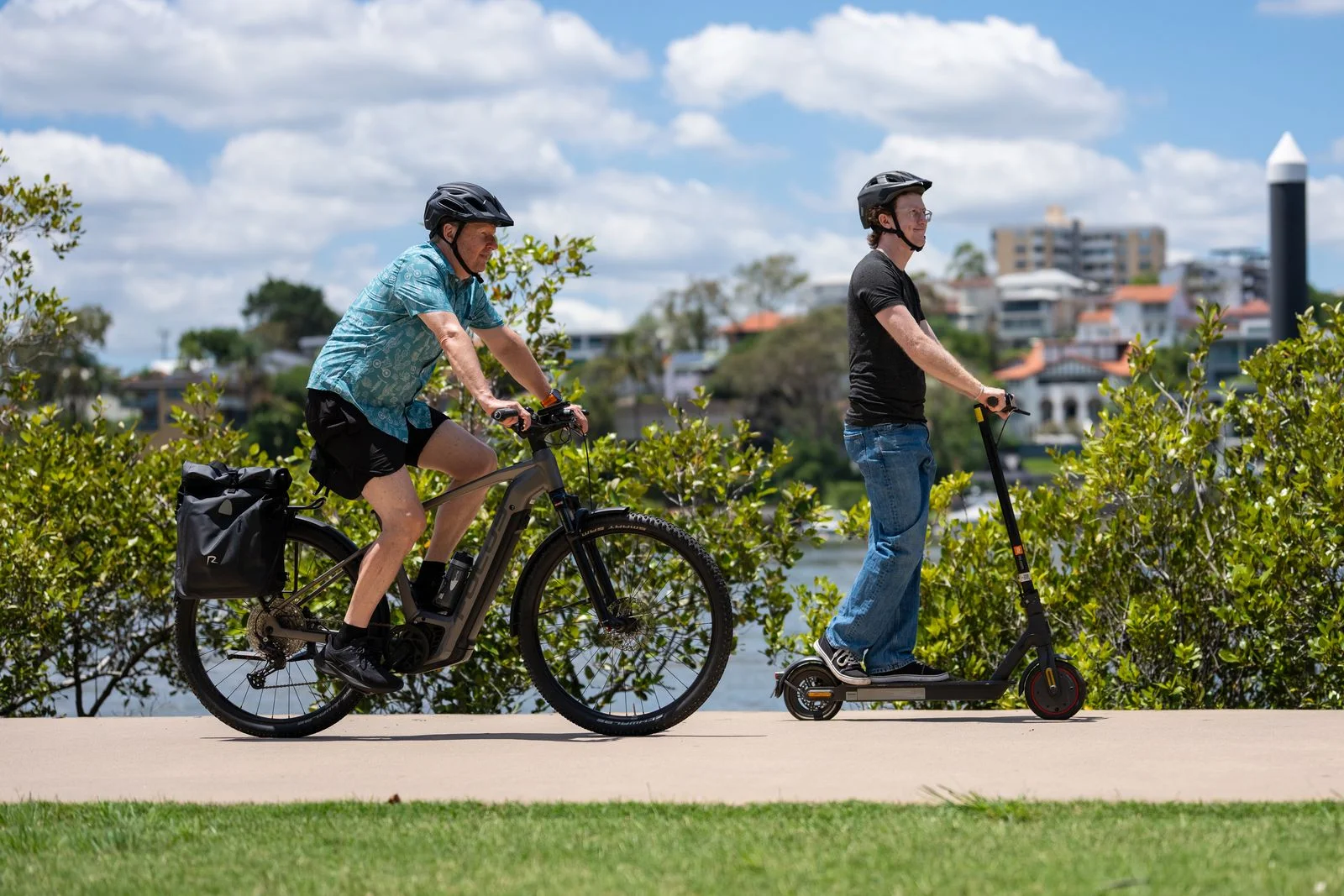
A safety campaign has been rolled out ahead of Christmas to encourage safer use of e-scooters and e-bikes in Toowong and across Queensland. The initiative follows concerns about fatalities, serious injuries and the use of illegal devices, particularly involving young riders. The Bicentennial Bikeway, a popular commuter route along the river from Toowong to the CBD, is one of the key locations where the safety messages apply.
Photo Credit: Supplied
Recent Safety Concerns
In the past three years, Queensland has recorded 18 e-scooter deaths and several e-bike-related fatalities. Authorities have also raised concerns about young people riding illegal e-motorbikes on public streets and roads, especially in South East Queensland.
Between 1 January and 31 December 2024, Queensland recorded 302 road fatalities, which was 28 more than the previous year and 34 above the five-year average. Over the same period, there were 8,573 hospitalised casualties from road crashes, 331 more than the previous year and 1,002 above the five-year average.
These figures sit behind the decision to reinforce road safety messages across all transport modes, including e-scooters, e-bikes and e-motorbikes.
Campaign Details in Queensland
The Know Your eRules campaign is being led by the Department of Transport and Main Roads. Advertising is running on Spotify, social media and bus shelters through the Christmas period to remind riders that e-mobility devices can be deadly when used illegally or incorrectly.
Queensland Police will issue penalties and fines to people who break the rules, including parents who allow children to ride illegal devices. The campaign encourages adults, particularly parents, to check the official guidance and ensure any device they buy for Christmas is legal and used safely.
Photo Credit: Supplied
E-Scooter Rules for Toowong Riders
For e-scooters and other personal mobility devices, riders must be at least 16 years old. Children aged 12 to 15 may ride only under adult supervision, while children under 12 are not allowed to ride these devices.
Only one person can ride an e-scooter at a time, and a properly fastened helmet is compulsory. E-scooters can travel at a maximum of 25 km/h, with a limit of 12 km/h on footpaths and shared paths unless signs say otherwise. Fines of more than $660 can apply for speeding.
E-scooters may be used on footpaths, shared paths, separated bike paths, on-road bike lanes with speed limits of 50 km/h or less, and local streets with speed limits of 50 km/h or less where there is no dividing line. Riders must leave their phone alone, not drink and ride, obey give way and stop signs, and give way to pedestrians.
E-Bike Requirements and Illegal Devices
E-bikes must rely mainly on pedal power and have a motor with a maximum continuous output of 250 watts, providing assistance only up to 25 km/h. Throttle power is permitted up to 6 km/h to help the rider start moving, but above that speed pedalling must activate the motor.
These devices may be ridden wherever bicycles are allowed, but not on motorways or in areas marked with “no bicycles” signs. Riders must follow signed speed limits and general road rules. High-powered devices that exceed 250 watts, rely on throttle power alone above 6 km/h, or use internal combustion engines are considered non-compliant. Total fines can be more than $1,640, and police may impound or confiscate illegal devices.
E-motorbikes are high-speed electric 2- and 3-wheelers that are separate from low-speed, pedal-assisted e-bikes. Road-legal e-motorbikes must comply with Australian Design Rules, be registered, carry compulsory third party insurance and have features such as headlights, brake lights, indicators, mirrors and a vehicle identification number. Riders need the correct motorbike licence class, and penalties apply for using unregistered, uninsured or unlicensed vehicles.
Some e-motorbikes are sold for off-road use only and cannot be used on roads or public paths in Queensland unless conditionally registered for very limited access to off-road tracks. The fact sheets note that children have been killed riding non-compliant e-motorbikes, and parents can be fined if they allow a child to ride such devices in public.
Local Routes in Toowong
The Bicentennial Bikeway is a popular commuter route that runs along the river between Toowong and the Brisbane CBD. This shared path is widely used by cyclists, e-bike riders and e-scooter users travelling between the western suburbs and the inner city. Parts of the Brisbane River Loop also make use of the same riverside corridor used by riders from Toowong.
The campaign encourages riders and parents in Toowong and across Queensland to check the StreetSmarts website for detailed information on legal devices and riding rules. The message is clear: choose legal devices, understand the rules and follow them, particularly during the Christmas period when many e-scooters, e-bikes and e-motorbikes are bought as gifts.
Public submissions have opened on a proposal to build three high-rise towers on the long-vacant former Woolworths site in Toowong, with residents, neighbours and local businesses invited to have their say until Monday, 8 December.
The developer is seeking approval for towers ranging from 49 to 58 storeys—more than double the current height limit for the area—and has promoted the project as delivering 40 per cent public open space and 102 per cent green space across the site.
Elements of the Planned Development
The application, lodged by Verso Development Group and designed by Kerry Hill Architects with landscape input from PWP and Urbis, outlines the creation of “Toowong Central,” a 14,126-square-metre precinct bounded by Sherwood Road, Jephson Street, and High Street.
Photo credit: Brisbane PD Online – A006836692
Central to the proposal (A006836692) are three residential towers rising to 58, 55 and 49 storeys. Together, they would deliver 1,104 apartments across one to four-bedroom layouts, including penthouses.
Photo credit: Brisbane PD Online – A006836692
Each tower would feature “slot gardens” to break up the vertical form, contributing to a subtropical aesthetic. The proposed heights are more than double the 25 storeys permitted under the current Toowong–Auchenflower Neighbourhood Plan.
The development site, now largely vacant, sits directly opposite Toowong Village and the train station. It was previously home to one of the suburb’s earliest supermarkets — a standalone Woolworths that traded until 2017.
Photo credit: Brisbane PD Online – A006836692
At podium level, Toowong Central is planned to host more than 12,000 square metres of retail and dining, anchored by a full-line supermarket, specialty shops, restaurants and cafes. Office tenancies are also proposed, reflecting demand for flexible workplace options in Brisbane’s inner west.
A strong focus has been placed on open space and community areas, with 4,500 square metres of landscaped gardens, rooftop terraces, recreation decks and pools for residents. Four major public spaces are planned, including Sherwood Plaza on Sherwood Road, High Street Park, a civic central plaza, and Jephson Terrace, which steps down to Jephson Street. These areas are designed for outdoor dining, water play, art installations and informal gatherings.
Photo credit: Brisbane PD Online – A006836692
Community Concerns
However, concerns have been raised about the development. Greens MP Michael Berkman points out that while the DA breaches existing height limits, there is no commitment to affordable housing.
He argues that if Council allows towers above the planning cap, at least 25% of the new apartments should be dedicated as affordable homes. On the green space promises, the developers advertise 14,191 m² of “greenspace,” but Berkman calls this misleading.
Only 16.7% of the site would be genuinely public green space, with the rest made up of private gardens, planter boxes, and vertical green walls. He also notes that just 6% of the site is allocated for deep planting—below the 10% code minimum—describing the current approach as “greenwashing.”
Site and Location
Town planning firm Urbis, which prepared an assessment report for Toowong Central Investment Holding Pty Ltd, said the scheme made efficient use of the irregularly shaped block, which fronts three major streets. Landscape architects have described the precinct as an “urban forest” concept, drawing inspiration from Toowong’s history as a gathering place.
With direct access to Toowong Station and the Bicentennial Bikeway, the development aims to establish itself as both a residential hub and lifestyle destination.
Community members are being urged to make formal submissions outlining concerns about urban planning, public amenity and local character, particularly the lack of any public or affordable housing in the proposal, despite the scale of the development and the significant uplift being requested from Council.
If approved, Toowong Central would be one of Brisbane’s most significant urban renewal projects, reshaping the suburb’s skyline and redefining its civic heart.