Fact and Folklore Blur as Toowong Cemetery Tales Spread Online

Brisbane’s historic Toowong Cemetery has become the centre of renewed community fascination as local storytellers and social media users breathe new life into its supernatural folklore, blurring the lines between urban legends and a chilling true crime.


Modern Interest in Old Tales

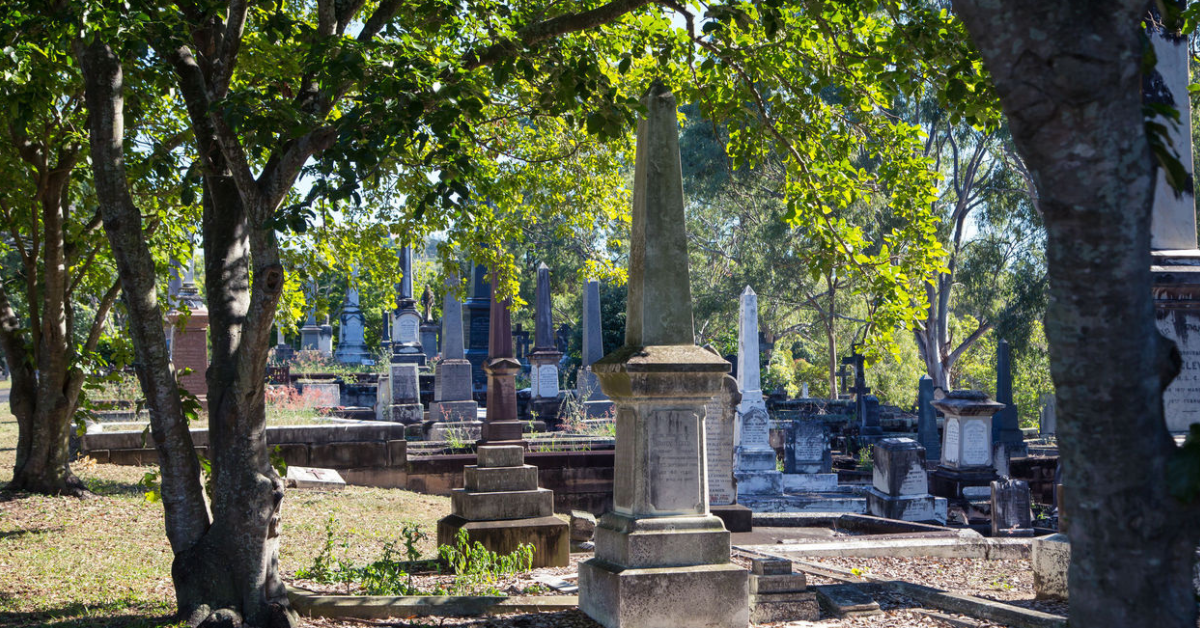
Toowong Cemetery
Photo Credit: OzCamper/ Tiktok

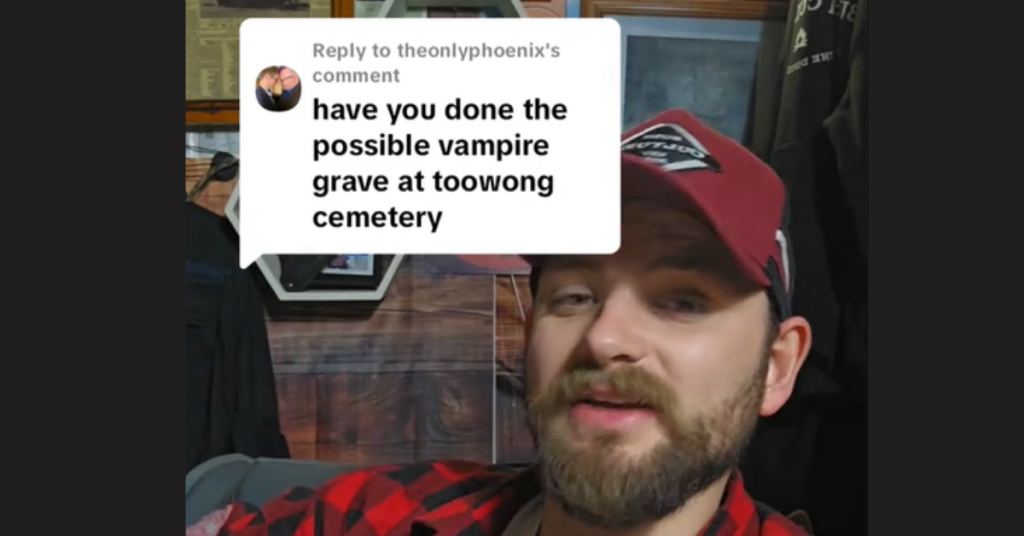
A recent surge in online discussion, sparked by content creators like Aussie camper Marcus Sutherland, has brought the long-standing ghost stories of Toowong Cemetery to a new generation. Through platforms like TikTok, haunting rumours about the grounds are circulating widely, prompting Brisbane residents to share their own unsettling experiences. 

Many have described the cemetery as an eerie and frightening place, particularly after dark, with some claiming to have seen mysterious figures or heard unexplained footsteps while visiting. This modern-day storytelling has ensured the cemetery’s reputation as a fixture of local gossip remains strong.

Enduring Folklore of the Grounds

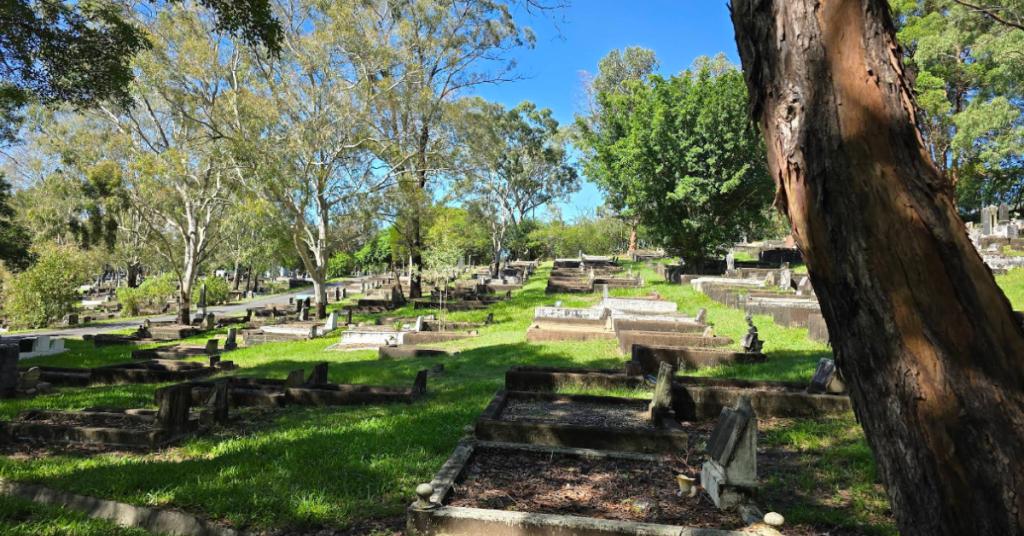
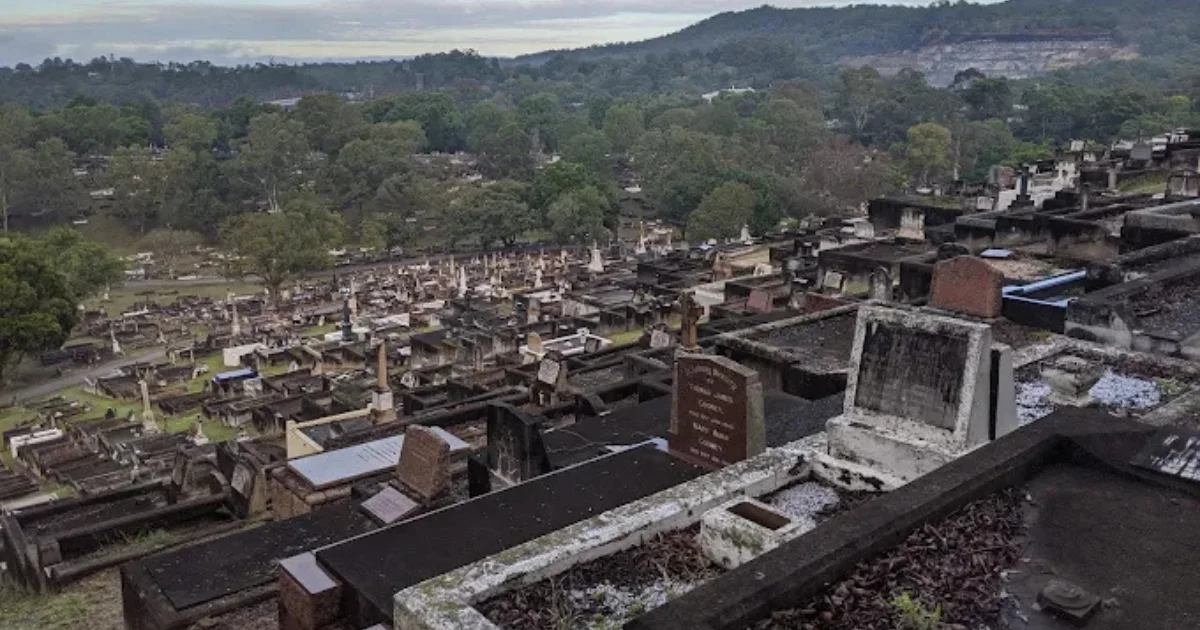
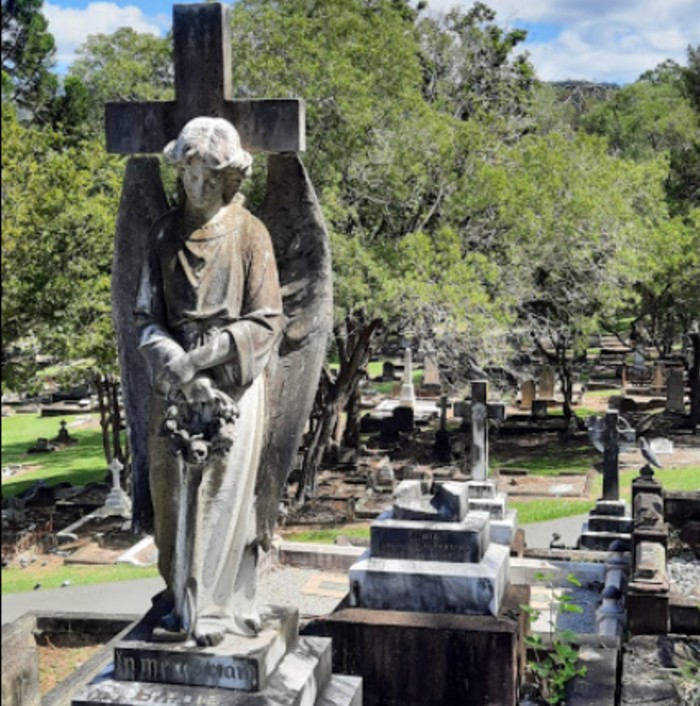
Toowong Cemetery
Photo Credit: Google Maps

At the heart of the community’s interest are several enduring legends. The most prominent is the tale of a 19th-century female vampire believed to be buried along Avenue 12. According to the folktale, her grave was once opened to reveal a body that had not decayed, and when touched, she supposedly opened her eyes. 

Another well-known story involves Spook Hill, an area near the graves of two young women who died in a car accident. Local lore claims that a vehicle parked in neutral at the base of the small hill will appear to roll uphill, a phenomenon some visitors have claimed to witness firsthand. The Museum of Brisbane has acknowledged that these wild and wonderful tales have been a part of the city’s culture for years.

A Link to True Crime

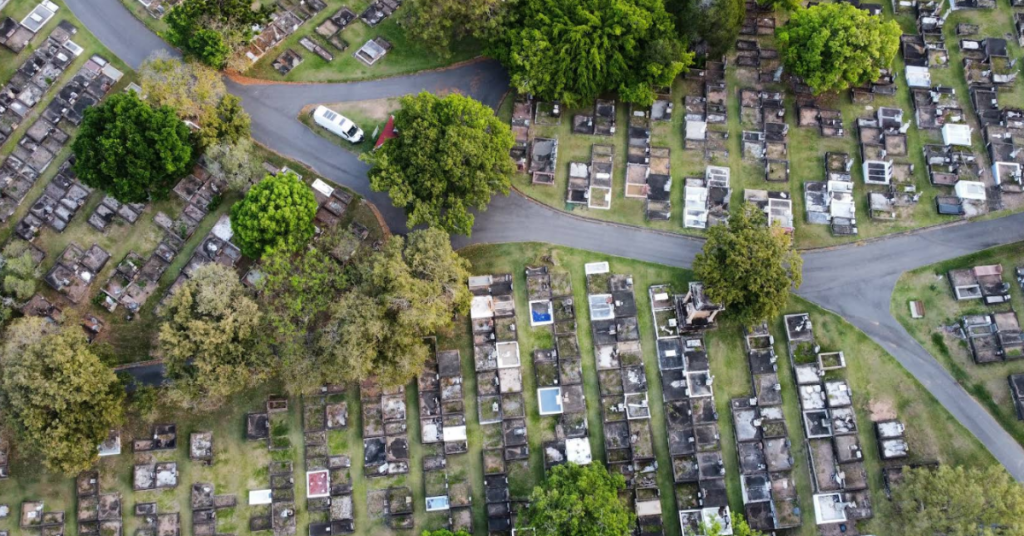
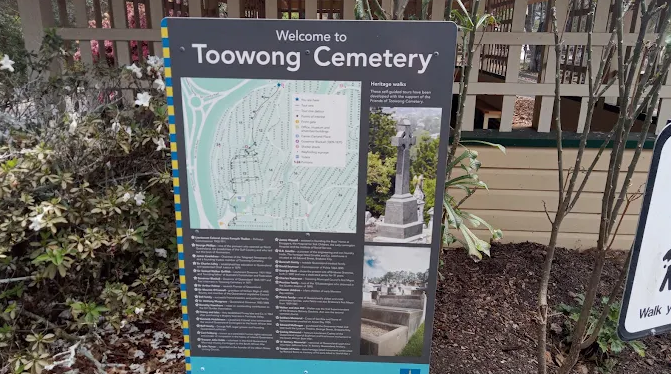
Toowong Cemetery
Photo Credit: Google Maps

While many of the stories are pure folklore, the cemetery’s dark reputation is also tied to the factual case of Tracey Wigginton, who was dubbed the “Lesbian Vampire Killer.” In the weeks leading up to a murder she committed in October 1989, it was documented that Wigginton and her friends would often visit Toowong Cemetery for night-time picnics. 

During her trial, it was claimed she had an obsession with vampirism and had drunk her victim’s blood. Although Wigginton is not buried at the cemetery, her documented presence there has intertwined a gruesome true crime with the location’s supernatural legends in the public’s mind.


A Heritage Site of Stories

Officially opened in 1875, the heritage-listed Toowong Cemetery is the final resting place for many of Queensland’s prominent colonial-era figures. While it is now closed to new burials, it remains a significant landmark. For many in the Brisbane community, it continues to be known not only for its history but also for the restless spirits and chilling tales that are passed down from one generation to the next.

Published 1-November-2025

Toowong Cemetery and Other Queensland Sites May Run Out of Burial Space by 2035

Queensland is facing a growing challenge. By 2035, the state could run out of room to bury its dead, with Toowong Cemetery, Brisbane’s largest cemetery, one of the sites in focus. Local authorities across the state are warning that population growth, an ageing population, and rising demand are placing significant pressure on burial space.


Read: Fact and Folklore Blur as Toowong Cemetery Tales Spread Online


New research from the Local Government Association of Queensland (LGAQ) shows many Councils expect their existing cemetery land to reach capacity within the next 10 to 15 years. Unlike most other land uses, cemetery plots are treated as permanent in Queensland. Once used, they are rarely reused, and the scarcity of suitable new land means councils have limited options for expansion.

Alison Smith, CEO of the LGAQ, stated that councils have been studying these statewide challenges and are collectively urging the State to collaborate with them on planning the future of cemeteries across Queensland.

“We need a holistic, strategic and statewide approach to considering and addressing these issues,” Ms Smith said.

Toowong Cemetery, located in Brisbane’s inner west, has long served as the resting place for many families and is recognised as the city’s largest cemetery. In other parts of Queensland, local authorities are already grappling with both space and cost pressures, managing land, securing new sites, and maintaining ageing cemetery infrastructure under financial strain.

Photo credit: Ruth Mavroleon/Google Maps

The issue is not solely logistical but also cultural. Some religious communities, including Muslim, Jewish, and Eastern Orthodox groups, adhere to burial traditions that limit the wider adoption of cremation, which in turn adds to pressure on land. In other jurisdictions, grave reuse or renewable tenure systems have been introduced. In Queensland, however, perpetual burial rights remain the norm, limiting flexibility in managing space.

Strategies and Suggestions for Sustainable Cemetery Management

Photo credit: Sonia Ho/Google Maps

Industry experts and councils are advocating for a range of strategies to manage the impending space shortage. One proposed measure is the adoption of renewable tenure for burial plots, where graves are leased for a defined period and may be reused afterwards, a model already in use in parts of Australia and internationally. Such a change could significantly increase the functional life of cemetery land.

Other practical strategies include allowing multiple internments, for example, family members sharing a single plot, and deeper graves to maximise space. These approaches require careful consideration of safety and cultural comfort during burial services.

Cremation is another frequently discussed alternative. While less land intensive, its acceptability varies by community and religious tradition. Advocates are encouraging councils and the state to develop policies that make cremation a culturally sensitive and accessible choice where appropriate.

Local authorities are calling for a statewide strategy that brings together the state, local councils, cemetery operators, and community representatives. The objective is to plan for land supply, invest in infrastructure, respect cultural and religious needs, and ensure the long-term financial viability of cemetery sites.


Read: Toowong Cemetery Holds the Forgotten History of Susan McGowan


For Toowong and other Queensland cemeteries, the conversation is about more than land, it is about how communities honour their past while planning for future generations. With coordinated planning, innovative choices, and community engagement, Queensland may be positioned to balance tradition, memory, and sustainability in its cemeteries.

Published 29-October-2025

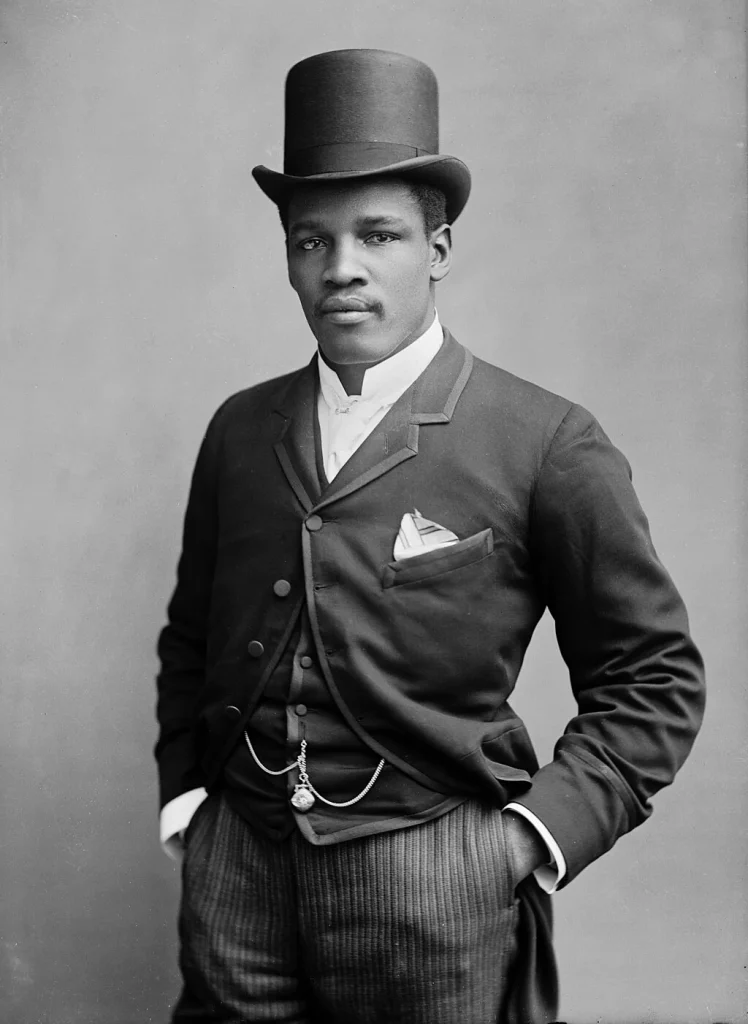
A Grave in Toowong Holds the Story of a Forgotten Boxing Legend: Peter Jackson

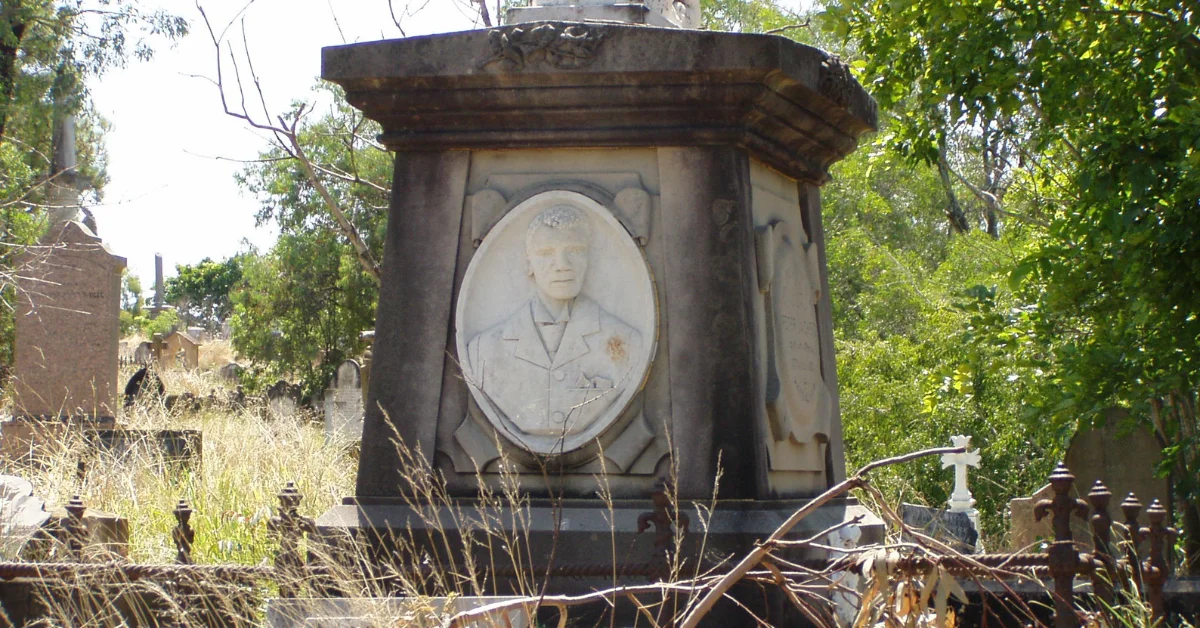
On a quiet slope of Toowong Cemetery, a marble headstone bears the simple inscription: “This was a man.” It marks the resting place of Peter Jackson, a boxer once hailed as among the finest heavyweights in the world.


His story stretched from the Caribbean to the colonial ports of Australia and the boxing halls of London and San Francisco. Yet it ended here, in Toowong, far from the roar of the crowds that once cheered his name.

The grave connects Australia’s colonial sporting past with broader histories of race and ambition in the 19th century. For those who wander among Toowong’s shaded paths, Jackson’s name offers a glimpse into a history that is both global and deeply local.

From St. Croix to the Australian Colonies

Peter Jackson was born on 3 July 1861 in Christiansted, on the island of St. Croix in the Danish West Indies, now part of the U.S. Virgin Islands. His father was from Jamaica, and Jackson’s early years unfolded in a colonial Caribbean still shaped by the legacy of slavery.

Brought to Australia as a boy, he worked as a seaman and on the waterfront, physically demanding jobs that preceded his entry into boxing.

It was in Australia’s port cities that Jackson’s talent began to attract attention. Boxing in the late 19th century was a brutal but popular sport, a mix of spectacle and endurance.

Jackson, known for his skill and composure, stood out from many of the more straightforward sluggers of the era. He combined strength with a calculated, scientific style that earned him both respect and fear in the ring.

A Champion Emerges

Jackson’s rise to prominence came in 1886 when he defeated Tom Lees in the 30th round to win the Australian heavyweight title. The bout was grueling, but it announced Jackson as a major figure in the sport.

His reputation spread quickly beyond Australia’s shores, and soon he was fighting in Britain and the United States. There, he faced some of the best fighters of his era and defeated many of them, including George Godfrey and Joe McAuliffe.

In 1888, Jackson claimed the World Coloured Heavyweight Championship, a title created because Black fighters were excluded from competing for the sport’s official world crown. His technical style was widely praised by the boxing press of the time as refined and strategic. He was a powerful and precise fighter who relied on intelligence as much as strength.

Yet despite his record and widespread admiration, Jackson was repeatedly denied the chance to fight for the official world heavyweight title. The informal but rigid “colour bar” prevented him from challenging white champions like John L. Sullivan. Sullivan, regarded as one of the era’s greatest fighters. He refused to face Jackson in the ring. It was a decision historians still regard as one of boxing’s most significant missed contests.

A Global Career and Its Toll

The years that followed took Jackson across continents. He fought in major venues in Britain and America, drawing significant attention and praise from contemporary newspapers. Yet the relentless travel, physical punishment, and constant fight schedule took a toll on his body.

By the mid-1890s, Jackson’s health was in decline. He suffered from tuberculosis, a disease that was often fatal in the 19th century and particularly devastating for athletes whose strength was their livelihood.

Contemporary reports described Jackson as a man of dignity and character, qualities that maintained his reputation even as his career waned. Eventually, his illness forced him to step away from the sport that had defined his life.

Final Days in Queensland

Jackson returned to Queensland as his health worsened. He spent his last months in Roma, a small town west of Brisbane, where he received care while battling tuberculosis.

On 13 July 1901, Peter Jackson died at just 40 years old. News of his death spread quickly, and tributes appeared across the Australian press. Newspapers described him as one of the finest heavyweights never to fight for the world title, a man whose career was shaped as much by prejudice as by talent.

Plans were soon made to bring Jackson’s body back to Brisbane for burial. A funeral procession accompanied his coffin through the city, with members of the public and the sporting community gathering to pay their respects. On 16 July 1901, he was laid to rest at Toowong Cemetery, his grave marked with a marble headstone funded by public subscription. The inscription, “This was a man,” reflected the deep respect and admiration held for Jackson.

Toowong: The Keeper of His Legacy

Today, Jackson’s grave is among the most notable sites in Toowong Cemetery. Located in Portion 5, Section 28, Grave 1, it is a point of interest for boxing historians, local researchers, and visitors interested in Queensland’s past. The site serves as a physical reminder of a man whose story might otherwise have been lost to time.

Toowong’s connection to Jackson shows how Queensland became the final chapter of a life lived across continents and shaped by the global forces of empire, sport, and race. More than a century after his death, the cemetery continues to be a place where people come to learn about the man beneath the stone — not just a boxer, but a figure who challenged the limits placed upon him and left a legacy that stretched far beyond the ring.

Peter Jackson’s contributions to boxing were eventually recognised long after his death. In 1990, he was inducted into the International Boxing Hall of Fame, a belated but significant honour that placed his name alongside the sport’s greats.


Published 21-Oct-2025

Anzac Day Architect Canon David John Garland Remembered at Toowong Resting Place

Brisbane’s historic Toowong Cemetery is the final resting place for Canon David John Garland, the influential clergyman widely regarded as the primary architect behind the Anzac Day traditions Australians honour each year.


Architect of Anzac Day

Canon David John Garland
Photo Credit: Trove

Known as the “architect of Anzac Day,” Canon David Garland was crucial in establishing today’s commemoration. Working as a chaplain at Enoggera Army Barracks during World War One, Garland saw rising casualties from campaigns like Gallipoli. Sources state he proposed a national day to honour the sacrifice of fallen soldiers.

He rallied community support and was central to establishing the Anzac Day Commemoration Committee of Queensland. Garland served as its secretary from 1916 to the present. He is credited with creating the original framework for Anzac Day commemorative services. 

Garland worked tirelessly to gain acceptance for the day from military, religious, political, business, and community groups. The first Anzac Day was marked on 25 April 1916 with ceremonies in Australia, a march in London, and events in army camps overseas.

Shaping the Commemoration

Canon David John Garland
Photo Credit: Trove

Beyond proposing the day, Canon Garland initiated many specific ceremonies and rituals that became central to Anzac Day. These included the Anzac Day march, the luncheon for returned soldiers, the solemn two minutes’ silence, wreath-laying ceremonies at memorials, and special church services. He also started a trust funded by the sale of Anzac Day badges – featuring the winged lion of St Mark because the saint’s day coincided with Anzac Day – to care for soldiers’ graves.

Garland actively promoted these ceremonies, which were adopted in other Australian states and significantly influenced commemorations in New Zealand and Great Britain. He used his extensive network of contacts with politicians, business leaders, military chiefs, and clergy across Australia and New Zealand to harmonise the approach to marking the day. He successfully persuaded the public, industry leaders, and clergy of all backgrounds to support this special day of remembrance.

Photo Credit: Monument Australia

His relentless campaigning was key to achieving government legislation establishing Anzac Day as a public day for solemn commemoration in Queensland by 1921, contributing to federal harmony by 1930. Sources indicate that he initially ensured the organising committee remained civilian-led.

A Life of Service

Canon David John Garland
Photo Credit: Trove

Born in Dublin, David John Garland originally trained for the law before moving to Australia and joining the Church of England ministry in 1889. His clerical career took him to New South Wales, Western Australia, and finally Queensland. In WA, he successfully organised parishes and campaigned for religious education in state schools, leading to changes in the Education Act.

In Queensland, from 1902, he served as a rector, canon, and archdeacon, and he led the successful campaign for the Bible in State Schools referendum in 1910. His service as a military chaplain began in the late 1890s in Western Australia with soldiers preparing for the Boer War. During World War One, he was a senior chaplain for troops in Queensland before serving overseas in the Middle East from 1917 to 1919. He established clubs for the Australian forces, developed special burial services, and raised funds for memorials and soldier support there. 

Upon returning, he became rector of Ithaca Parish in Brisbane, broadcasting Sunday services from St Barnabas’ Church at Red Hill for many years until his death. He was also involved in immigration programs and led the New Settlers’ League.


Enduring Legacy in Toowong and Beyond

Canon Garland Overpass
Photo Credit: Monument Australia

Canon Garland’s energetic work and organisational skills left a lasting mark on Australian society, particularly through the establishment and enduring nature of the Anzac Day commemorations. His central role was recognised during his lifetime; acting Queensland premier W. N. Gillies reportedly described him in 1924 as the “life and soul” of the Anzac Day committee. He was appointed an Officer of the Order of the British Empire (OBE) in 1934.

Canon David John Garland passed away in 1939 and was buried in Toowong Cemetery, a place connected to his work, including his role in establishing the Cross of Sacrifice memorial. His contributions are remembered through memorials such as plaques and a road overpass dedicated to the “architect of Anzac Day.” His former church, St Barnabas’, is also noted for its connection to this significant figure in Australia’s history.

Published Date 07-April-2025
Toowong Cemetery Holds the Forgotten History of Susan McGowan

Toowong Cemetery, one of Brisbane’s historic resting places, holds the remains of Susan McGowan, whose short and turbulent life reflects the harsh realities of 19th-century Australia.


A Troubled Life Remembered

Susan McGowan, who lived from 1862 to 1891, endured an extraordinary series of misfortunes, spending much of her life on the streets of Brisbane. 

Born in New South Wales, she moved to Brisbane as a young adult and found herself navigating a world that offered few protections for women in her position. Without steady work or a stable home, she turned to prostitution and became a familiar figure in Brisbane’s police courts.

Throughout 1885, Susan’s name appeared in court records at least five times as a victim of assault. She was subjected to violent attacks in public streets by both men and women. 

In January of that same year, Joshua Stead assaulted her, knocking her down and kicking her, resulting in a two-month sentence of hard labour for him. Months later, Patrick Brittain and Margaret Corkery also attacked Susan in separate incidents, each leading to convictions but offering her little reprieve from danger.

By mid-year, Susan had been assaulted in public repeatedly, including an incident in July where James Feeney knocked her down multiple times on Albert Street.

Susan McGowan was attacked by James Feeney
Photo Credit: National Library of Australia

The Streets of Brisbane

Brisbane’s central streets in the late 1800s were notorious for petty crime and public disorder. Areas like Queen Street and North Quay were frequented by street urchins, thieves, and drunkards. 

Women like Susan faced an even harsher reality, as their perceived social status often left them vulnerable to both violence and harsher judgment in the legal system. Historian Anastasia Dukova noted that women in Susan’s situation were often policed more strictly than men, with little chance for reform.

By 1890, Susan’s health had deteriorated severely. She lived in Lower Albert Street’s “Nine Holes” in an area known as Frog’s Hollow, a low-lying neighbourhood notorious for its poor sanitation and frequent flooding. 

Flooding on Albert Street
Flooding on Albert Street in 1890
Photo Credit: State Library of Queensland

Medical reports from the time described it as a hazardous place, rife with disease. Living in such conditions took a toll on Susan, who appeared less frequently in court as her health declined.

A Tragic End

Susan died at the age of 28 in April 1891 while en route to a hospital. The official cause of death was listed as phthisis, or tuberculosis, and exhaustion. Her final resting place at Toowong Cemetery is marked by the simplicity of the grave, reflecting the hard life she endured. Despite her struggles, her burial in one of Brisbane’s most historic cemeteries underscores the connection between her life and the city’s complex early settlement past.


Susan McGowan’s story, while tragic, is a window into the lives of many marginalised women in Australia at that time. Today, her grave at Toowong Cemetery serves as a silent witness to a life shaped by resilience in the face of relentless adversity.

Editor’s note: Information for this article was obtained from various sources, including the Queensland Police Service; “To Preserve and Protect: Policing Colonial Brisbane,” a book by Dr Anastasia Dukova, (TCD) FRHistS,
 IAPH; a 2020 interview by Australian Policy and History with Dr Dukova; the National Library of Australia; and the State Library of Queensland.

Published 3-Jan-2025
Exploring Irish Heritage: Toowong Cemetery Tour for St Patrick’s Day

In preparation for St Patrick’s Day festivities, the Queensland Irish Association has joined hands with Friends of Toowong Cemetery to present an enriching Irish History Tour. 


Read: Stalled Development at Toowong Site Sparks Community Debate


Scheduled for Sunday, 10 March 2024 10:00 a.m., the guided tour promises an insightful walk through the final resting places of notable Irish figures, including founding members of the Queensland Irish Association. 

Participants can anticipate captivating narratives during the two-hour exploration. Attendees are advised to wear comfortable, enclosed shoes and attire suitable for the weather. The meeting point is set at the flagpole located at the Frederick Street/main entrance to the cemetery. Parking is available within the cemetery premises, with convenient bus stops nearby. 

Donations in cash are welcomed on the day to support the preservation efforts of Friends of Toowong Cemetery.

St Patrick’s Day Parade Participation

As the countdown to St Patrick’s Day begins, preparations are also underway for the annual St Patrick’s Day Parade, slated for Saturday, 16 March 2024 10:30 am. 

The Queensland Irish Association extends an open invitation to all enthusiasts willing to partake in the parade and represent the Association. Participants will be honoured to march behind the QIA float, carrying none other than Saint Patrick himself.

Photo Credit: Queensland Irish Association

Those interested can simply assemble at the City Botanical Gardens on Alice Street gates from 10:00 a.m. onwards on the event day.

Grand St Patrick’s Eve Dinner at Brisbane City Hall

Mark your calendars for the most anticipated St Patrick’s Day celebration event – the St Patrick’s Eve Dinner hosted by the Queensland Irish Association at the grand Main Auditorium of the Brisbane City Hall. Members are encouraged to secure their spots early for the event, which promises an unforgettable evening filled with merriment and tradition. 

Priced at $160 per person, the dinner includes a generous five-hour drinks package featuring beer, Guinness, red and white wines, and soft drinks, served from 6 pm to 11 pm.

Guests will also indulge in a delectable three-course dinner, courtesy of Epicure at Brisbane City Hall, accompanied by lively entertainment provided by the QIA Dancers and the Queensland Irish Association Pipe Band. 

The event will feature a toast to Australia Our Nation proposed by Father Frank Brennan SJ AO, alongside esteemed Irish and Australian guests. The evening will culminate in a heartwarming community sing-along of Irish favourites. 

For booking enquiries, email stpatricksevedinner@hotmail.com 

About the Queensland Irish Association

The Queensland Irish Association (QIA) traces its roots to March 23rd, 1898, emerging from the collective resignation of Irish volunteers in response to government interference. Led by former commandant Major PJ Stephens, ex-members joined forces with the Hibernian Australasian Catholic Benefit Society to establish the association, embodying the principles of its predecessors.


Despite facing financial challenges and declining membership during wars and economic downturns, the QIA remains Queensland’s longest continuously operating national association. Non-sectarian and non-political from its inception, the QIA aims to unite Irish individuals and their descendants, fostering national freedom and community.

Over its century-long existence, membership has evolved to include women and has expanded to encompass various cultural activities such as a library, pipe band, dancers, singers, and theatre groups. The association hosts annual dinners and events, attracting prominent figures including Irish presidents and ambassadors.

Today, the QIA continues to be a beacon of Irish culture and heritage, guided by the vision of its founding fathers and embraced by Irish Australians who uphold its traditions. Stay connected to the QIA to celebrate Irish identity and heritage.

The Curious Case of ‘The Temple of Peace’

In the heart of Toowong Cemetery, a grand and enigmatic mausoleum stands, occasionally referred to as the “Temple of Peace,” defying the Australian tradition of modest gravesites.


Read: Toowong to West End Green Bridge Design Phase to Start Soon


It is a truly imposing sight, characterised by a towering structure adorned with a concrete urn and its walls adorned with stained glass. The heritage-listed memorial, located at the corner of Frederick Street and Mt Coot-tha Road was designed and built by Richard Paul Carl Ramo.

Upon initial inspection, the Temple of Peace appears to be a heartfelt homage to a father’s departed sons and a beloved pet. Welcoming visitors is a lintel bearing the same title, along with marble plaques inscribed with the names Fred, Gordon, Victor, Henry, and “I.”

Inside the chamber, one encounters marble tablets, whilst the ceiling bears the names and places of death of two of Richard Ramo’s sons. A statue of a little dog guards the entry, signifying a painful loss brought on by deliberate poisoning, and stained glass panels at the back honour Victor’s passing.

Recent investigations, however, have uncovered a complicated history for this extraordinary mausoleum. Although Richard Ramo did not leave any writings behind, it is now thought that many claims made about the monument are either untrue or misleading.

The absence of their real names from the tomb suggests that Ramo may have made up the existence of three of his alleged sons who died in World War I. He did have two other sons, Percy and Cecil. The latter enlisted whilst the former did not; however, neither died during the War.

Intriguingly, there are hints of a connection between Ramo and the Industrial Workers of the World and the Rationalist Society, suggested by references to the Red Flag and other inscriptions.


Read: St Ignatius School Unveils Two New Murals, Celebrates 120 Years


On December 6, 1924, the Temple of Peace was dedicated in a ceremony attended by thousands, primarily from socialist and pacifist communities. A casket said to contain the remains of Ramo’s “adopted son” Fred, who had tragically taken his own life, was placed inside the mausoleum. The dedication was presided over by the president of the Rationalist Association.

The question of how Ramo, who was not considered wealthy, financed this grand monument remains a puzzle. Ramo’s story concluded with his death in 1951, and his ashes were interred alongside the ”alleged” sons he had honoured.

Published 9-September-2023

Silent Waters, Silent Secrets: The Tragic Fate of Elizabeth Dale at Toowong Cemetery

On one fateful day in February 1905, grieving widow Elizabeth Dale was found lifeless, floating in a creek at the Toowong Cemetery.


Before the ill-fated day, the creek in the cemetery had been dammed to provide water for the beautiful flowers and grapes in Portion 10. The installation of taps to control the dam’s water level was in progress when destiny intervened.

Every day, Elizabeth would faithfully pay a visit to her late husband’s grave, following a familiar routine. Clad in a heavy black mourning gown and a veil, she walked along a path now referred to as Elizabeth Dale Walk.

Making her way across the walkway spanning the dam wall, she eventually reached the vicinity of the Blackall Monument. From there, it was a short distance to her brother’s burial site.

Her brother, Henry Harris Dodd, rests in Portion 11. One day in early 1898, Henry, who worked as a warder at St. Helena switched shifts with another warder, William James Downie. As fate would have it, while unlocking a cell door, a prisoner named William Archer mistakenly stabbed him, causing his untimely death. The prisoner had actually intended to harm the other warder.  

During the summer, Elizabeth would occasionally pause at the water’s edge, leaning over to scoop up a handful and refreshingly splash it across her face before proceeding uphill to her brother’s final resting place.

Tragically, on one fateful day, it is believed that Elizabeth met her demise. Unable to swim, especially burdened by the weighty attire she wore, she met an untimely end after inadvertently falling into the water.

Elizabeth Dale, a resident of Rosalie’s Baroona Road, was born in Dublin. She was forty years old when she died.

Although the newspapers neglected to mention Elizabeth’s husband’s first name, they did disclose the anniversary of his passing. They recounted that Elizabeth visited the cemetery to commemorate the eleventh anniversary of her husband’s demise. 

Interestingly, within the grounds of Toowong Cemetery, two individuals by the surname of Dale were buried in 1894. Among them was Thomas Dale, laid to rest on 2 February. It was on this very date, eleven years later, that Elizabeth would also be interred, sharing the same grave with her husband.

Eyewitnesses shared the chilling discovery of Elizabeth’s lifeless body. Constable Walsh, along with visitors John Littlechild and Kenneth Cooper from New South Wales, noticed her floating in a pool. They quickly alerted the cemetery attendants, who promptly arrived at the scene.

Thomas Francis Dodd, Elizabeth’s grief-stricken brother, identified her body.

As the investigation unfolded, peculiar details emerged. Grace Thomson, a trusted friend from the Salvation Army, revealed that Elizabeth’s departure that morning seemed unremarkable. However, she had experienced unconsciousness just two nights before, hinting at a hidden fragility beneath her brave facade.

Subsequent enquiries into her life and death revealed that Elizabeth had a frail disposition. She had delicate health, poor eyesight and was prone to fainting spells. An official report revealed traces of morphine in her system, likely from her dependence on Kay’s Compound, a medicinal tonic containing morphine.


Thomas Henry Brown, an assistant overseer at Toowong Cemetery, recounted the eerie moment he discovered Elizabeth’s body. After receiving reports of something amiss in the pool, he retrieved her lifeless form. The cold, stiff body lay approximately twenty feet from the pathway, adding to the enigmatic circumstances surrounding her demise. 

In the annals of Toowong Cemetery’s history, Elizabeth Dale’s story stands as a poignant reminder of the fragility of life and the eternal bonds that connect us to our loved ones, even in death.

Published 14-June-2023

Who Should Fix Damaged Headstones at Toowong Cemetery?

Observations of damaged headstones at Toowong Cemetery have raised questions about who is responsible for fixing them after some locals called on authorities to intervene in repairing them.


Read: Historian Asks For Preservation Of Burial Sites In Toowong Cemetery


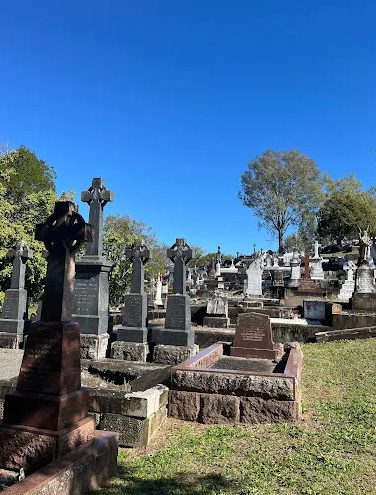
With a history dating back to 1875, Toowong Cemetery is now already home to around 117,000 graves. Many of the headstones at the cemetery have fallen and a number of the grave surrounds have collapsed.

Finding graves at the cemetery can also be extremely difficult. Since most of the graves at the cemetery are quite old, the majority of headstones do not have numbers markings on them. This is due to the fact that the practice of marking numbers on headstones was not introduced until the late 1900s.

Toowong Cemetery
Photo credit: Robert Garvey/Google Maps

Under the Queensland Cemeteries Act 1865, the burial rights holder and their descendants are responsible for maintaining individual graves.

There are locals who believe this law should be updated; however, others believe taxpayers’ money would be put to better use providing housing for the ‘living’ instead of being spent on graves.

Jack Sim, a historian and member of Friends of Toowong Cemetery, noted that repairing and maintaining headstones can be very expensive, highlighting the fact that the cemetery is home not just to hundreds but thousands of headstones needing repair.

Mr Sim, who is famous for his ghost tours at Toowong Cemetery and other cemeteries across the city, said in 2021, that restoring deteriorating burial places would require Brisbane City Council to have an emergency fund, since the cost of repinning a headstone is estimated to be around $3,000.

Toowong Cemetery
Photo credit: Mark Boltman/Google Maps

Meanwhile, Council has made it clear that maintenance of headstones and plaques, including the restoration of old and dilapidated headstones, is the responsibility of the family and descendants.

BCC currently maintains 12 cemeteries across the city and this includes Toowong Cemetery.

Whilst Council is working with community groups like Friends of Toowong Cemetery to improve the cemetery’s condition, they are only responsible for maintaining the cemetery grounds.


Read: What You Need To Know About the Toowong Cemetery Ghost Tour


Council’s responsibility for the cemetery, according to law, only includes mowing, whipper snipping, tree care, topping-up dirt levels in graves, lifting and levelling subsided plaques, and cleaning-up old and unwanted flowers off gravesites.

Historian Asks For Preservation Of Burial Sites In Toowong Cemetery

A Queensland historian is calling on authorities to restore the deteriorating burial places at Toowong Cemetery, in honour of Brisbane’s past and the people buried there.


Read: Toowong Local Named Finalist For Prestigious Women In Technology Awards


Jack Sim, a member of the voluntary organisation Friends of Toowong Cemetery believes Brisbane City Council would need an emergency fund to promptly repair the broken sites, as the cost of repinning a headstone is estimated to be around $3,000.

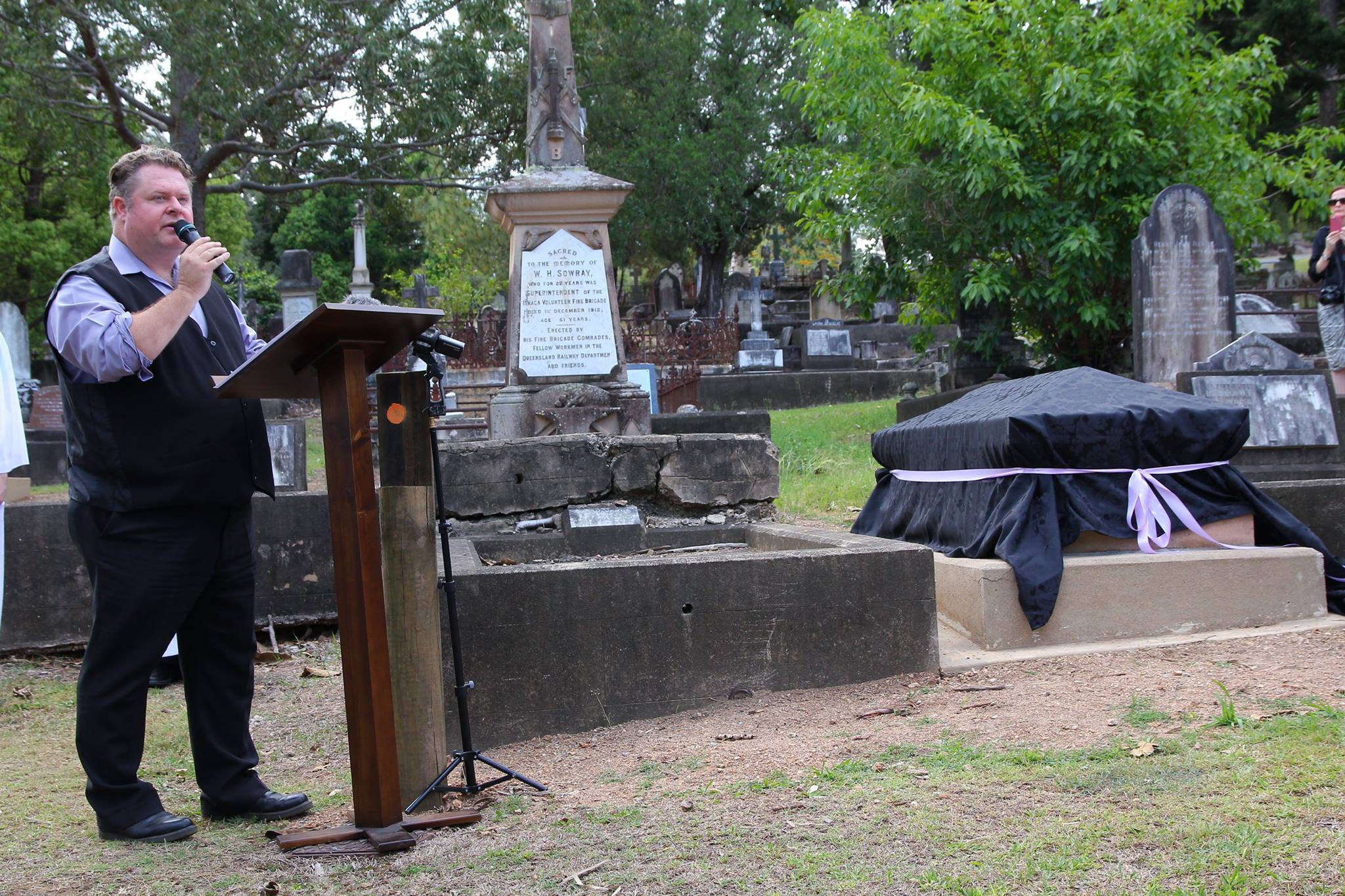
Jack Sim after donating funds to restore the graves at Toowong Cemetery in 2014 (Photo credit: Haunted Heritage/Facebook)

Whilst some headstones survive, many have been smashed and there are slabs that have been cracked open. Some graves have been overrun with weeds. With thousands of dollars needed for one headstone alone, the extent of damage at the cemetery could amount to multi-millions of dollars.

Yet under the Cemetery Act 1865, a grave and its monuments belong to the dead person’s family. Although the Council is in charge of Toowong Cemetery, they cannot touch damaged graves regardless of whether the damage is because of time, nature or human activity.

Photo credit: Beachcoma/Google Maps

BCC maintains 12 cemeteries, including the one in Toowong and whilst they allocated $12 million in the financial year for the maintenance of the cemeteries’ lawns and gardens, they will not pay to fix the graves.

There are approximately 117,000 people buried at Toowong Cemetery, including politicians, sporting legends, poets, soldiers, and celebrities.

The heritage-listed cemetery contains the war graves of 270 Commonwealth service personnel of World War I and 117 from World War II, besides two sailors of the Dutch Navy from the latter war. 

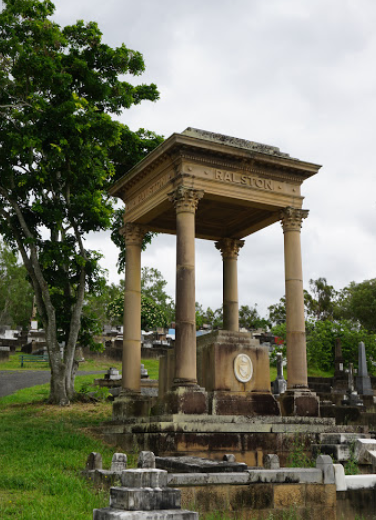
Grave of Walter Vardon Ralston (1846-1920), general manager of the Queensland National Bank (Photo credit: Vic Bushing/Google Maps)

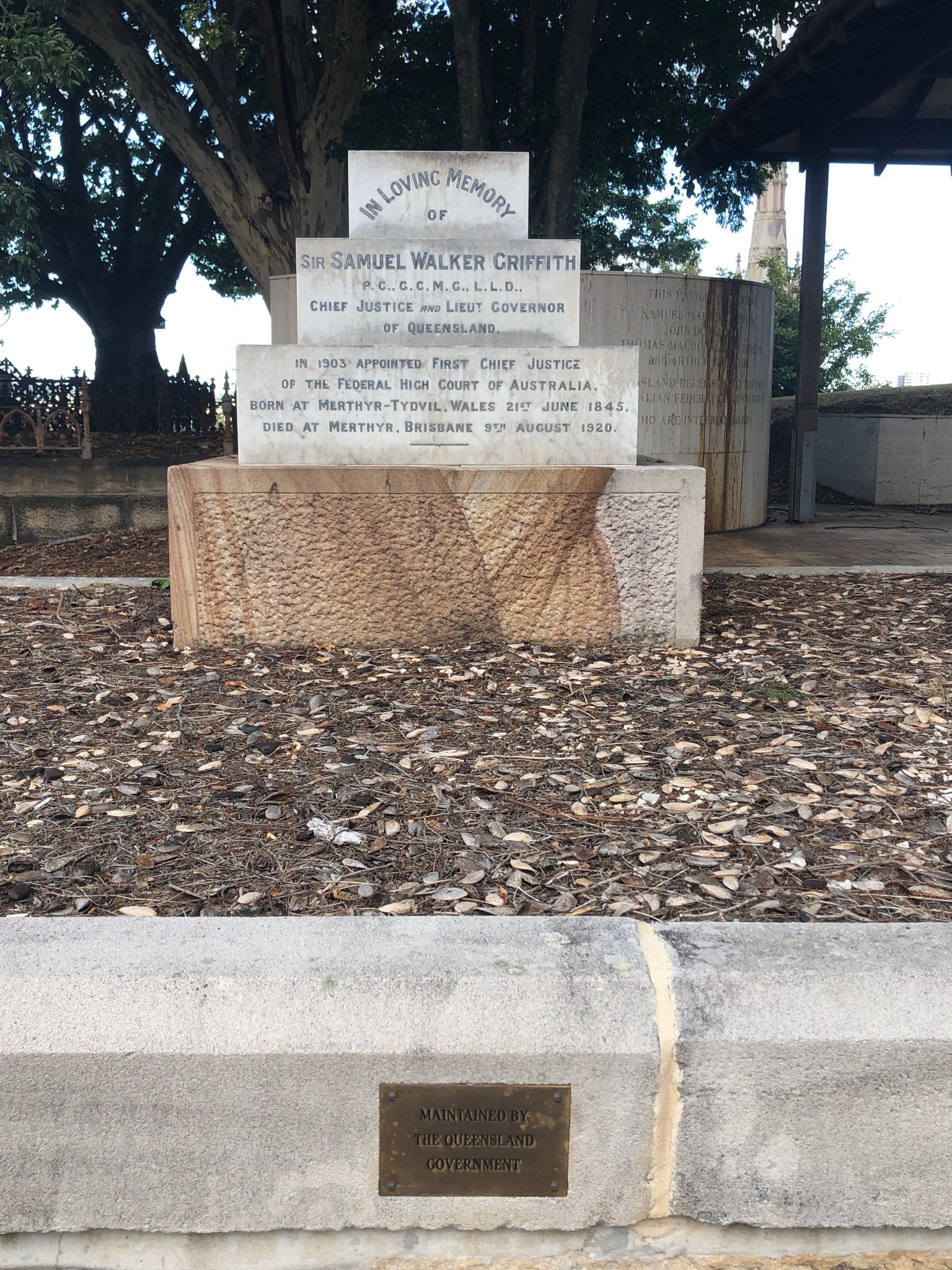
One of the most notable graves here is where Sir Samuel Walker Griffith rests. Sadly, the crucifix on his monument was left broken. He is one of the founding fathers of Australia’s Federation, author of the Constitution. Aside from being a former Queensland premier and first chief justice of Australia, he’s known for being one of the greatest jurists produced by Australia in the 19th century.

Photo credit: Cate/Find A Grave
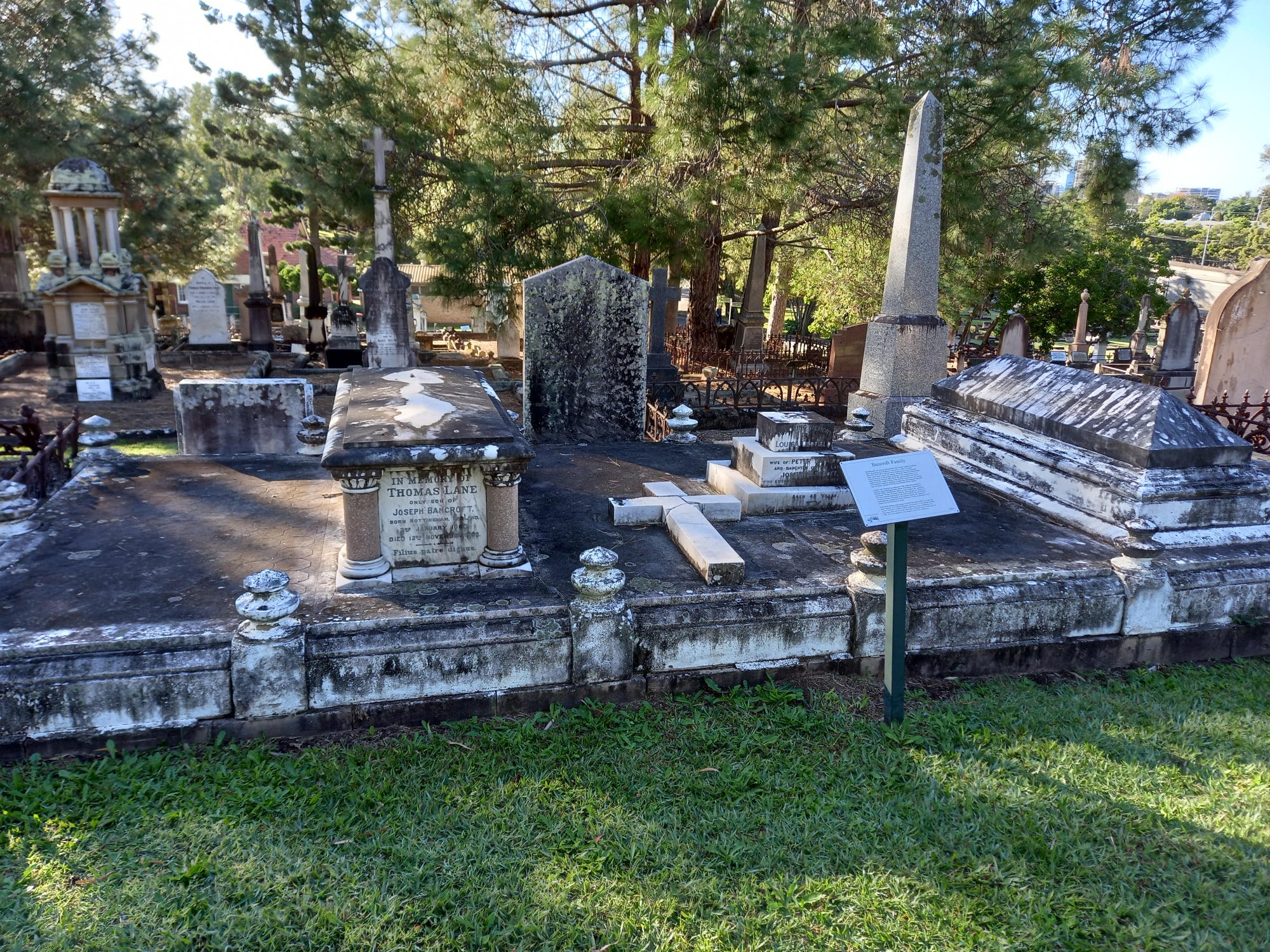
Grave of Bancroft family, who are among Queensland’s most notable medical families (Photo credit: Toni Hughes/Facebook)

It also serves as the final resting place of John Petrie, first mayor of Brisbane, who was buried with his wife in their plot in the cemetery.


Read: Dovercourt: Stunning Heritage Landmark in Toowong to Undergo Makeover


Mr Sim, who has been donating funds for Toowong Cemetery’s grave restoration through the years, believes Toowong Cemetery deserves to be preserved because cemeteries are all about our history and our people.