Developed by Consolidated Properties Group, the project has reached a significant milestone with the structural work on both towers now complete.
Photo credit: Monarch Residences/Facebook
Situated on a 1.2-hectare site, Monarch Residences has already seen overwhelming demand, with 98 per cent of its 224 apartments sold. Only four remain on the market as construction advances towards its final stages. Future residents are expected to move in before Christmas, marking the culmination of years of planning and building.
Photo credit: Monarch Residences/Facebook
Hutchinson Builders, responsible for bringing the vision to life, has navigated weather challenges over the past two years to ensure steady progress. With the scaffolding set to come down in the coming months, the full exterior of River 1 will soon be revealed to the public, offering the first glimpse of the completed design.
Photo credit: Monarch Residences/Facebook
Beyond the apartments themselves, interior fit-outs and rooftop amenities are currently underway. The development will feature high-end facilities, including a premium pool deck, a gym, a sauna, and entertainment spaces designed to enhance the riverside living experience.
Middenbury (Photo credit: CC BY 4.0/Heritage branch staff – State of Queensland: Queensland Heritage Register/Wikimedia Commons)
A key element of the project is the restoration of the heritage-listed Middenbury House, which is undergoing a major refurbishment. A particularly notable milestone in this effort is the replacement of its historic Welsh slate roof, using the last shipment of traditional Welsh slate to arrive in Australia.
Once the restoration is complete, the building will be open to the public for the first time since its original construction in 1865, adding a unique cultural and historical aspect to the development.
With construction progressing at a strong pace, the Monarch Residences is set to be a standout addition to Brisbane’s riverfront skyline. The blend of contemporary luxury living with a preserved piece of history makes it a distinctive and highly anticipated project in the city’s property market.
Developers in Toowong have submitted plans to build a 12-storey residential tower at 70 Sylvan Road, exceeding the local height limit of eight storeys and sparking debate within the community.
High-Rise Plans in Toowong Challenge Height Restrictions
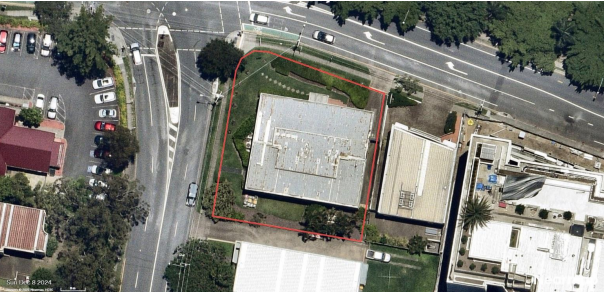
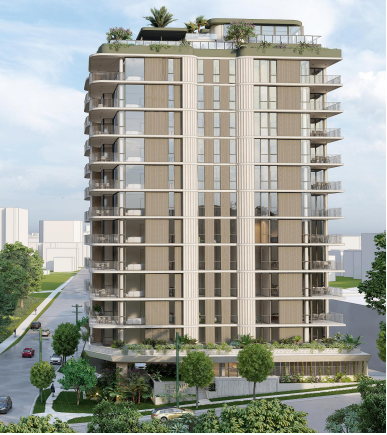
BCC is currently reviewing a proposal from developers aiming to build a 12-storey residential tower at 70 Sylvan Road, Toowong. The site, located at the intersection of Croydon and Jephson streets and close to the Regatta Hotel, has a current height limit of eight storeys. The proposal, submitted by Pradella, features 53 residential units along with a rooftop pool and entertainment area.
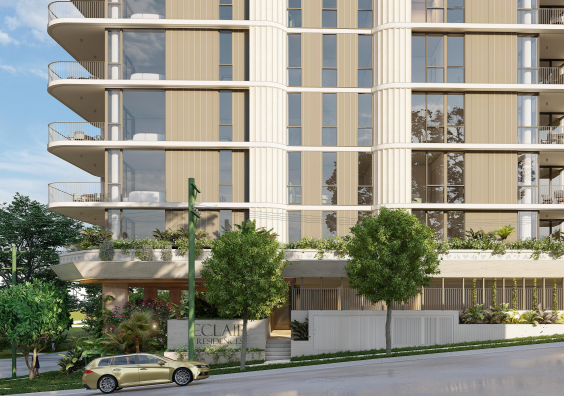
This ambitious plan has drawn attention due to its proposed height, which surpasses local planning regulations. The development has been designed by HAL Architects, who emphasise that the building’s aesthetics draw inspiration from Toowong’s rowing history. According to the architects, the curved and sculpted form of the structure is meant to evoke a sense of flowing water, reminiscent of the area’s subtropical Queenslander heritage.
Photo Credit: DA/A006737871
Developer’s Argument
Despite the height restriction, developers argue that taller buildings have previously been approved in the area. They believe the proposed Sylvan Residences would blend into the existing skyline and contribute positively to the local architectural landscape.
In materials submitted to the BCC, HAL Architects describe the tower as embodying Toowong’s character.
Photo Credit: DA/A006737871
Planning Application Details
The application (A006737871) was submitted on 24 March 2025 by PP Sylvan Pty Ltd. Currently, the application is in progress under an impact assessment level, awaiting a decision from the BCC.
Photo Credit: DA/A006737871
Future Implications
As of today, only one resident has submitted an opinion on the proposed development. While he welcomes the project to provide more housing in the area, he also raised concerns about the impact on his view. He stated that the new high-rise could “completely decimate” his view of the trees and morning sunlight.
As the application progresses, community input and BCC deliberations will play crucial roles in determining the project’s outcome. The BCC has yet to make a final decision. Residents are encouraged to submit their feedback.
A major redevelopment at the former Woolworths site in Toowong is progressing, with updated plans incorporating community input on public space, design, and facilities.
New Ownership and Ongoing Planning at Toowong Central
Toowong’s former Woolworths supermarket site—spanning 1.4 hectares and bordered by High Street, Sherwood Road and Jephson Street—is undergoing significant transformation.
Since acquiring the site in late 2023, the new private owners have initiated early planning to convert the area into a mixed-use commercial, retail and residential precinct. This follows earlier challenges, including non-compliance with prior approval conditions related to site upkeep and fencing.
BCC has confirmed that the current owners were not responsible for conditions before their acquisition. A change application (A006427990) submitted in December 2023 is currently under assessment, with BCC emphasising that any amendments must deliver improved safety and visual amenity.
Community involvement has played a central role in shaping the future of the Toowong Central site. Since early 2024, hundreds of residents have contributed via surveys and local events. Feedback focused on character, open spaces and facilities.
Preliminary concepts include a 2,800m² public space featuring an activated retail zone and a subtropical landscape design. One feature under consideration is an interactive “water veil” with night-time lighting. Plans also suggest fewer, taller buildings, creating space for a central town square accessible from High and Jephson Streets.
Public vs Private: Ownership and Access
The proposed public space within the redevelopment is privately owned, despite being publicly accessible. This has raised questions among locals about long-term access rights and maintenance responsibilities.
Comparisons have been drawn to other Brisbane sites such as West Village in West End (2,118m² of public space) and Gasworks Plaza in Newstead (2,230m²), both of which operate under similar public-private arrangements.
Photo Credit: DA/A006427990
Local Sentiment and Feedback
Online community discussions have reflected a mix of enthusiasm and concern. Some residents have questioned whether the greenery will feel authentic and spacious compared to existing developments.
Others are eager for construction to begin, citing the need for new housing. In response to community queries, city official Penny Wolff confirmed that the number of storeys in the new buildings is yet to be determined.
BCC has stated that community input opportunities will continue once design and planning advance. Residents are encouraged to have their say. Feedback can be sent to info@theheartoftoowong.org.
While the current design is still in development, further updates are expected as the planning application progresses. The project aims to strike a balance between housing growth, accessibility and lifestyle quality in the Toowong area.
Brisbane Boys’ College (BBC), based in Toowong, delivered an outstanding performance at the Great Public Schools (GPS) Swimming Championships. The Senior School Swim Team secured a historic third-place finish—the school’s first podium result in nine years.
Meanwhile, the Junior swimmers also impressed, finishing fourth in their category and showcasing the depth of BBC’s swimming program. The competition at Brisbane Aquatic Centre saw both teams achieve multiple podium finishes and break several school records.
A Unified Send-Off for Junior and Senior Swimmers
BBC’s swimming program was in full force as both the Junior and Senior School teams competed at the GPS Championships on 13 March 2025. The Junior swimmers kicked off the competition in the morning, while the Senior team followed in the afternoon.
The Junior squad impressed with a fourth-place finish, with 63% of the swimmers achieving personal bests. Their standout performances included:
U12 4x50m Freestyle Relay Champions:
Edward S, Wilbur H, Michael G, Timmy M
U11 4x50m Freestyle Relay Second Place:
Kyne W, Peter Z, James S, Oscar I
Five team relay personal bests and 11 individual relay personal bests
The support of the entire Year 6 cohort, who filled the stands cheering for the #GreenWhiteBlack, added to the spirited atmosphere of the event.
Senior Swimmers Make History with Podium Finish
Photo Credit: Brisbane Boys’ College/Facebook
BBC’s Senior School Swim Team delivered a remarkable performance, securing:
Three GPS Champions:
Jacob Algate (All Age 200m Individual Medley)
Campbell Watt (U14 50m Freestyle)
Andre Venter (U16 50m Breaststroke)
Five BBC Records:
Tom Symonds (U15 50m Backstroke – the second-fastest swim in GPS history)
Jacob Algate (Open 100m Breaststroke)
Andre Venter (U16 50m Breaststroke)
U15 Medley Relay
Tom Symonds, Harrison Hill, Mitch Warman and Gus Lawrence
Open Medley Relay
Jacob Algate, Derwin Lee, Jack McMahon and Dylan Clive
Photo Credit: Brisbane Boys’ College/Facebook
The team’s dedication paid off, with 62% of Senior School swimmers achieving personal bests, reinforcing the strength of BBC’s swimming program.
A Tradition of Excellence in GPS Swimming
The GPS Swimming Championships, held annually by the GPS Association of Queensland, is a premier event for young athletes. It fosters commitment, teamwork, and sportsmanship, values exemplified by BBC’s swimmers throughout the competition.
This year’s results highlight BBC’s growing presence in GPS Swimming, with both Junior and Senior squads demonstrating exceptional skill and determination.
Photo Credit: Brisbane Boys’ College/Facebook
Looking to the Future
With the Senior team securing a historic third-place finish and the Junior squad showing great promise with their fourth-place result, BBC’s swimming program is on an upward trajectory. The support from the school community, coaching staff, and families has played a pivotal role in this success.
As BBC looks ahead to future competitions, the momentum from this year’s GPS Championships sets a strong foundation for continued achievements in the pool.
The Toowong area is set to benefit from significant active transport improvements. The long-planned Sylvan Road Bikeway and the Toowong-West End Bridge secured new funding. The projects, which have also received state and local government support, aim to enhance cycling and pedestrian infrastructure in Brisbane’s western suburbs.
The planned upgrades for Toowong’s transport infrastructure have been discussed for several years. The State and BCC previously set aside funds for these projects. The recent commitment from the federal government has now ensured all three levels of government are financially contributing, allowing the long-awaited developments to proceed.
Under the $100 million Active Transport Fund, the Federal Government has allocated $5 million to the Sylvan Road Bikeway, a key cycling corridor connecting the Western Freeway Bikeway and the Bicentennial Bikeway. Additionally, $1 million has been earmarked for an updated business case for the Toowong-West End Bridge, a new active travel connection over the Brisbane River.
Sylvan Road Bikeway: Addressing Safety Concerns
Sylvan Road in Toowong has long been identified as a high-risk cyclist area. According to BikeSpot 2023 rankings, it is one of Brisbane’s most hazardous cycling routes, due to high traffic speeds, dangerous intersections, and a lack of separation from vehicles.
Currently, cyclists outnumber cars at peak times at intersections such as Jephson and Croydon Street, yet sporadically enforced parking restrictions continue to pose risks. The new funding will help BCC implement a safe, separated bikeway, eliminating a critical gap in Brisbane’s active transport network.
Toowong-West End Bridge: Scaling Back But Moving Forward
Initially part of a broader “Bridges for Brisbane” strategy proposing five new river crossings, the Toowong-West End Bridge remains one of the last projects to proceed. Rising construction costs and budget pressures led to the cancellation of the West End-St Lucia Bridge. Still, efforts to deliver the Toowong connection remain on track, with a focus on securing funding ahead of the 2032 Brisbane Olympics.
While the project is still in the business case phase, the Federal Government’s funding injection signals strong support for the bridge, which will provide a vital active transport link between Brisbane’s western suburbs and the inner city.
Photo Credit: BCC/Flickr
Community Support for Active Transport Investment
Local cycling advocacy groups, including Brisbane West BUG and Space4CyclingBNE, have long pushed for these projects. These groups are engaging with representatives across political lines to prioritise investment in active transport.
With Brisbane’s population continuing to grow and the 2032 Olympics approaching, community advocates hope this funding marks a broader commitment to safer and more sustainable transport solutions.
Photo Credit: Space4cyclingbne/Facebook
Next Steps for Toowong’s Infrastructure
With funding now secured, BCC will proceed with detailed planning and implementation of the Sylvan Road Bikeway. Feasibility studies for the Toowong-West End Bridge continue.
Timelines for construction are yet to be confirmed. Stakeholders remain optimistic that these upgrades will enhance safety and connectivity for pedestrians and cyclists in Toowong.
Merle Thornton, who famously challenged the ban on women drinking in public bars by chaining herself to the Regatta Hotel bar in Toowong, has been recognised with an honorary doctorate and a pledge named in her honour to combat corporate gender inequality.
Fifty-five years after her protest at the Regatta Hotel, the University of Queensland bestowed an honorary Doctorate of Letters upon Merle Thornton, celebrating her profound impact on Australian Society. The 1965 protest where Thornton and Rosalie Bogner chained themselves to the Regatta Hotel Bar, resulted in repeal of section 59A of the Queensland Liquor Act five years later. UQ Vice-Chancellor Debbie Terry stated that the doctorate was awarded for Thornton’s extraordinary contribution to society.
In addition to the doctorate, UQ has launched the “Merle’s Pledge,” an initiative to increase female representation in professional settings. This pledge requires individuals to commit gender equity as a condition of their participation in panels and conferences.
Dr Dee Gibbon, UQ’s Head of Workplace Diversity and Inclusion, confirmed that the senior leadership team has pledged to avoid panels or events lacking adequate female representation. This initiative addresses the gender imbalance in physics and electrical engineering, where conferences often lack female speakers.
Dr Jacqueline Romero, a physics and mathematics fellow at UQ, acknowledged the gender disparity in science and emphasised the importance of visible female role models for young people. She also admired Thornton’s advocacy for women’s and Indigenous rights.
Merle Thornton’s daughter, Sigrid Thornton, conveyed her mother’s deep honour and delight at the recognition. Sigrid Thornton, a gender-quota advocate in the film and television industry, highlighted the significance of the “Merle’s Pledge” in redressing gender imbalances. She emphasised the need for both female and male feminists to champion gender equity. The “Merle Pledge” provides guidelines for other institutions to adopt the pledge, and encourages the use of the pledge’s messaging and logo.
Merle Estelle Thornton AM, who passed away on August 16, 2024, was a dedicated advocate for women’s rights and social justice. Beyond the Regatta Hotel protest, she co-founded the Equal Opportunities Association for Women in 1965 and helped establish the first Women’s Studies course at UQ in 1973. Her activism extended to demanding equal pay and the removal of the marriage bar for women in public service.
In 2015, Thornton was awarded the Member of the Order of Australia for her service to the community, particularly her advocacy for women and Indigenous rights and her contributions to the arts. In 2014, the Regatta Hotel acknowledged her impact by renaming its bar “Merle’s Bar. ” In 2009, her 1965 protest was recognised as a “Q150 Icon.”
Tropical Cyclone Alfred has brought heavy rainfall and flooding to Brisbane, impacting local creeks and causing disruptions across various suburbs. Creeks such as Cubberla, Witton, Toowong, and Sandy have experienced significant water flow, raising concerns for residents and community groups.
Residents have reported high water levels in several creeks. One resident shared an image of Sandy Creek in full flow as of Sunday, March 9, reflecting the heavy rainfall’s impact on the waterway.
Sandy Creek (Photo credit: David Muir/Facebook)
Similarly, Toowong Creek has also experienced surging water levels. A local resident shared: “And is just past us now. It is producing a lot of local run-off. The picture shows the current flow from nearby Toowong Creek entering the river. For us, local run-off is not much of an issue. For others, not so nice.”
Photo credit: brisbane.qld.gov.au
The Toowong Creek Catchment covers an area of 3.86 square kilometres, with its centre located about 5 km southwest of Brisbane’s CBD. The catchment partially includes the inner-city suburbs of Toowong and Taringa. Its headwaters originate in the bushland reserves of Mount Coot-Tha and Brisbane Forest Park, before eventually flowing into the Brisbane River.
UQFC Fields Closed Due to Flooding
The University of Queensland Football Club (UQFC), located at Cubberla Creek Reserve in Chapel Hill, has announced that all its fields will remain closed until further notice.
“UQFC will continue to monitor the flooding situation at Cubberla Creek and Gem Road and ask that you please stay off the fields,” the club stated through social media. The club is urging players and visitors to avoid the area until conditions improve.
The flooding has also caused infrastructure issues, with an unplanned power outage currently impacting 97 customers in the Holland Street and Sherwood Road areas of Toowong. Local authorities and power companies are working to restore service as soon as possible.
With floodwaters still present in many parts of Brisbane due to ex-Tropical Cyclone Alfred, officials are urging residents to remain vigilant and avoid flood-prone areas. The Bureau of Meteorology continues to monitor the situation, and further updates are expected.
Keep track of the latest developments post-Cyclone Alfred:
Evacuation Centres Open for Residents Affected by Flooding
Updated: 11 March 2025
Council has opened evacuation centres for residents needing to leave their homes due to flooding.
Evacuation Centres Now Open:
Sleeman Sports Complex (Chandler Arena) – 757 Tilley Road, Chandler, 4155 (access via Old Cleveland Road, Car Park 3)
Kedron Wavell Services Club – 21 Kittyhawk Drive, Chermside, 4032
Community-led Evacuation Centre: Riverlife Community Centre – 47 Jennifer Street, Seventeen Mile Rocks, 4073
Safety Reminders:
Check alerts and road conditions before evacuating.
Leave early and avoid driving through floodwaters.
If stopping, avoid parking near trees, creeks, or drains.
What to Bring:
Essential items – mobile phone, charger, spare clothing, toiletries, towel, important documents (e.g., insurance papers, passports, medical prescriptions).
Medication and infant supplies – formula, nappies, or any special medical needs.
Bedding – pillows and blankets are recommended.
Before leaving: Inform neighbours, turn off electricity and gas, and lock your home.
Pet Guidelines:
Sleeman Sports Complex & Riverlife Community Centre – Pets allowed but must be crated, leashed, and securely transported. Owners must bring food and litter trays.
Kedron Wavell Services Club – No pets allowed, except for registered service animals.
Brisbane Council Service Updates Following Cyclone Alfred
Updated: 11 March 7:00 a.m.
Brisbane City Council has adjusted its services and facility operations due to Alfred’s impact.
Closures Until Further Notice:
Cemeteries, City Hall, Community Halls, Libraries, Pools, and Sir Thomas Brisbane Planetarium
Five Council Customer Service Centres (North & South Regional Business Centres, Indooroopilly, Carindale, Brisbane Square)
Golf Courses and Off-Street Parking (King George Square & Wickham Terrace)
Mountain bike tracks at Gap Creek and Mt Coot-tha Reserve
Toowong Library is among several Brisbane libraries affected by the recent major library restructure, which includes reductions to key community programs as part of broader budget adjustments.
BCC’s library services are undergoing a significant restructure, raising concerns among staff and the community. A recent survey by The Services Union revealed that half of Brisbane’s librarians are considering quitting, citing low morale, heavier workloads, and a lack of consultation in the restructuring process.
BCC has denied claims that $17 million has been cut from library funding, stating that the budget remains intact while adjustments are being made to maintain financial stability. Local official Fiona Cunningham said the BCC is committed to balancing the delivery of essential services with responsible spending.
Program and Staff Reductions at Toowong Library
As part of the changes, Toowong Library has reduced its Toddler Time sessions from two per week to one. Other Brisbane libraries have also seen cuts to programs, including First 5 Forever, a state-funded early childhood literacy initiative, which has seen a 25% reduction in weekly sessions citywide.
While funding from the State for First 5 Forever has remained unchanged since 2019, BCC has faced increasing operational costs. As a result, they scaled back some sessions, despite continued high demand in certain locations, including Indooroopilly, where parents reported overcrowding in past sessions.
Library Staff Push Back Against Changes
Library staff have voiced strong opposition to the restructure, with some participating in industrial action to push for improved working conditions. According to The Services Union, a recent survey of library staff found:
97% of workers felt the restructure was poorly planned.
82% believed the changes negatively impacted their mental health.
Over 50% were considering resigning due to increased stress.
Union leaders criticised the restructure, arguing that it has exacerbated workload pressures, physical strain, and workplace aggression from customers while prioritising cost-cutting over community needs.
Parents and community members have expressed frustration over the program reductions, arguing that libraries provide more than just book lending—they serve as vital community hubs offering educational resources, digital services, and early learning programs.
BCC has defended its position, stating that the changes are necessary to maintain financial sustainability. The BCC has promised to monitor attendance levels and adjust schedules where needed, but some fear library services will be deprioritised as part of broader council budget constraints.
With these changes rolling out in the coming weeks, residents in Toowong and across Brisbane will have to wait and see how their local library services will be affected. While BCC has assured that services will continue, fewer sessions, reduced staff, and growing discontent from workers and the community indicate ongoing challenges for Brisbane’s public libraries.
Lesley Trotter, a 78-year-old retired school teacher known for her active lifestyle and dedication to recycling, disappeared from her Toowong home in March 2023. The coroner ruled her deceased, but the cause of death remains undetermined.
Ms Trotter last contacted her family on 27 March 2023. Her brother found her Maryvale Street unit unlocked the following day, with her phone, wallet, and car left behind. Concerned, he reported her missing, prompting an immediate police search.
Authorities found traces of blood near bins outside her unit. They determined that her body was inside a wheelie bin collected by a BCC rubbish truck from Clayton Lane on 28 March 2023. Despite an extensive search of over 3,000 tonnes of waste at landfill sites in Swanbank and Rochedale, her remains were never recovered.
Police considered three possibilities:
A medical episode while sorting through bins.
Accidental misadventure.
Foul play, potentially linked to tensions with neighbours over her recycling habits.
Ms Trotter was known for meticulously checking bins to ensure recyclables were correctly sorted. While some neighbours appreciated her efforts, others found her behaviour intrusive. Police acknowledged possible tensions but found no direct evidence linking disputes to her disappearance.
Extensive Search Yields No Answers
The search for Ms Trotter’s body was one of Queensland’s largest waste facility operations, involving the Australian Defence Force. Investigators quarantined waste sites and sifted through rubbish, finding various “items of interest,” but none linked to her. Decomposing waste hindered recovery efforts, and the search was called off.
The case remains open. Queensland Police urge anyone with relevant information, CCTV footage, or dashcam recordings from 28 March 2023 to contact Crime Stoppers on 1800 333 000. Even minor details may be crucial in determining how Ms Trotter’s body ended up in the bin and whether foul play was involved.
Thousands of Queensland students, including those in Toowong, are vying for limited spots in the state’s top selective schools, with just over a third making the cut. As competition intensifies, parents are turning to expensive tutoring from as early as age six to improve their children’s chances.
Queensland’s selective state high schools are facing unprecedented demand, with entry rates at an all-time low. Recent figures show that out of nearly 2,500 applicants, only 700 students were accepted into the three Queensland Academy campuses—one of which is located in Toowong, the Queensland Academy for Science, Mathematics and Technology.
Parents are investing heavily in tutoring services, with some enrolling their children in preparation courses years in advance. Experts warn that the extreme competition is not only financially straining families but also putting unnecessary pressure on young students.
Limited Spots, High Costs, and Rising Parental Pressure
The Queensland selective school system currently consists of three state-run institutions:
Queensland Academy for Science, Mathematics and Technology (QASMT)
Queensland Academy for Creative Industries (QACI)
Queensland Academy for Health Sciences (QAHS)
Each year, thousands of students compete for entry, paying a $250 non-refundable application fee.
QACI had only 174 places available.
QAHS offered 179 spots.
QASMT in Toowong, the most sought-after, admitted just 250 students.
Brisbane State High School (BSHS) also runs an out-of-catchment entrance exam, but of the 524 students who applied last year, only 124 secured a spot, with families paying $420 in processing fees.
Tutoring From Age Six: A Growing Trend in Toowong and Beyond
Education experts report that parents are enrolling children in tutoring from as early as Year 1, hoping to prepare them for the rigorous entrance exams.
E-Yong Lee, founder of Lee Excellence Education Academy, said many parents worry that their children will not get into high-performing schools. He explained that some families start tutoring when their child enters primary school.
Six-year-old Emily Paterson, already enrolled in tutoring, is part of this growing trend. Her mother, Jettie Fan, believes early preparation will give Emily a strong foundation.
Tutor Prabhjot Singh, who prepares students for QASMT entrance exams, has seen a sharp rise in demand. He stated that even Year 5 students are coming in for high school entrance exam tutoring.
Photo Credit: QASMT
Queensland’s Selective Schools Lag Behind NSW
Experts argue that Queensland’s limited number of selective schools is putting regional students at a disadvantage.
Currently, NSW has 17 fully selective schools and 25 partially selective schools, many located outside Sydney. In contrast, Queensland’s three academies are all concentrated in Southeast Queensland, leaving gifted students in regional areas with few options.
Dr Matthew White, an inclusive education expert from Australian Catholic University, believes Queensland should expand its selective school network. However, a Queensland Department of Education spokeswoman confirmed that there are no plans to establish additional selective schools. Instead, she pointed to regional ‘Programs of Excellence’, such as those at Cairns State High School and Rangeville State School in Toowoomba.
Critics argue that while these programs provide enrichment opportunities, they do not match the academic intensity of selective schools.
The Mental Toll of Selective School Exams
While some students thrive in competitive academic environments, experts warn that rejection from selective schools can negatively impact students’ self-esteem.
Dr White highlighted that students who fail to secure a spot often experience lower academic self-confidence. Additionally, the high cost of tutoring and exam fees is placing financial strain on many families, raising concerns that selective schooling is becoming an exclusive opportunity for wealthier students.
Photo Credit: QASMT
What’s Next for Queensland’s Selective Schools?
As pressure mounts on the state government to address Queensland’s selective school shortfall, education experts continue to push for a more inclusive model.
With no immediate plans for new selective schools, the debate will likely intensify as more families turn to expensive tutoring services to boost their children’s chances. For now, students in Toowong and across Queensland face an uphill battle to secure a spot in the state’s most sought-after high schools.