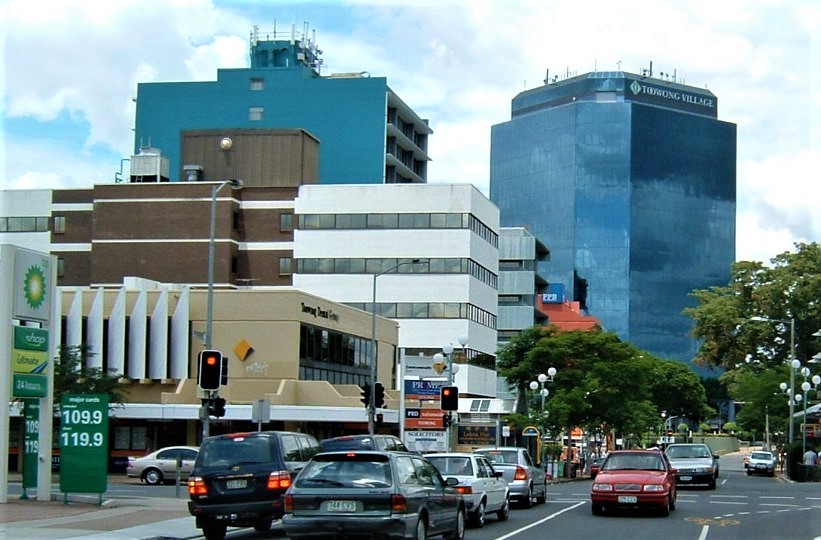

The Council of Mayors in South East Queensland (SEQ) has submitted a proposed $62 billion infrastructure project that would expand motorways and rail lines in the region. Toowong’s Legacy Way stands to benefit from this plan, along with 46 other roadworks expected to be rolled out from 2019 to 2041.
Three roadworks identified in the SEQ People Mass Movement Study, which was released last January, will significantly impact Toowong traffic gridlocks once the road constructions are underway.
The North-South Link (Inner Western Bypass) will comprise a tunnel corridor linking from Toowong (Centenary Motorway and Legacy Way) to the North-West Transport Corridor at Everton Park. The East-West Link will entail the construction of a tunnel connecting Toowong from Legacy Way to the South East Freeway. The Centenary Motorway Bypass, on the other hand, will cover Sumners Road Interchange to Legacy Way at Toowong and link to North-South Link at Everton Park.
In an interview with the media, Council of Mayors Chairperson and Brisbane Lord Mayor Graham Quirk said that South East Queensland needs to get these infrastructure projects started to cope with rising demands. Population growth in the region is expected to increase in the coming years and the current transport strategies will not be enough to sustain SEQ’s global competitiveness and livability.
“As the population continues to grow, this plan is an important step towards protecting the quality of life we currently enjoy in SEQ,” Mr Quirk said. “[This is] ensuring that we can safely and efficiently move residents, tourists and freight throughout our region.”
The Council of Mayors expects all levels of government to increase infrastructure spending to $3.5 billion a year for the key projects until 2031. After this, spending may lower to $2.7 billion a year to complete all 47 motorway and railway projects by 2041.
Mr Quirk said that the projected numbers are realistic, economical, and efficient compared to the infrastructure spending in cities like Melbourne and Sydney.
During a BCC meeting held on the 5th of February, however, Labor opposition leader Peter Cumming questioned the validity of the study. The Council of Mayors apparently commissioned French company Lagardère Sports, through its specialised team Event Knowledge Services (EKS), to conduct the study. This is the same group that did a feasibility study for the Sydney 2000 Olympics.
Since 2018, SEQ expressed plans to bid for the 2023 Olympics to be held in Brisbane. Mr Quirk said that the bid cannot push through if the infrastructure projects are not approved.
The mayor also said the study collected multiple data on the federal, state and council levels. There hasn’t been a comprehensive infrastructure report that identified the possible road problems affecting all sectors of government. Thus, attempts to invalidate the report “would be a very bad move,” according to Mr Quirk.
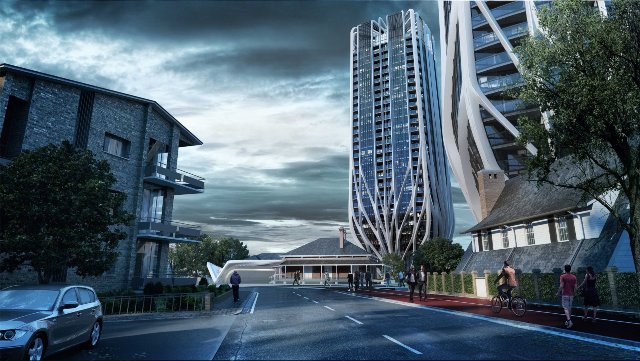
After losing the battle over their proposed “champagne flute” skyscrapers in the former ABC Toowong headquarters, Sunland has moved on and is currently planning a new project for the site.
It can be recalled that they became controversial in 2018 after the Grace on Coronation development also known as “champagne flutes” skyscrapers by Zaha Hadid Architects received criticisms due to “lack of sensitivity to the geography and context of the site.”
The new project, which is in its early planning stage, is expected to adhere to the 15 storey limit. The initial project would have been 27 storeys, greater than what’s outlined in the planning scheme. The developers dumped the structure in December following the rejection from the Planning and Environment Court in September 2018.
According to the company’s managing director Sahba Abedian, they are in the process of preparing the new development application for the project.
“We are now directing every effort to conceive a new architectural outcome that celebrates the unique riverfront site,” Abedian said.
Abedian, who assures the project will contribute to “Brisbane’s coming of age as a true international city” said that no further details will be available until a new development application is lodged.
Toowong Cemetery has been and remains to be an icon in the suburb. Established in 1866 and formally opened in 1875, it is currently the largest cemetery in Queensland.
The heritage-listed cemetery is a prominent landmark in Queensland not only because of its size but also for the history it carries and the personalities buried in the premises.
History of Toowong Cemetery
Brisbane General Cemetery (Toowong) – General plan, 8 July 1909 Photo credit: CC-BY/Queensland State Archives/Flickr
The Toowong Cemetery has quite an interesting beginning. Initially, Augustus Gregory, the Surveyor-General in 1866 did not particularly favour the Toowong site. However, he found it to be the only locality to present the necessary requirements for a general cemetery. Actually, the choice of that particular parcel of land was made by default rather than by design.
The appropriateness of the Toowong site for the purpose of a general cemetery was an issue that was actively contested for around two decades after the choice was announced. Its isolation and doubts about its suitability plus the lack of access to public transport fuelled the dissent and debate. Although the cemetery was already established, the public continued to use the cheaper, more accessible familial grounds at Milton.
In 1868, a further portion of Crown land, some 53 acres in the area north of the cemetery reserve was added to fulfil of the Trustee’s requirement for the entire cemetery to be surrounded with public roads.
The cemetery reserve of 250 acres 1 rood was gazetted and the Cemetery Trust was established in October 1870. Its honorary trustees were amongst Brisbane’s most prominent political and business figures including James Cowlishaw, John Hardgrave, William Pettigrew, Samuel Walker Griffith, George Edmonstone, Alexander Raff, John Petrie (Chairman), Michael Quinlan, and Nathaniel Lade.
In December 1870, trial sinking at the cemetery found the ground to be unsuitable, but this did not prompt the government to secure a more appropriate location. Queensland’s second governor, Samuel Wensley Blackall had been a supporter of the Toowong site. In his ill health, he indicated his desire to be buried there.
Samuel Wensley Blackall. Photo credit: John Oxley Library, State Library of Queensland. Image number: 147063
Governor Blackall was buried on the highest knoll on 3 January 1871. His memorial is the largest and most prominent in the cemetery with commanding views of the city and surrounds.
The Surveyor General, the Trustees, and the Colonial Secretary still haven’t favoured the Toowong Site. Even after the burial of Governor Blackall on its most prominent peak, the Trustees still sought other more suitable prospects for a cemetery site.
Trustee George Edmondstone’s property on Enoggera Creek was identified as being most suitable, however, the Colonial Treasurer could not reach an agreement on price. Because of this, the Toowong site was finally accepted as the Brisbane General Cemetery grounds.
Headstone of Walter Thomas Porriott, a possible Jack the Ripper suspect. Photo credit: Rocketrod1960/Wikimedia Commons
Being one of the most prominent burial grounds in Queensland, it is no surprise that the Toowong Cemetery is now home to several notable personalities. These include, but are not limited to, a Prime Minister, two Queensland Governors, 13 Queensland Premiers, 11 Queensland Labor leaders, at least 15 Brisbane Mayors, and many other prominent political, religious, sports, arts, and business figures.
As a general cemetery ground, Toowong cemetery has been the burial place of individuals from all walks of life. Interestingly, it has been rumoured that this is also where the notorious Jack the Ripper was buried.
Toowong Cemetery – War Memorial from South-East (2015). Photo credit: Vic Bushing/des.qld.gov.au
Toowong Cemetery is still an operating cemetery. It currently features a number of cultural areas, historical trails, and memorials.
Today, Brisbane City Council has been working with the Friends of Toowong Cemetery (FOTC), a voluntary organisation of people with a special interest in the historic landmark to maintain and improve the cemetery’s condition.
The FOTC holds guided walks in the cemetery every first Sunday of the month at 10:30 a.m. (except January). On their upcoming Toowong Cemetery Heritage Walk, they will be exploring the political and non-political events of one hundred years ago at the graves of some of the people who were involved.
The “1919, The Year of Peace?” heritage walk will be on Sunday, 3 February 2019 from 10:30 a.m. to 12:00 p.m. and meeting point for participants is at the flagpole, Canon Garland Place, Toowong Cemetery.
Apart from the historical walks, Toowong cemetery is also popular for its weekly ghost tours. The Original Toowong Cemetery Ghost Tour features a two-hour visit highlighted by thirteen ghost stories of real haunted graves within the cemetery.
Another ghost tour is The Other Side Tour which also lasts for two hours with a similar format. However, the tour starts at a different location, follows a different route, and has a different set of ghost stories.
After losing the legal battle, Sunland has decided to abandon its “Grace on Coronation” development plans at the Coronation Drive, Toowong.
The controversial “champagne flute” skyscraper — designed by Dame Zaha Hadid, who passed away in 2016 — was a $430-million development proposal for a 555-unit, two 24-storey and one 27-storey towers at the former ABC studios site. The proposed development at the 1.5-hectare site also included a landscaped public parkland and ground floor retail space. Approval was granted by the Brisbane City Council in 2015 and construction was scheduled to commence that same year.
Local resident Kate Peta Bell, however, appealed the decision on the grounds that the proposed buildings exceeded the height limitation of 15-storeys. The appeal was dismissedby Judge Rackemann on the basis that the public space surrounding the base of the tower offset the non-compliance with the Brisbane City Council planning scheme.
Photo Credit: Zaha Hadid / zaha-hadid.com
In May 2018, the Planning and Environment Court’s decision was overturned by the Supreme Court of Queensland and leave to appeal was granted.
It is not for the decision maker (including in this context a Court), to gainsay the expression of what constitutes the public interest that is in a planning scheme. A decision maker might think that a limit of 15 storeys is too restrictive, and the public would be better served by a higher limit. But this decision maker must accept that it is in the public interest that the limit be 15 storeys, because that is what the planning scheme effectively provides – Bell v Brisbane City Council & Ors [2018] QCA 84.
Ultimately, by the judge substituting his own view of the public interest for that which was expressed in the Scheme, there was a legal error which affected his conclusion under s 326. Further, that was also affected by the legal error in the interpretation of overall outcome (3)(h). – Bell v Brisbane City Council & Ors [2018] QCA 84.
In my conclusion, the judgment was affected by errors of law, which warrant a grant of leave to appeal and the appeal being allowed. – Bell v Brisbane City Council & Ors [2018] QCA 84.
Ultimately, the proposal was refused in the Planning and Environment Court’s final decision last September 2018.
The Sunland Group said that they respect the court’s decision and has since removed the “Grace on Coronation” development from their website. A new project for the Coronation Drive site is now being conceived, however, no details have been disclosed yet.
Toowong is one of the top performing suburbs for unit capital growth in 2018 as the Brisbane housing and units market is poised to perform better in 2019, latest research shows.
Brisbane can look forward to a bustling housing market in 2019 as house sales and rentals are seen to rise and supply contract due to expected increase in demand, Place Estate Agentsresearch predicts.
Brisbane’s performance in 2018 was mostly buoyed by low unemployment rate, affordability, and upcoming and underway infrastructure projects including the Queens Wharf development and the Howard Smith Wharf precinct. These factors are expected to continue boosting the capital city’s residential market performance next year.
Brisbane has been defying predictions of gloom and doom in the property market and challenges brought by unit oversupply this year. Whilst other capital cities experienced declines, Brisbane suburbs registered growth, both for houses and units, for the past 12 months.
National Housing Market Update | December 2018
Video Credit: CoreLogic Australia / YouTube
According to CoreLogic’s November hedonic home value index report released in December 2018, Brisbane recorded positive dwelling values change over the month (0.1 percent), quarter (0.1 percent), and annual (0.3 percent). This, despite the national dwelling values dipping 0.7 percent over the month — the weakest month-on-month change since the Global Financial Crisis.
The top ten suburbs for houses capital growth is led by East Brisbane with an annual average capital growth rate of 11.7 percent, followed closely by Fortitude Valley with 11.3 percent. Coorparoo, Teneriffe, Highgate Hill, Greenslopes, Albion, Paddington, West End, and New Farm rounds out the list.
Herston, on the other hand, led the top ten suburbs for units in 2018 with 4.5 percent annual capital growth rate, followed by Hawthorne (4.2 percent) and Toowong (3.9 percent). The rest of suburbs that made the list are Wilston, New Farm, Teneriffe, St Lucia, Highgate Hill, Windsor, and East Brisbane.
A 20-level apartment building has been proposed for 58-60 High Street in Toowong.
The development application submitted by Nan Xin Brisbane Toowong Ltd Pty proposes the construction of a residential tower right at the corner of High Street and Ebor Street. The plan calls for 171 apartment units consisting of 78 one-bedroom units, 84 two-bedroom units and nine three-bedroom units.
Photo credit: pdonline.brisbane.qld.gov.au
Describing Toowong as a nexus between the leafy suburbs and the city, the developer says that it aims to build a tower with communal outdoor rooms and leafy neighbourhood backyard for the residents. To realise this, the plan boasts three double-height outdoor rooms that can be shared by residents.
The common spaces, which will include a patio and a BBQ space for gatherings and family get-togethers, will be surrounded by green walls, trees and shrubs.
Retail spaces will dominate the ground level with alfresco seating adjacent to the footpath. The main entrance will also be activated by retail and dining areas.
Photo credit: pdonline.brisbane.qld.gov.au
Car spaces will be located at the back of the size through an access easement. This way, it will free up the High Street frontage for public pedestrian use. The development will provide 204 car spaces, 174 of which will be for residents. There will also be space for 30 motorbikes and 214 bicycles.
On the roof will be lush, green gardens for relaxation and social activities. The roof garden will offer residents panoramic views of the mountains, the city and the river. The communal space will also incorporate a swimming pool, a gym, and BBQ terraces. The greeneries and pergolas will help bring shade and minimise the strength of the afternoon sun.
There will be around 30 new ways for Brisbane residents to get fit and healthy as new free outdoor gyms will be coming or already opened in local parks including Perrin Park in Toowong.
“Council is committed to delivering more lifestyle and leisure opportunities across the city through free public outdoor gyms and multi-use games arenas in Brisbane parks,” Lord Mayor Graham Quirk said.
The Council is investing $5 million in “modern outdoor exercise equipment to help residents live healthy and active lifestyles.” Already, some of these fitness equipments, including large outdoor gyms, have been installed at around 20 parks since 2016. These facilities are located at CJ Greenfield Park in Richlands, Grinstead Park in Alderley, Nixon Park in Moorooka, Robinson Park in Tingalpa, and Perrin Park in Toowong
Photo Credit: Brisbane City Council/flickr.com/photos/brisbanecitycouncil
These outdoor gyms combine cardio and strength equipment suitable for any fitness-level such as cross-trainers, treadmills, hand bikes, lateral pull down, shoulder press equipment, leg press, and oblique equipment. The courts are fully-fenced with line marking for five-a-side soccer, basketball, or netball.
Several of these outdoor gyms also include multi-use games arenas such as the ones built at Richlands, Alderley, Moorooka, Toowong and Tingalpa. Next in line to have these kind of facilities will be Ferny Grove, Zillmere, Kangaroo Point, Runcorn, and Holland Park.
Photo Credit: Brisbane City Council/flickr.com/photos/brisbanecitycouncil
So far, more than 130 of Brisbane City Council parks have been installed with exercise equipment that are free to use. Facilities range from simple and static equipment to movable and interactive equipment for cardio and resistance training including rowing and stepping machines.
“With our enviable weather, it’s no wonder that people want to do more in the outdoors and Council’s outdoor gyms are providing an affordable and convenient alternative to traditional gym memberships.”
“Over the coming 18 months, fitness equipment will be installed at a further 10 locations, to ensure our local parks help create a vibrant and liveable city,” concludes Cr Quirk.
The QASMT expansion is part of the government’s Building Future Schools Fund which aims to deliver new and innovative education infrastructure solutions for growing communities.
For QASMT in Toowong, the expansion’s main goal is to enable the school to accommodate up to 1,200 students by 2021.
QASMT Expansion
QASMT’s proposed new northern learning centre. Photo credit: yoursay.buildingfutureschools.advancingeducation.qld.gov.au
The expansion involves two stages. Stage 1 will be complete by the start of the 2019 school year to accommodate Year 7 students. This stage primarily involves the refurbishment of existing school infrastructure.
QASMT’s proposed new eastern STEM hub. Photo credit: yoursay.buildingfutureschools.advancingeducation.qld.gov.au
On the other hand, QASMT targets the completion of Stage 2 at the start of the 2020 school year to provide accommodation for Years 8 and 9 students. The final stage includes a new northern learning centre and a new eastern STEM hub.
Community Consultation
QASMT expansion’s site plan. Photo credit: yoursay.buildingfutureschools.advancingeducation.qld.gov.au
Following the Department of Education’s community consultation for the said expansion, they have considered the feedback from the community and incorporated them into the updated expansion plans.
Changes to the expansions include the following:
Reduction in the number of additional carparks on-site – additional carparks will be added under the Northern Learning Centre.
Removal of a proposed formal carpark accessed via Miskin Street.
New kiss and ride facility on Bywong Street to improve traffic flow and access to on-street parking.
The location of the Northern Learning Centre has been adjusted to move it further from Toowong Creek.
The Eastern STEM Building has been reduced in height to be the same height as the existing buildings.
Toowong Habitat Protection Group is one of the major opponents of the expansion. This is mainly due to the ecological impact of the development of new buildings on Toowong Creek.
The group has identified several issues of concern including the development’s effects on the surrounding vegetation and animals as well as the area’s traffic conditions.
Clearing of Multiple Trees
Trees marked for removal. Photo credit: Toowong Habitat Protection Group/Facebook
Furthermore, the habitat protection group says that the development will require clearing of 59 trees. Unfortunately, one of the trees that are subject for removal is approximately more than 300 years old.
Clearing of these trees will certainly affect multiple animal species in the area. Currently, the Toowong Creek, as well as its buffer zone, is a sensitive and significant ecological area. In fact, around seven threatened wildlife species including Tusked Frog, Powerful Owl, and Grey Headed Flying Fox inhabit the proposed building location.
The ring tailed possum is one of the endangered species that is at risk due to habitat clearing. Photo credit: Toowong Habitat Protection Group/Facebook
Loss of habitat is not the only issue that can affect these animals as noise and dust pollution during construction can also significantly affect wildlife behaviour. The group has also cited that “scientific publications/literature shows construction noise depletes frog numbers, reduces reproductive physiology, and induces the likelihood of epidemiologic disease”.
Whilst the group is supportive of the government’s investment in education, their efforts focus on minimising the impact of the new buildings on community and natural assets.
Should you be interested in joining the group’s effort in saving Toowong Creek, you may visit their page to learn more about what you can do to help.
A historic Italian restaurant property on St Pauls Terrace, Fortitude Valley, could be moved to St Osyth Street in Toowong should a change to a development application get approval.
Berson Properties Pty Ltd initially requested to demolish the house at 240 St Pauls Terrace where the Mama Luigi’s used to operate. The restaurant stopped operating in the 1980s, but the name still brings many dear memories to those who remember. To many, back in the day, it was the first time they tasted Italian cuisine.
Mama Luigi’s was the first Italian restaurant in the whole of Brisbane. Historians also believe that this may have been the first foreign food restaurant in the city.
When the developer proposed to demolish the property, many locals voiced their opposition. The house is not heritage listed and the only protection it has is its inclusion in the Pre-1911 building overlay. The property was added to the Brisbane City Plan Pre-1911 list on 1 December 2017.
Because of the Pre-1911 building protection, the developer is now proposing a transfer of the property to 15 St Osyth Street in Toowong. The Toowong site owner, J Hutchinson Pty Ltd, has consented to the proposed transfer.
The proposed site for the transfer currently has an existing dwelling house, which was built after 1946. Since the existing property is not heritage-listed and does not fall under Pre-1911 building overlay or commercial character building overlay, Berson Properties is proposing to demolish it to accommodate the former Mama Luigi’s house.
Berson Properties believes that the Toowong site is suitable for the Pre-1911 property as it is subject to the Traditional Building Character Overlay. This, the developer says, will ensure that the building character will be secured.
Despite what seems to be a compromise, people opposed to the demolition are still not happy with the proposed transfer.
Councillor Jared Cassidy believes that the building should be retained at its original location. He thinks that the proposed transfer would remove the property from the site where it is associated and such action would just be as bad as demolition.
The council has done an initial review of the change in the DA. It is asking the applicant to provide further details about the protection of the building during relocation as well as other issues such as flood risk, a tree that could be removed and existing stormwater infrastructure in the Toowong site.
Toowong is among Brisbane’s healthiest suburbs, according to a Domain Healthy Brisbane study.
The first-ever study, in partnership with Deloitte Access Economics and Tract Consultants, compares 260 Greater Brisbane suburbs based on 10 indicators that either promote or hinder residents from achieving a healthy lifestyle.
These indicators include walkability, active transport to work, open space, tree cover, and volunteering. Based on these indicators, each suburb is then given a rating from 0.5 (poorest) to 5 (best) stars.
Promotion Indicators:
Walkability – Measures the urban environment’s capacity for walking combined with safety, efficient and enjoyable walking experience.
Active Transport to Work – Measures the percentage of residents in the labour force travelling to work, through walking or cycling, from their residence. Scores favour those suburbs with close proximity to employment centres or have access to bicycle routes.
Open Space – Measures the proportion of a suburb covered by public open space, providing an opportunity for active recreation and participation in sporting activities.
Tree Cover – Measures the percentage of tree cover of a suburb. Tree cover is known to have calming effects and aids in recovery, as well a reducing air pollution and lowering urban temperatures.
Access to Fresh Food/Supermarkets – Measures the density of supermarket and fresh food retailers in a suburb per 1000 of the population.
Volunteering – Measures the proportion of the suburb’s population involved in volunteer work.
Hindrance Indicators:
Fast Food Stores – measures the ease of access to fast-food. A high density of fast-food store equates to greater accessibility. The final accessibility score is the average of individual suburb scores plus the scores of neighbouring suburbs.
Liquors Stores – Measures the density of residents per packaged liquor store.
Recovery Indicators:
Hospitals – The average of a suburb’s distance to a hospital and the number of hospital beds per 1000 population.
Allied/Community Health – Combines both the allied and community facilities that are available for residents in a particular suburb.
Photo credit: Domain/domain.com.au
The 5-star Suburbs Are as Follows:
Indooroopilly
Taringa
Grange
Ashgrove
Chelmer
Toowong
Wilston
Bardon
Graceville
Chermside West
Chapel Hill
St Lucia
Fig Tree Pocket
Auchenflower
Yeronga
Many of these indicators were smoothed to account for “boundary effects” such as a road dividing suburbs, where a large park is located just across that boundary. The study is designed to create a better understanding of the opportunities that suburbs provide its residents that promotes healthy living.