

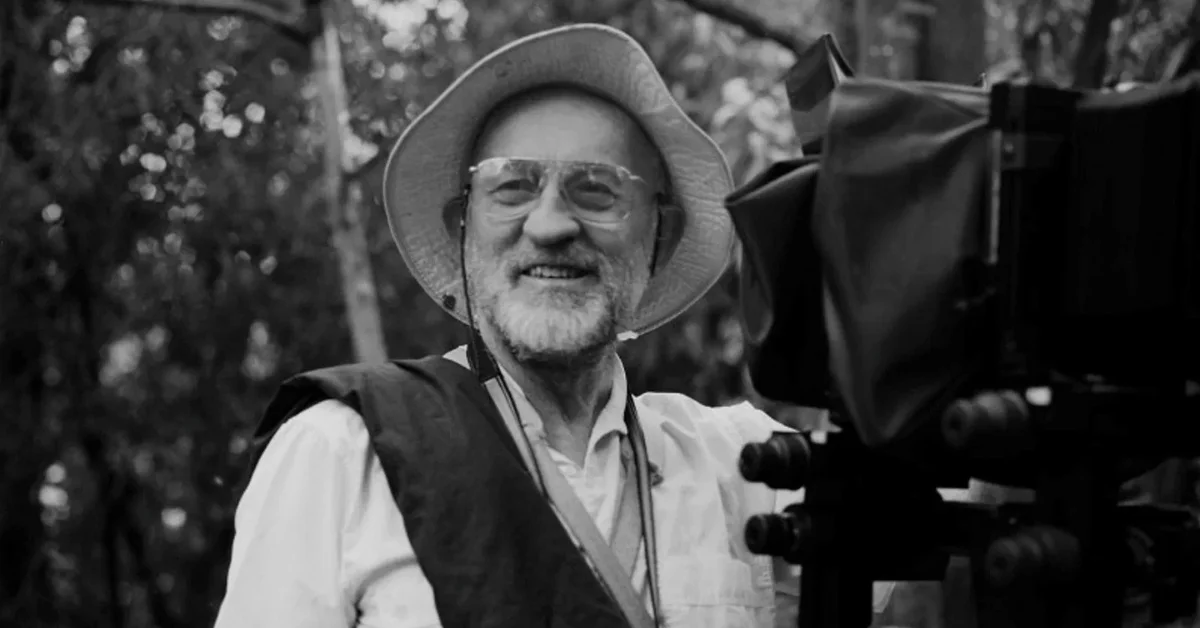
Architectural Photographer Richard Stringer of Toowong Receives Australia Day of Honours

Architectural photographer Richard Stringer of Toowong has been appointed a Member of the Order of Australia for his significant service to architectural photography, education and history.


The 89-year-old Toowong resident has spent over six decades documenting Queensland’s built environment, creating an archive of more than 63,000 negatives now held at the State Library of Queensland. His photographs captured many of Brisbane’s historic buildings before demolition, preserving visual records that would otherwise be lost.

Forensic Precision Meets Architectural History

Stringer arrived in Brisbane in 1963 after studying architecture at the University of Melbourne. He joined renowned architect James Birrell’s practice at the University of Queensland, where architecture and photography merged into his life’s work.

His photographic approach treats the medium as forensic documentation rather than artistic interpretation. This technical precision means his images serve as detailed records of structural design and architectural elements that researchers and historians now rely on to understand Queensland’s architectural evolution.
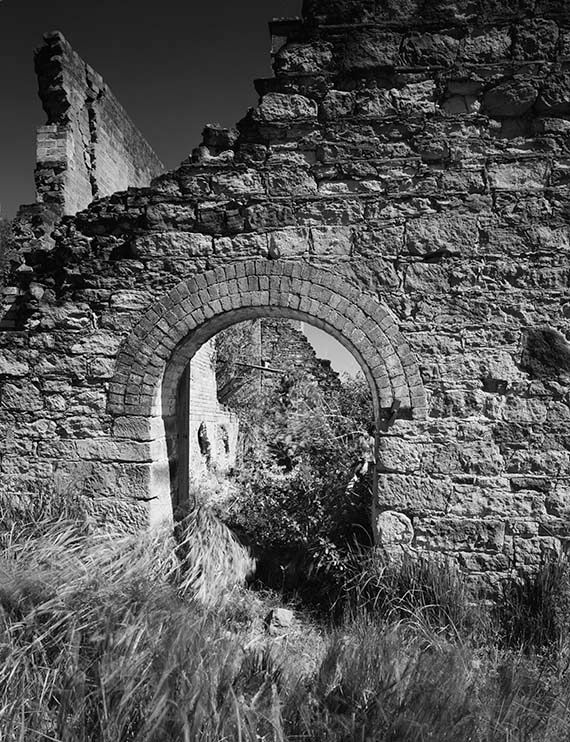
Photographed by Richard Stringer
Photo Credit: Richard Stringer / QAGOMA

The State Library of Queensland’s acquisition of his complete archive ensures permanent public access to this visual history spanning Brisbane’s dramatic transformation from the 1960s onwards.

Preserving Brisbane’s Vanished Spaces

Stringer’s most valuable contribution came through capturing buildings destined for demolition. His photographs of the Bellevue Hotel precinct and other lost buildings provide some of the most detailed visual records of these spaces.
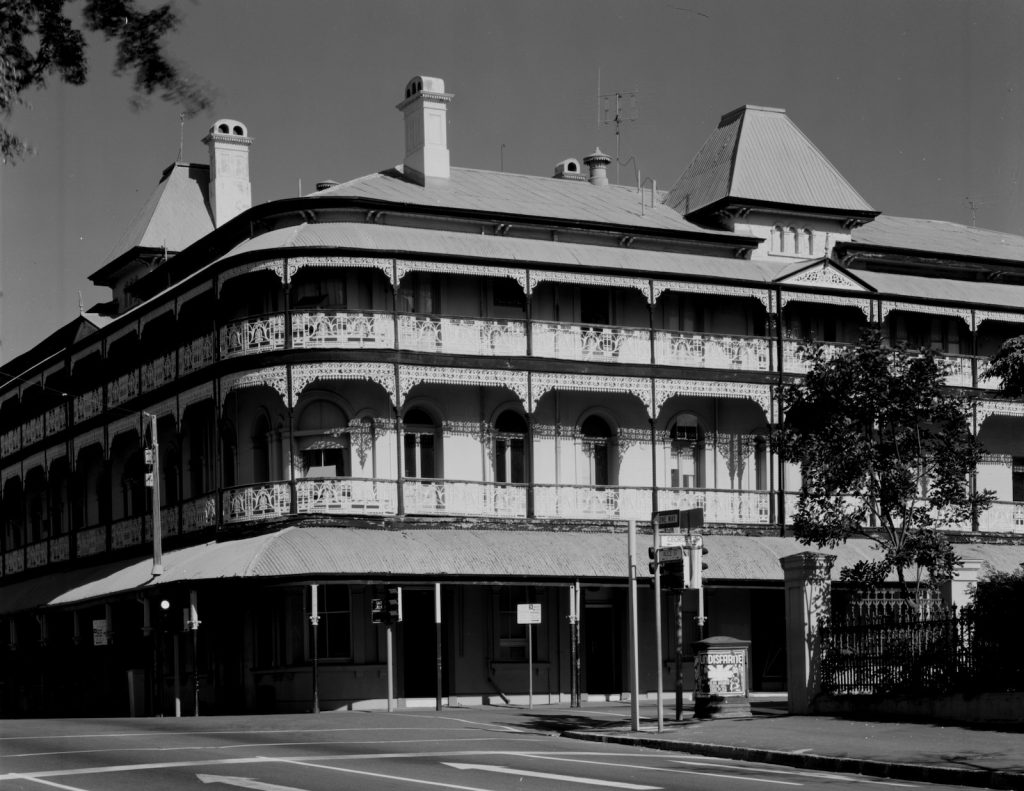
The Bellevue Hotel
Photo Credit: Richard Stringer / State Library

This archival thinking set him apart. Rather than creating promotional images, Stringer built a comprehensive record of Queensland’s architectural heritage, photographing buildings at different life stages including decay and demolition.

Teaching and Professional Recognition

Beyond photography, Stringer influenced countless architects and photographers through decades of teaching. The Toowong Australia Day recipient holds Honorary Life Membership with the Institute of Modern Art and Fellowship with the Royal Australian Institute of Architects.

In 2003, the University of Queensland awarded him an honorary Doctor of Philosophy for documenting the state’s cultural legacy. His work reached wider audiences through exhibitions, notably Pleasure of Place at QAGOMA in 2013-2014.
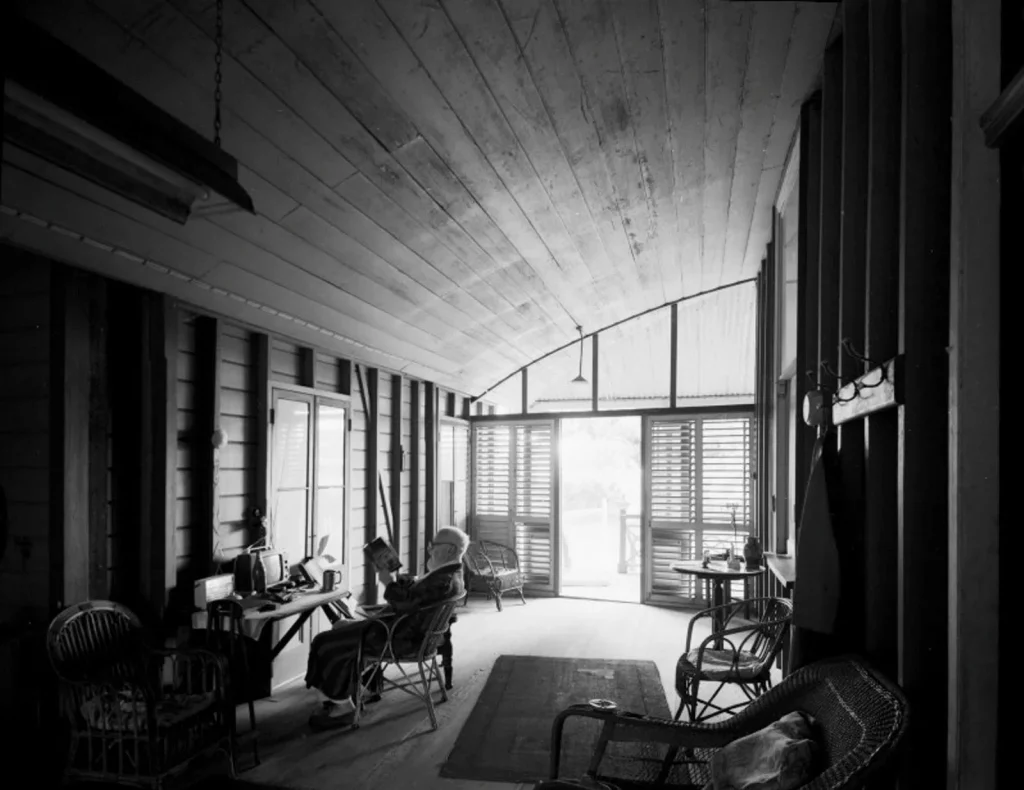
Photographed by Richard Stringer
Photo Credit: Richard Stringer / Museums of History NSW

What This Means for Toowong

The recognition highlights how one resident’s meticulous work over 60 years created an irreplaceable public resource. Stringer’s archive doesn’t just document buildings, it preserves visual evidence of how Brisbane transformed from a regional city into a modern metropolis.

For Toowong residents, having a neighbour recognised nationally for work benefiting all Queenslanders demonstrates the area’s role as home to people making lasting cultural contributions. His archive will serve researchers and the public for generations, long after the buildings themselves have vanished.


Published 26-January-2026.

Toowong Teen’s Portrait of Dad Captures Heart of Brisbane Portrait Prize

In Toowong, a quiet art classroom has given rise to a story now reaching the walls of the State Library of Queensland. Brisbane Boys’ College student Louis Ko, 15, has been named a finalist in the Brisbane Portrait Prize, with his work Dad recognised in the Next Generation category. 


What was intended as a birthday gift to his father has grown into a work of public admiration, selected from dozens of entries for its depth and tenderness. The portrait will be part of the Brisbane Portrait Prize exhibition from 20 September to 9 November.

A portrait born from distance and gratitude

Louis’s portrait is painted in acrylic on canvas, measuring 51 by 61 centimetres. The sitter is his father, Eunsung, who has been separated from him by distance but not by devotion. Louis explained to organisers that although he and his father live apart, they remain connected through his education, something his father worked tirelessly to make possible.

He chose to paint his father gazing upward, describing this gesture as a symbol of respect and pride. For Louis, the act of painting became a way to express words that often go unsaid — an acknowledgement of sacrifice, care, and quiet strength carried over the years. 

“Though we’re separated by distance, we are connected through my education — something he has worked so hard to make possible,” Louis said. “This portrait is my thank you, a way of showing that I see everything he’s done and that I admire him not just as a dad, but as someone who’s shaped the path I’m walking now.”

Behind the scenes at the State Library

On 12 September, organisers announced that all 77 finalist works across categories had arrived at the State Library in a single five-hour delivery window. Condition checks and preparations are now underway, with opening night scheduled for Friday, 20 September. 

The scale of the exhibition reflects the breadth of portraiture in Brisbane, with professionals and students alike contributing works that capture not only faces but also stories.

Louis’s Dad will hang among them, standing alongside works from some of Queensland’s most promising young talents. Visitors will be able to view his portrait in the Next Generation gallery, where the future of Australian portraiture is given its space to shine.

Local pride in Toowong

News of Louis’s achievement was shared proudly by Brisbane Boys’ College, which celebrated his recognition as a reflection of both skill and dedication. The school has encouraged the Toowong community to visit the exhibition, underscoring the importance of supporting young artists as they step into a broader public view.


For Louis, the journey from school art studies to a state exhibition has not only marked an artistic milestone but also enabled him to place his family’s story into a broader conversation. His portrait speaks to love, distance, and gratitude — universal themes expressed through the personal lens of a Toowong teenager with a paintbrush.

Published 16-Sept-2025

How Toowong Got Its Name

Whilst other Brisbane suburbs have been named after a distinct landmark, Toowong derived its name from its local birdlife.

The name Toowong is believed to have originated from the call of a migratory bird, the Eastern Koel, which nests in the area between September and April. The bird was known for its call which was thought to mark the arrival of rain.


Credit: Tim Siggs/YouTube

The Koel has a unique survival tactic. It lays its eggs in the nests of other species and lets them raise their young before returning to Papua New Guinea and other South-East Asian countries for winter.

Eastern Koel Eudynamys orientalis Cuculidae Photo credit: birdlife.org.au

The State Library of Queensland has confirmed the link between the naming of Toowong to the call of the migratory bird. However, the Toowong and District Historical Society Inc. has a different story behind the naming of the suburb.

White-throated Nightjar Eurostopodus mystacalis Photo credit: Aviceda/Wikimedia Commons

According to the District Historical Society, the suburb was named after the native bird known as the white-throated nightjar. The Aborigines referred to this bird as the “tu-wong” —  an onomatopoeic word which copies the sound of the bird’s call. Since the native bird nested in several eucalyptus trees along the river bank on the bend of the Brisbane River below the Indooroopilly Bridge, the Aborigines named the locality Tu-wong.

Bird researcher Ian Venables said that other early records say that Toowong was named after the Koel. The confusion would explain why a newcomer to Toowong, John O’Neil Brenan (who arrived in 1872), came to understand the origin of the word as the Koel’s call. To this day, the confusion as to where the name of Toowong really came from, remains.

Toowong Creek Photo credit: Kgbo/Wikimedia Commons

Survey maps from as early as 1849 show that Toowong Creek was the first to use the name. The word was later adopted as a locality name when local landowner Richard Langlar Drew advertised land along Toowong Creek for sale as “The Village of Toowong”.

The name became more widely used when Toowong was given to the area’s newly-opened local railway station. The district’s inhabitants later identified with the name of “Toowong”, and its inhabitants adopted the name for the locality after the railway station’s name.

Today, Toowong is a popular suburb, home to more than 10,800 people.