
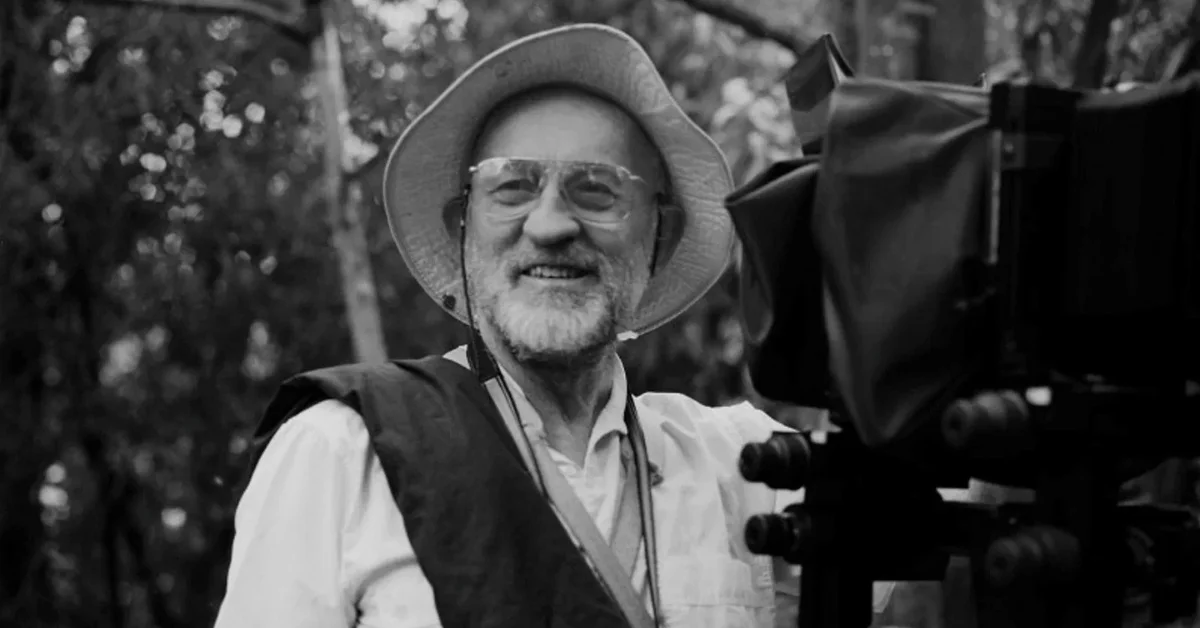
Architectural Photographer Richard Stringer of Toowong Receives Australia Day of Honours

Architectural photographer Richard Stringer of Toowong has been appointed a Member of the Order of Australia for his significant service to architectural photography, education and history.


The 89-year-old Toowong resident has spent over six decades documenting Queensland’s built environment, creating an archive of more than 63,000 negatives now held at the State Library of Queensland. His photographs captured many of Brisbane’s historic buildings before demolition, preserving visual records that would otherwise be lost.

Forensic Precision Meets Architectural History

Stringer arrived in Brisbane in 1963 after studying architecture at the University of Melbourne. He joined renowned architect James Birrell’s practice at the University of Queensland, where architecture and photography merged into his life’s work.

His photographic approach treats the medium as forensic documentation rather than artistic interpretation. This technical precision means his images serve as detailed records of structural design and architectural elements that researchers and historians now rely on to understand Queensland’s architectural evolution.
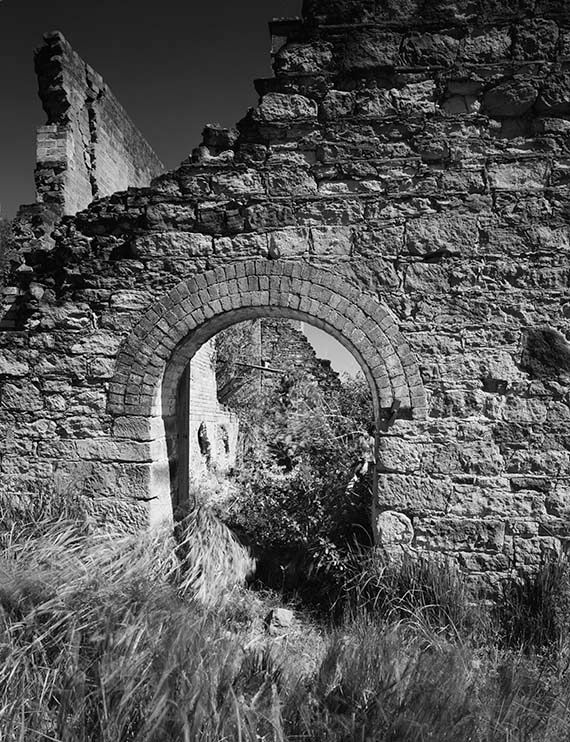
Photographed by Richard Stringer
Photo Credit: Richard Stringer / QAGOMA

The State Library of Queensland’s acquisition of his complete archive ensures permanent public access to this visual history spanning Brisbane’s dramatic transformation from the 1960s onwards.

Preserving Brisbane’s Vanished Spaces

Stringer’s most valuable contribution came through capturing buildings destined for demolition. His photographs of the Bellevue Hotel precinct and other lost buildings provide some of the most detailed visual records of these spaces.
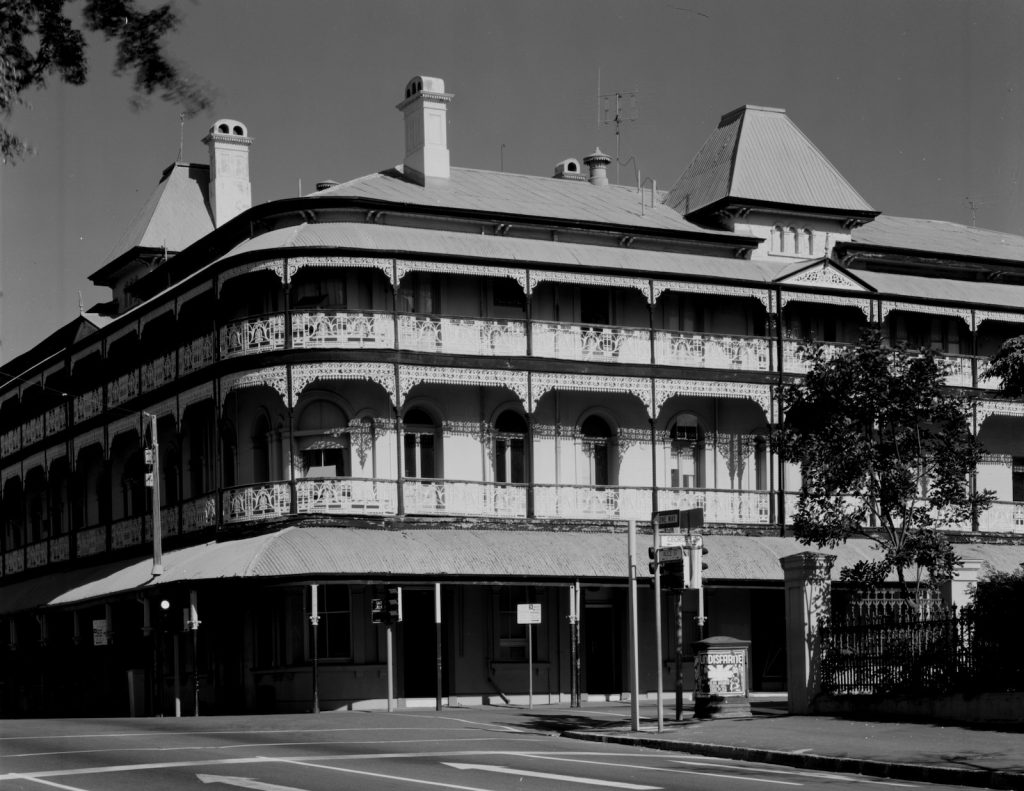
The Bellevue Hotel
Photo Credit: Richard Stringer / State Library

This archival thinking set him apart. Rather than creating promotional images, Stringer built a comprehensive record of Queensland’s architectural heritage, photographing buildings at different life stages including decay and demolition.

Teaching and Professional Recognition

Beyond photography, Stringer influenced countless architects and photographers through decades of teaching. The Toowong Australia Day recipient holds Honorary Life Membership with the Institute of Modern Art and Fellowship with the Royal Australian Institute of Architects.

In 2003, the University of Queensland awarded him an honorary Doctor of Philosophy for documenting the state’s cultural legacy. His work reached wider audiences through exhibitions, notably Pleasure of Place at QAGOMA in 2013-2014.
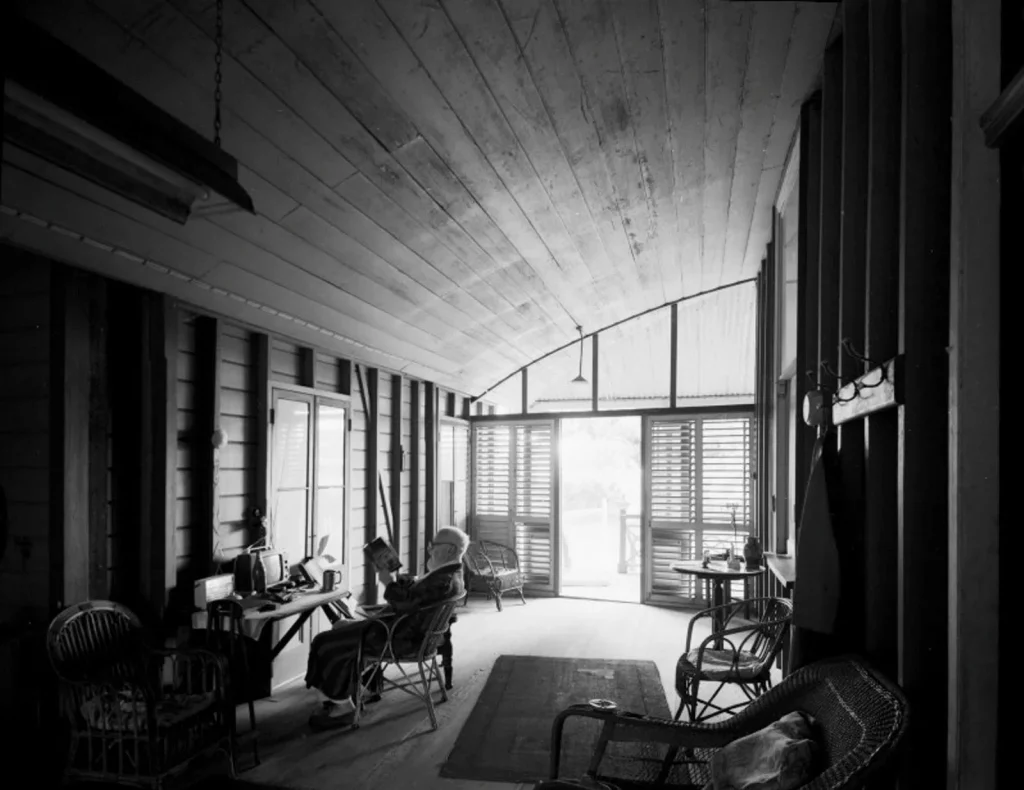
Photographed by Richard Stringer
Photo Credit: Richard Stringer / Museums of History NSW

What This Means for Toowong

The recognition highlights how one resident’s meticulous work over 60 years created an irreplaceable public resource. Stringer’s archive doesn’t just document buildings, it preserves visual evidence of how Brisbane transformed from a regional city into a modern metropolis.

For Toowong residents, having a neighbour recognised nationally for work benefiting all Queenslanders demonstrates the area’s role as home to people making lasting cultural contributions. His archive will serve researchers and the public for generations, long after the buildings themselves have vanished.


Published 26-January-2026.

Innovative Cottage Renovation Transforms Family Life in Toowong

A remarkable renovation project in Toowong has demonstrated how thoughtful design can breathe new life into a 1930s cottage, creating a modern family sanctuary that respects the neighbourhood’s character.


The project, completed by local architecture firm Alcorn Middleton, has transformed a traditional porch-and-gable cottage into an award-winning family home that accommodates five residents across a compact 455-square-metre site. The renovation took 14 months to design and document, followed by another 14 months of construction, resulting in a 192-square-metre home that maximises every centimetre of available space.

Retaining Toowong’s Character

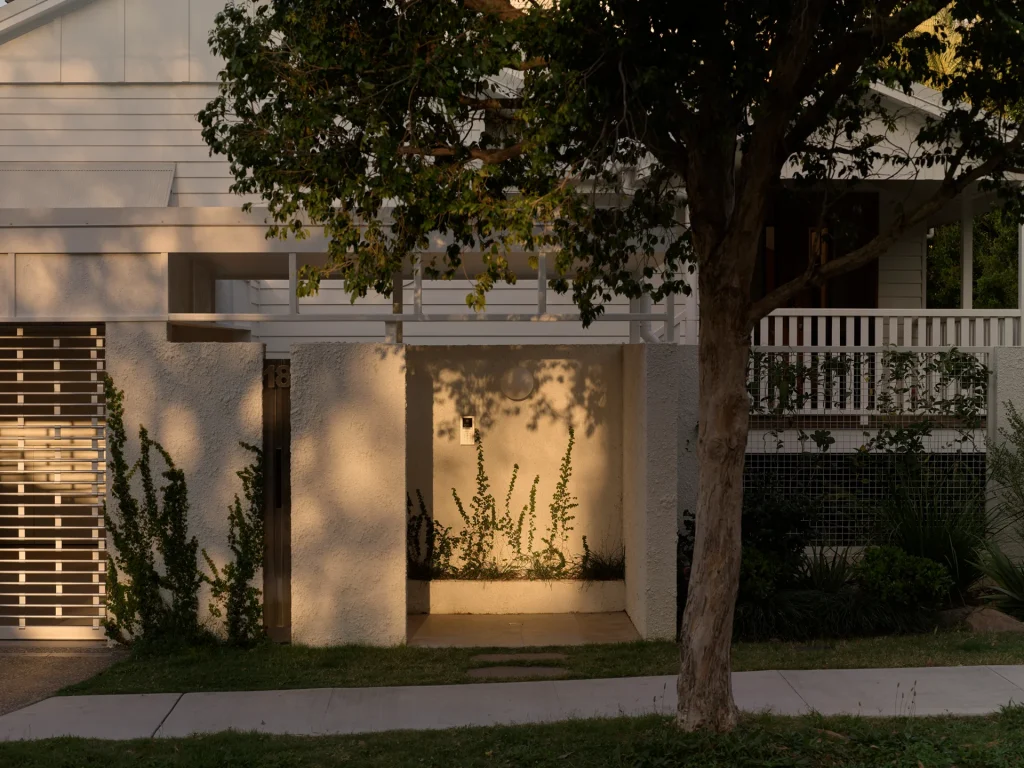
What sets this renovation apart from many others in Brisbane’s inner west is the architects’ decision to keep the original cottage in place rather than lifting and building underneath. This approach has preserved the home’s street presence while avoiding the common pitfalls of damp, disconnected lower levels that often result from lift-and-fill developments.

Photo Credit: Alcorn Middleton / Toby Scott

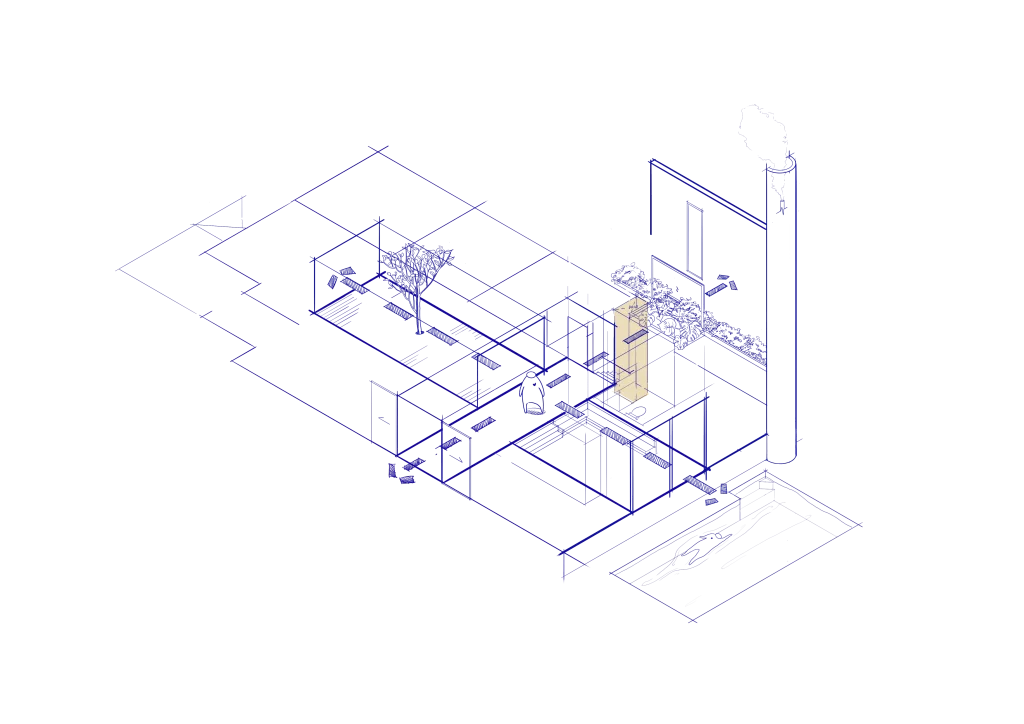
The Brisbane-based practice of Joel Alcorn and Chloe Middleton draws on their experiences of other cities to design homes that respect local traditions while challenging conventional approaches. Their solution centres around a newly created courtyard that serves as the heart of the home, providing northern light and breathing space to previously cramped rooms.

Photo Credit: Alcorn Middleton

A Tree at the Centre

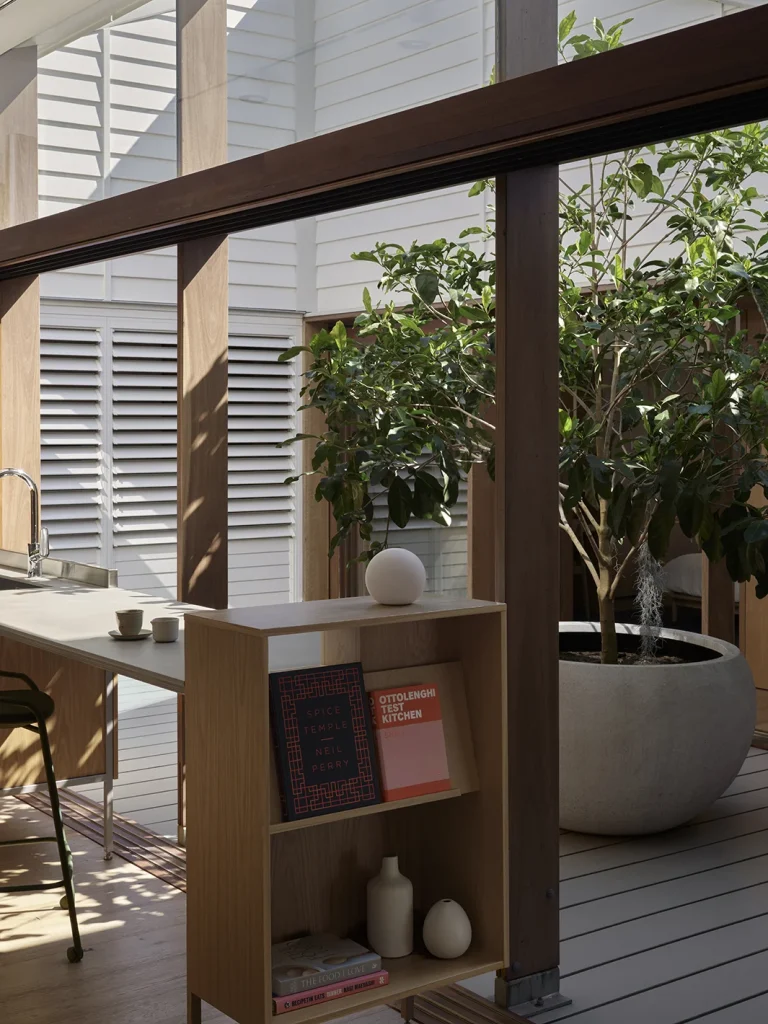
The defining feature of the renovation emerged from the clients’ desire to have “a house with a tree in it.” With neighbours positioned close to each boundary, the architects carved away portions of the existing floor plan to create a central courtyard that brings light, air and greenery into the home’s core.

Photo Credit: Alcorn Middleton / Toby Scott

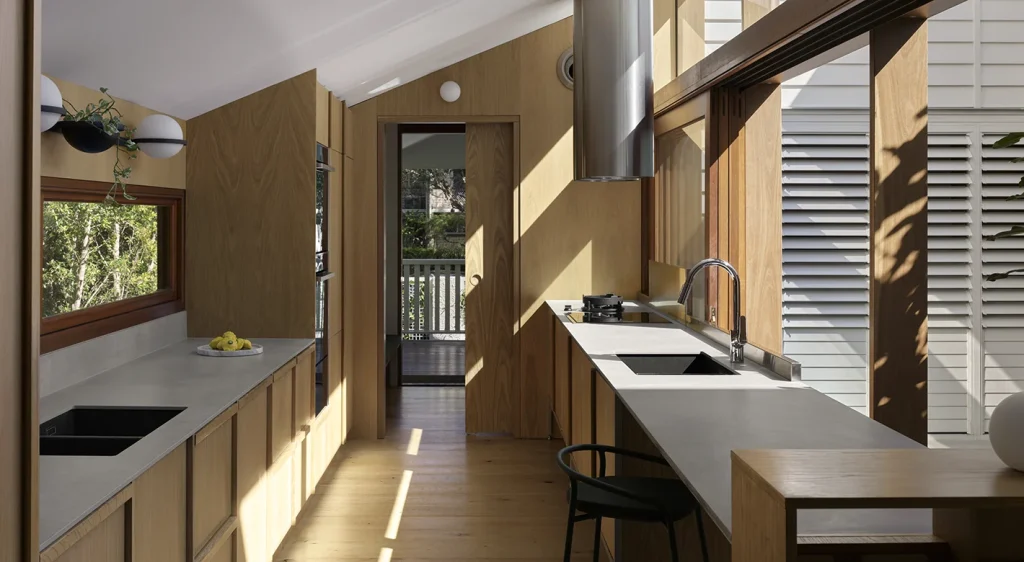
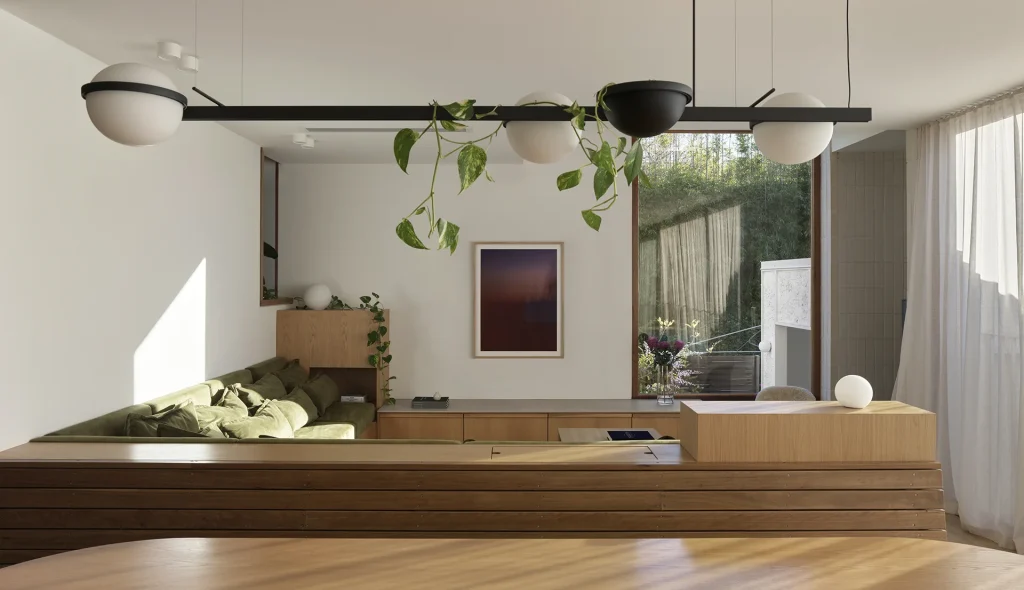
This courtyard connects seamlessly with a generous galley kitchen, where the ceiling height increases dramatically and clever storage solutions create a sense of openness. Warm timber elements throughout the project provide visual continuity and help ground the various spaces within a coherent design framework.

Photo Credit: Alcorn Middleton / Toby Scott

Smart Space Planning

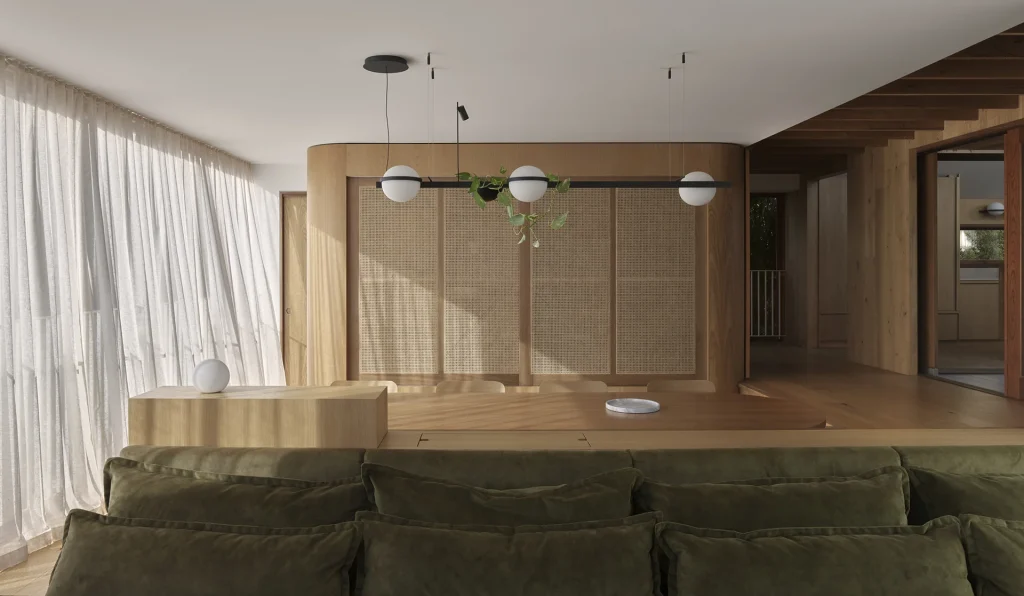
The renovation showcases several innovative approaches to maximising space efficiency. The living and dining areas sit on a slightly lower level, creating opportunities for casual seating on the edge while enhancing views to the swimming pool beyond. Strategic voids in the upper corners capture slices of sky and additional natural light.

Photo Credit: Alcorn Middleton / Toby Scott

The design includes multiple flexible spaces that adapt to changing daily needs. The dining area doubles as a meeting space for the home-working parents, while concealed sliding doors allow rooms to open up or close down as required throughout the day.

Photo Credit: Alcorn Middleton / Toby Scott

Upstairs Retreat

Photo Credit: Alcorn Middleton / Toby Scott

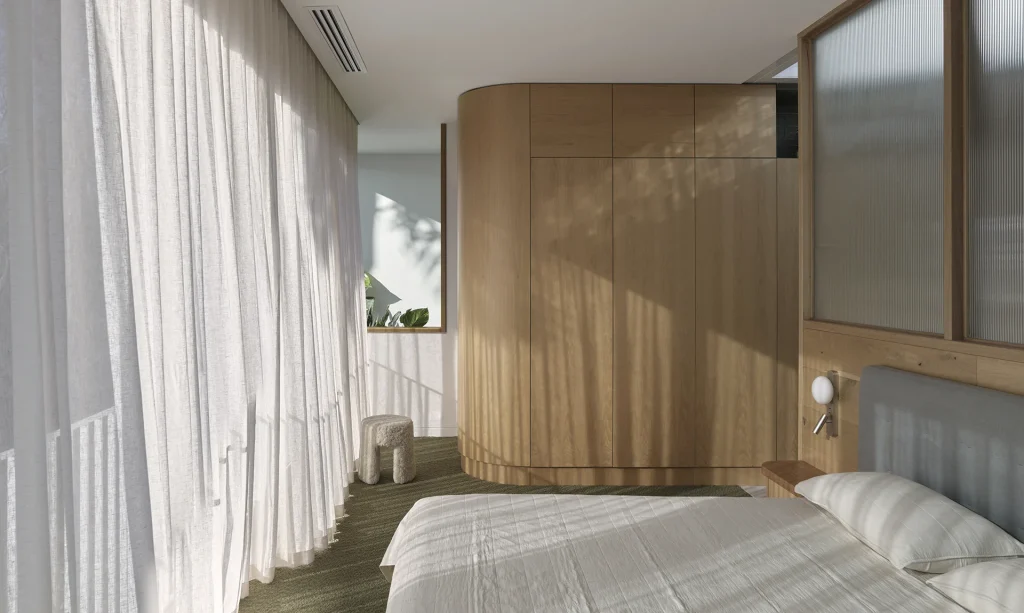
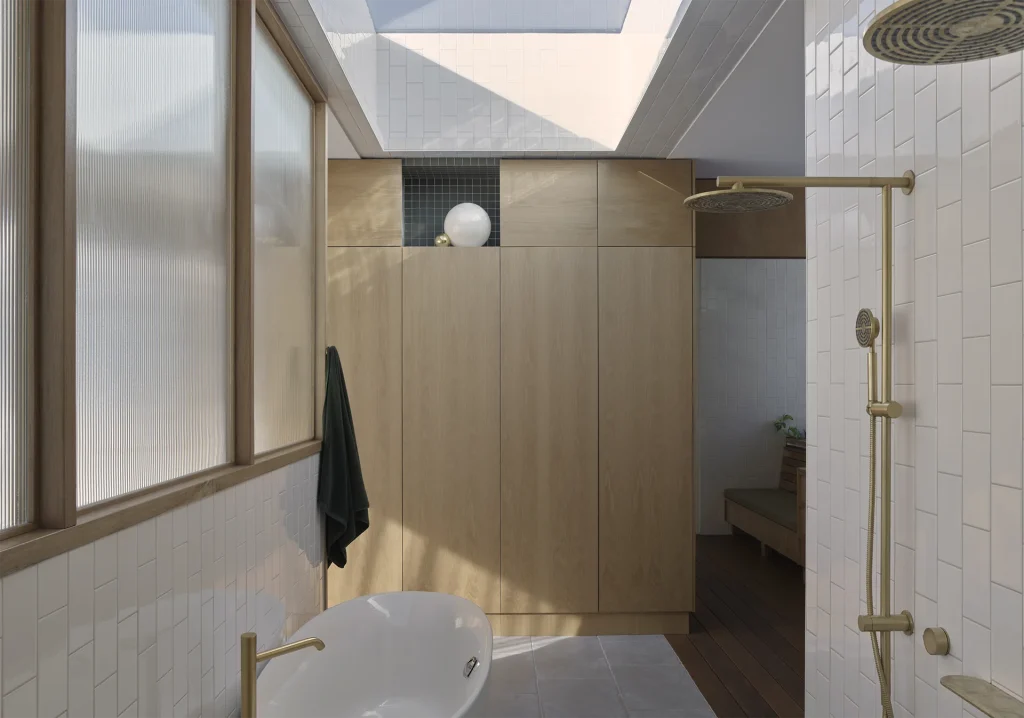
A narrow staircase leads to the parents’ private retreat, described as an “eyrie” overlooking the double-height study space. This upper level features a generous bathroom flooded with natural light through an enormous skylight, creating an almost outdoor terrace feel. Fluted glass separates the bathroom from the bedroom, softening transitions while maintaining privacy.

Photo Credit: Alcorn Middleton / Toby Scott

Sustainable Features

The renovation incorporates numerous sustainable elements, including 14 kilowatts of solar panels, ducted air conditioning, and a Stuv fireplace. The project utilises locally sourced materials where possible, including tallowwood decking and limestone from Australian suppliers.

Recognition and Awards

The project has been recognised in the 2025 Australian Interior Design Awards in the Residential Design category, highlighting its success in bridging heritage and contemporary living in Toowong’s leafy streets.

About the Architects

Alcorn Middleton was established in 2019 by Joel Alcorn and Chloe Middleton, though their collaborative journey began organically in 2013. The practice has gained recognition for their thoughtful approach to suburban renovations, with this Toowong project joining their portfolio of award-winning residential work.

Photo Credit: Alcorn Middleton

The Toowong Towers project demonstrates that significant improvements to family living can be achieved within existing suburban footprints, offering a sustainable alternative to demolition and reconstruction while respecting the character that makes Brisbane’s inner-west suburbs so desirable.


Project Details:

  • Location: Toowong, Brisbane
  • Site area: 455m²
  • Building area: 192m²
  • Design and documentation: 14 months
  • Construction: 14 months
  • Builder: Allicient Built Developments
  • Landscape design: Robert Waddell

This project sits on the traditional land of the Turrbal and Jagera peoples.

Published 28-August-2025