

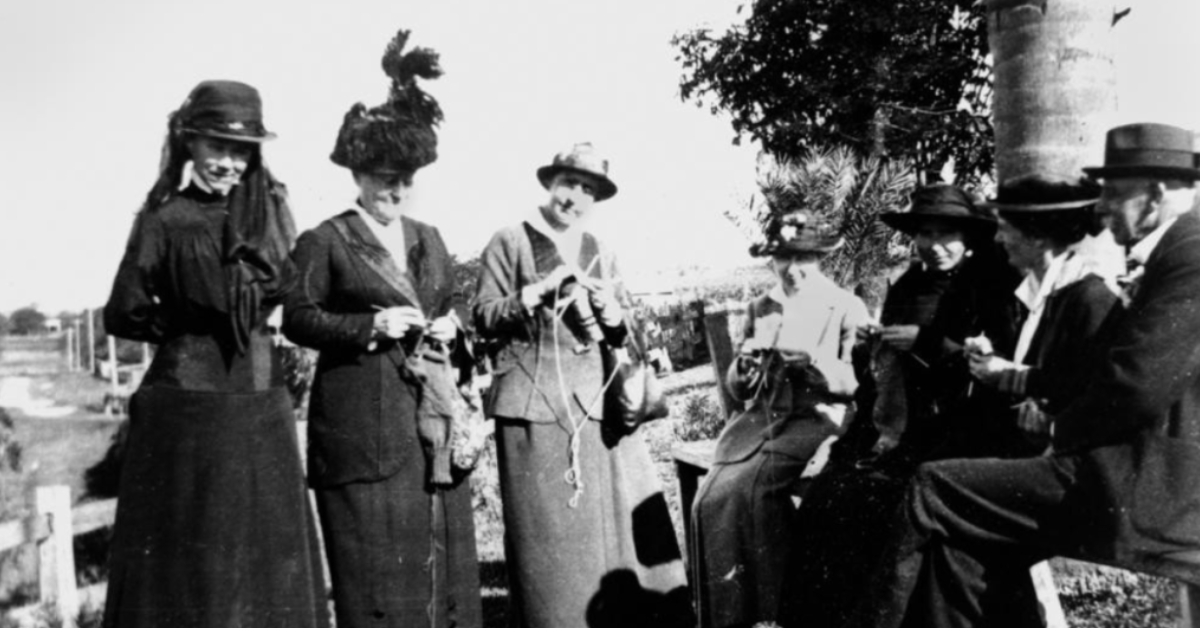
Toowong residents Mesdames Donaldson and Patterson led a dedicated local knitting circle that formed a vital link in a massive community network providing over 100,000 pairs of handmade socks to Queenslanders serving abroad.
A Royal Call to Action
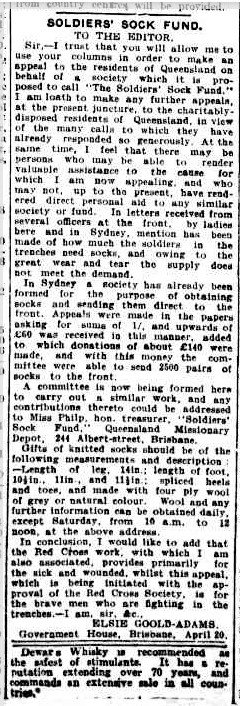
The movement began on April 19, 1915, during a meeting at Government House in Brisbane. Lady Goold-Adams, the wife of the Queensland Governor, gathered several influential local women to address a desperate need for warm clothing in the trenches.



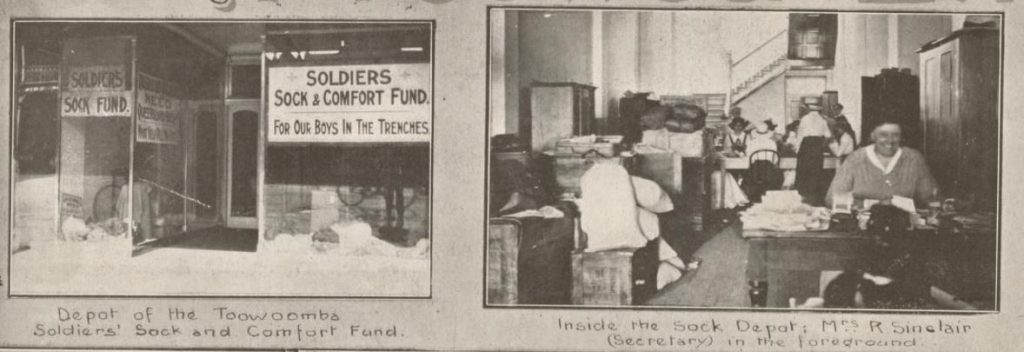
Officers from the front had written home explaining that the intense conditions caused footwear to wear out rapidly. The Queensland Soldiers’ Sock Fund was created to collect money for wool and distribute it to volunteers who could turn the raw material into finished garments.
Strict Standards for the Front
The headquarters for the operation was located at the Queensland Missionary Depot on Albert Street. From this central hub, the committee managed a sophisticated production line. Because the socks needed to be durable and fit properly, the fund issued specific instructions for all volunteers. Each sock was required to have a 14-inch leg and a foot length between 10.5 and 11.5 inches.

To ensure they lasted as long as possible, the knitters used four-ply wool in natural or grey colours and included reinforced heels and toes. Every two weeks, the finished items were packed and sent to the Queensland Patriotic Fund for shipping.

A Network of Schools and Circles
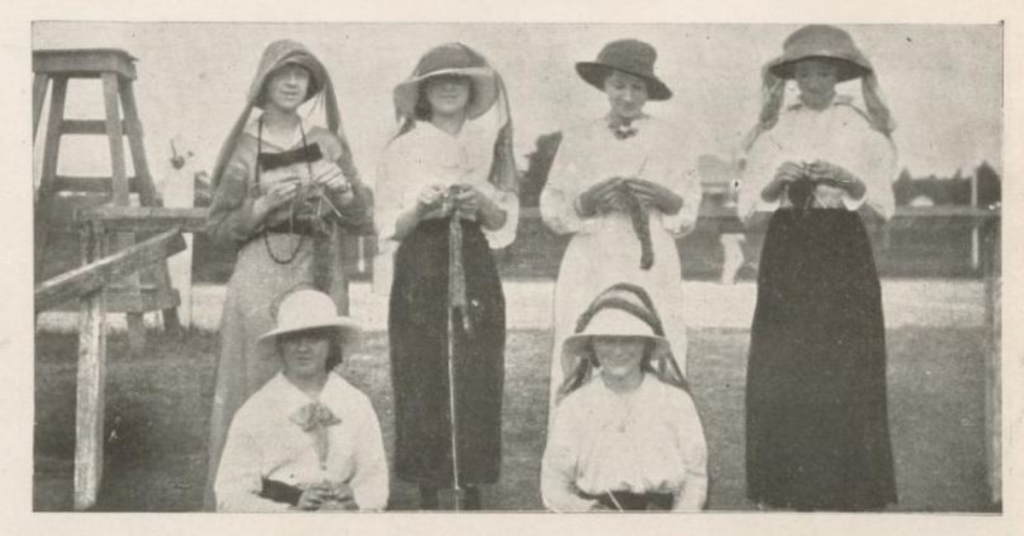
The Toowong knitting circle was part of a much larger web of support that stretched across the entire state. In nearby areas, the Wynnum Patriotic Sewing League and Wynnum State School joined the cause. Other schools, including Brisbane Girls’ Grammar, Taringa State School, and Cleveland State School, also encouraged students to contribute.
Regional branches appeared in towns such as Roma, Gympie, Townsville, and Mackay. Local newspapers supported the drive by publishing the names of everyone who helped, which kept the community motivated and aware of the ongoing need.



Remarkable Local Contributions
While many worked in groups, some individuals achieved incredible results on their own. Rebecca Balser, an 83-year-old resident of Teneriffe, gained recognition in early 1916 for her tireless work. She managed to knit 100 pairs of socks by herself, along with a collection of caps, scarves, and mittens.
By the time the first annual meeting was held in May 1916, more than 19,000 pairs had already been sent to the front. The following year, an urgent appeal saw that number jump to over 45,000 pairs in a single twelve-month period.
Shifting Focus to a New Crisis
By the time the fund stopped its knitting operations in February 1919, it had raised more than £4,600, which is worth over $353,000 in modern currency. In total, the volunteers produced 104,594 pairs of socks. As the war ended, the community faced a new challenge with the arrival of the Spanish Flu pandemic. The same volunteers who had spent years knitting for soldiers were asked to use their skills to create influenza masks to help protect the public from the spreading illness.
Published Date 23-March-2026